
Geomat Fabric Guide: Types, Installation and Engineering Applications
Geomat fabric is a three-dimensional geosynthetic mat made from polymer filaments such as HDPE or PP. It is widely used for slope protection, erosion control, and vegetation support by stabilizing surface soil, reducing runoff, and promoting root anchorage in highways, embankments, riverbanks, and landfill cover systems.
What Is Geomat Fabric?
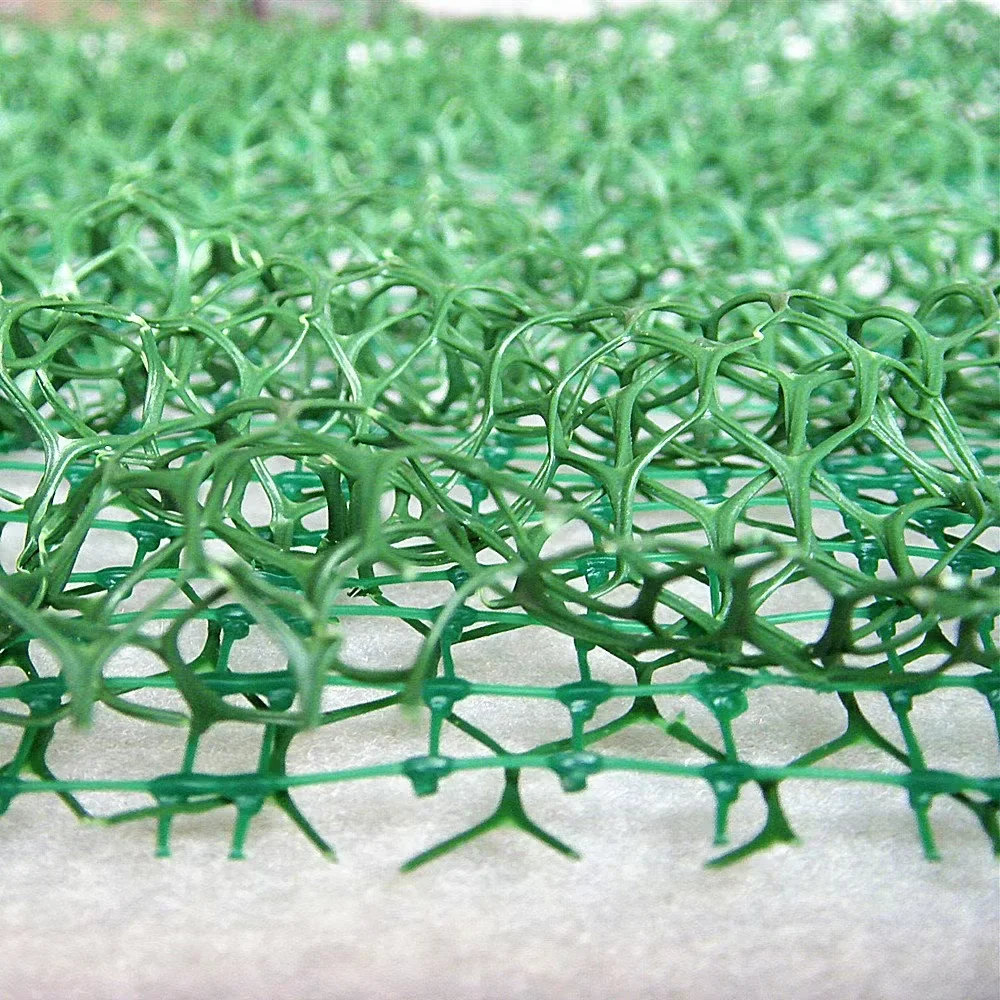
Geomat fabric is a three-dimensional (3D) erosion control mat designed to retain surface soil and support vegetation growth. It is typically manufactured from extruded polymer filaments bonded into a stable network structure.
Unlike traditional flat geotextiles, geomat fabric creates a spatial matrix that traps soil particles and prevents erosion caused by rainfall and runoff.
It is commonly used in civil engineering projects where slope stabilization and long-term surface protection are required.
How Does Geomat Fabric Work?
Soil Retention
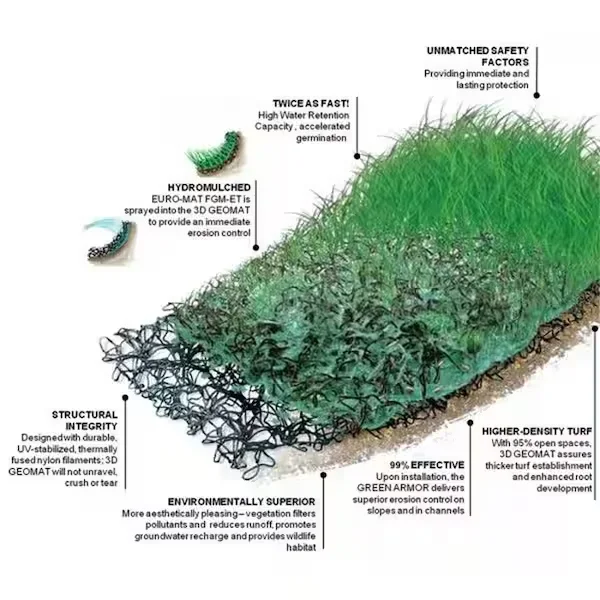
Geomat fabric forms a three-dimensional structure that traps loose topsoil and prevents it from being washed away during rainfall.
Runoff Reduction
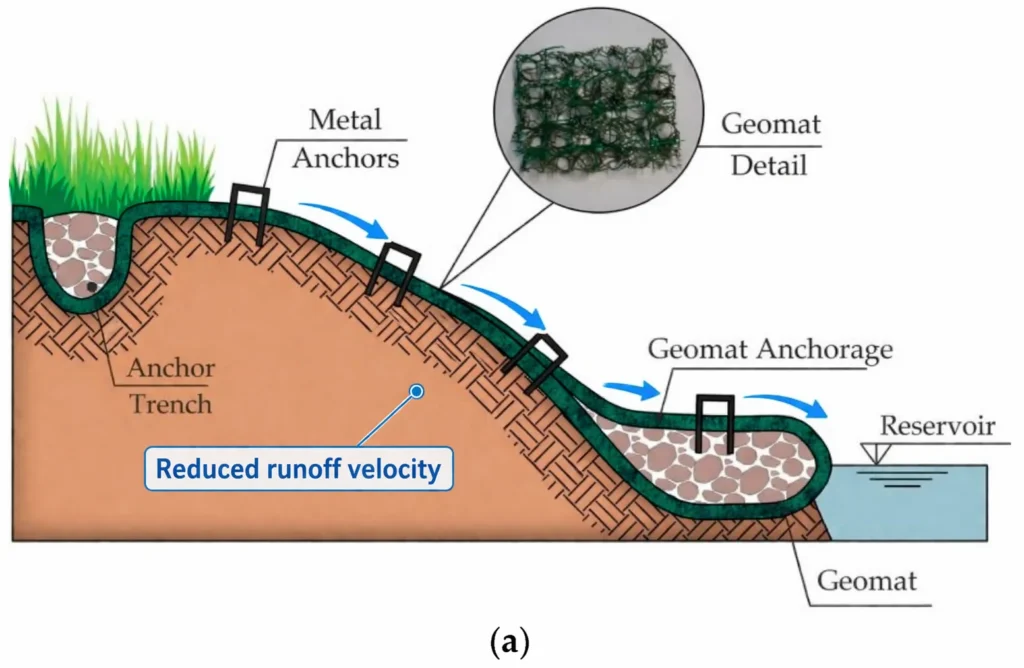
The rough surface and internal network reduce the velocity of surface water, minimizing erosion caused by runoff.
Root Anchorage
The open structure allows plant roots to grow through the mat, forming a reinforced soil-vegetation system that provides long-term stability.
Common Types of Geomat Fabric (EM2–EM5)
| Type | Layers | Typical Thickness | Recommended Application |
|---|---|---|---|
| EM2 | 2 | 10–12 mm | Landscaping and gentle slopes |
| EM3 | 3 | 12–14 mm | Highway and embankment slopes |
| EM4 | 4 | 14–16 mm | Steep slopes and erosion-prone areas |
| EM5 | 5 | 16–18 mm | Heavy erosion zones and high rainfall regions |
In most road and infrastructure projects, EM3 and EM4 are commonly selected due to their balance between flexibility and erosion resistance.
Where Is Geomat Fabric Used?
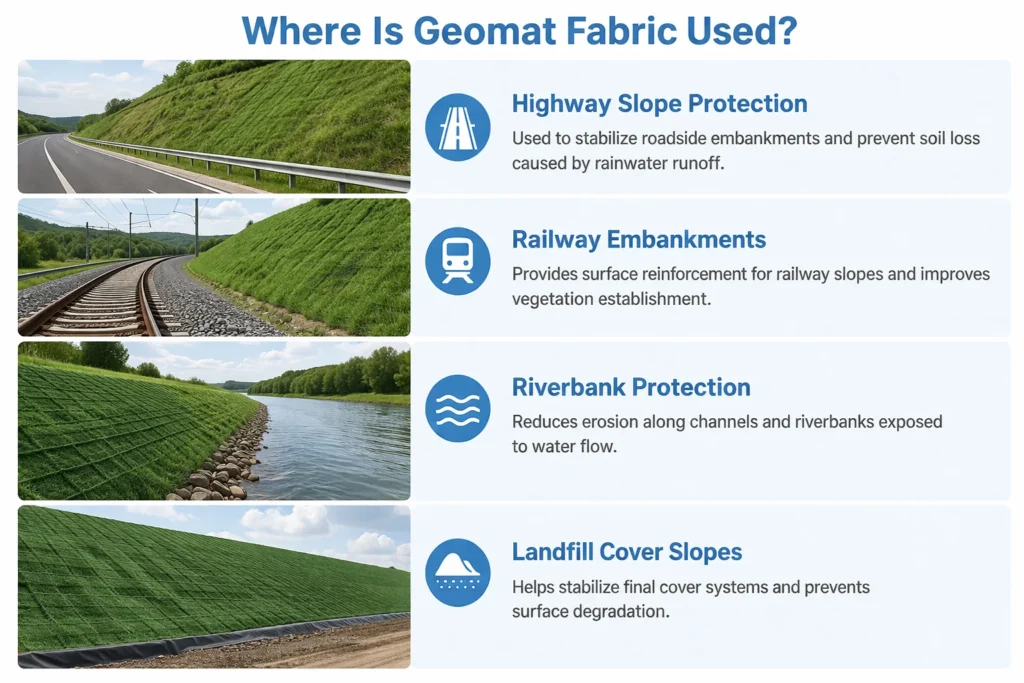
Highway Slope Protection
Used to stabilize roadside embankments and prevent soil loss caused by rainwater runoff.
Railway Embankments
Provides surface reinforcement for railway slopes and improves vegetation establishment.
Riverbank Protection
Reduces erosion along channels and riverbanks exposed to water flow.
Landfill Cover Slopes
Helps stabilize final cover systems and prevents surface degradation.
How to Choose the Right Geomat Fabric
By Slope Angle
- <30° → EM2
- 30–45° → EM3
- 45° → EM4 or EM5
By Rainfall Intensity
- Low rainfall → lighter geomat
- Moderate rainfall → medium thickness
- Heavy rainfall → high-strength geomat
By Soil Type
- Sandy soil → higher confinement required
- Clay soil → drainage consideration needed
- Fill soil → reinforcement recommended
By Vegetation Requirement
Projects requiring rapid vegetation growth benefit from thicker geomat structures.
By Design Life
UV resistance and long-term durability should be considered for exposed environments.
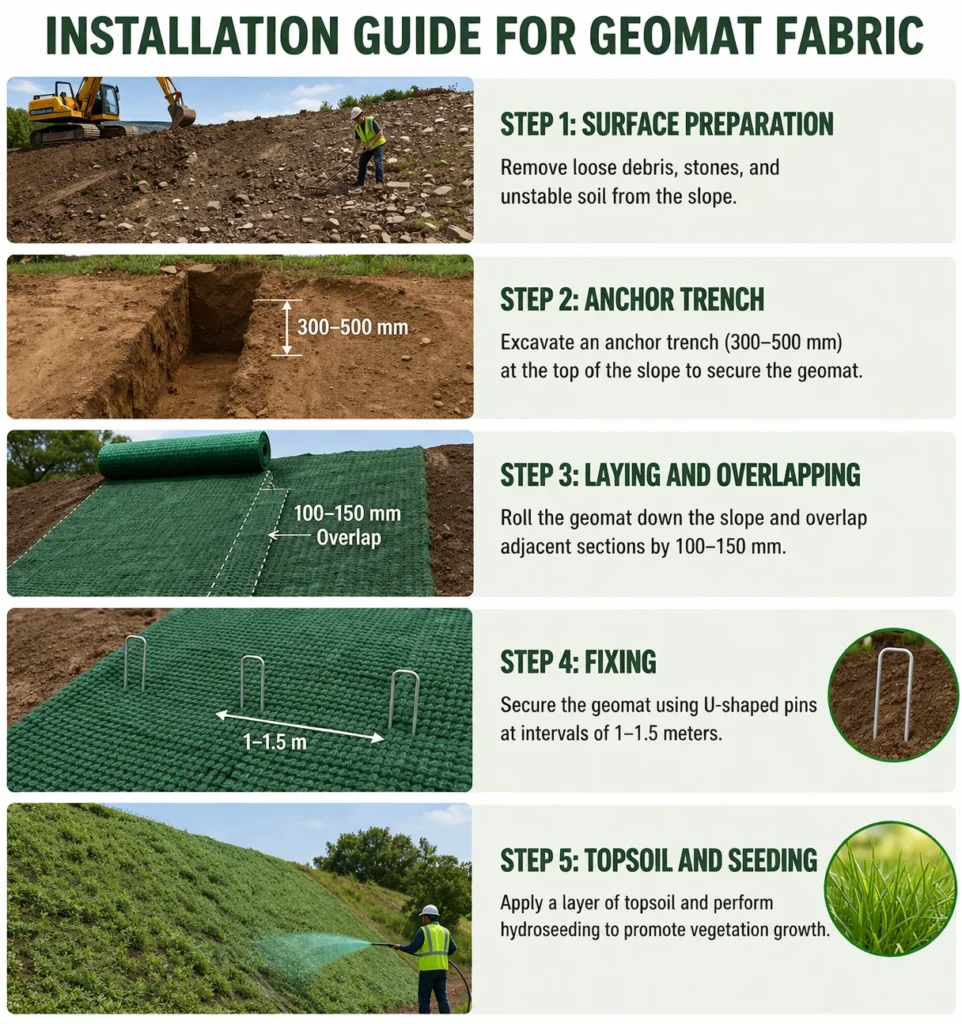
Installation Guide for Geomat Fabric
Step 1: Surface Preparation
Remove loose debris, stones, and unstable soil from the slope.
Step 2: Anchor Trench
Excavate an anchor trench (300–500 mm) at the top of the slope to secure the geomat.
Step 3: Laying and Overlapping
Roll the geomat down the slope and overlap adjacent sections by 100–150 mm.
Step 4: Fixing
Secure the geomat using U-shaped pins at intervals of 1–1.5 meters.
Step 5: Topsoil and Seeding
Apply a layer of topsoil and perform hydroseeding to promote vegetation growth.
Geomat vs Geotextile vs Geocell
| Material | Structure | Main Function |
|---|---|---|
| Geomat | 3D | Erosion control and vegetation support |
| Geotextile | 2D | Separation, filtration, drainage |
| Geocell | 3D cells | Load distribution and soil confinement |
Geomat fabric is specifically designed for surface erosion control, while geotextiles and geocells serve different engineering purposes.
Technical Specifications (Typical Values)
| Property | Typical Value |
|---|---|
| Material | HDPE / PP |
| Thickness | 10–18 mm |
| Mass | 220–430 g/m² |
| Width | 2–4 m |
| Roll Length | 30–50 m |
| UV Resistance | ≥80% |
Looking for geomat fabric specifications, roll sizes, or project pricing?
Explore our Geomat Product Page for detailed technical data sheets and supplier support.
FAQ
What is geomat fabric used for?
Geomat fabric is used for slope protection, erosion control, and vegetation support in infrastructure and environmental projects.
Is geomat fabric the same as geotextile?
No. Geomat is a 3D erosion control structure, while geotextile is a 2D fabric used for separation and filtration.
Which geomat type is best for steep slopes?
EM4 or EM5 geomats are typically recommended for steep slopes with high erosion risk.
How long does geomat fabric last?
Depending on material and environment, geomat fabric can support vegetation and provide protection for several years or longer.
Can geomat fabric support vegetation growth?
Yes. Its open structure allows roots to grow through and stabilize the soil naturally.
With extensive experience in geosynthetic materials and slope protection systems, geomat fabric has become a reliable solution for erosion control in both temporary and permanent applications. Proper selection, installation, and maintenance are essential to achieving long-term performance.