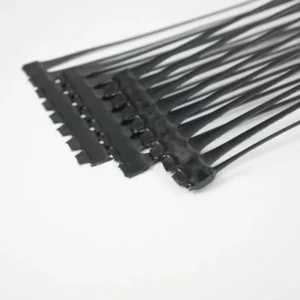
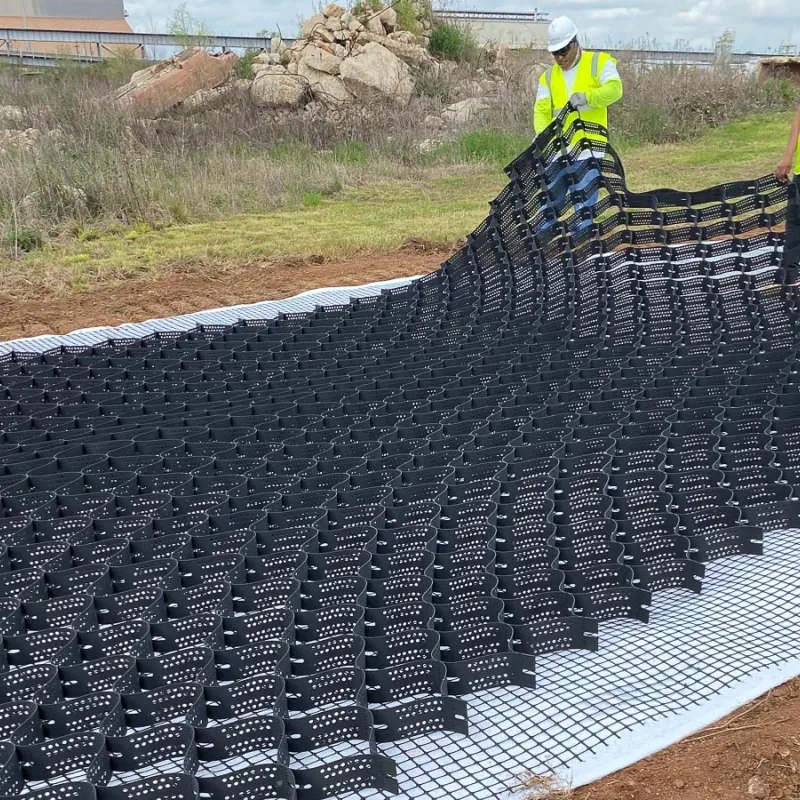
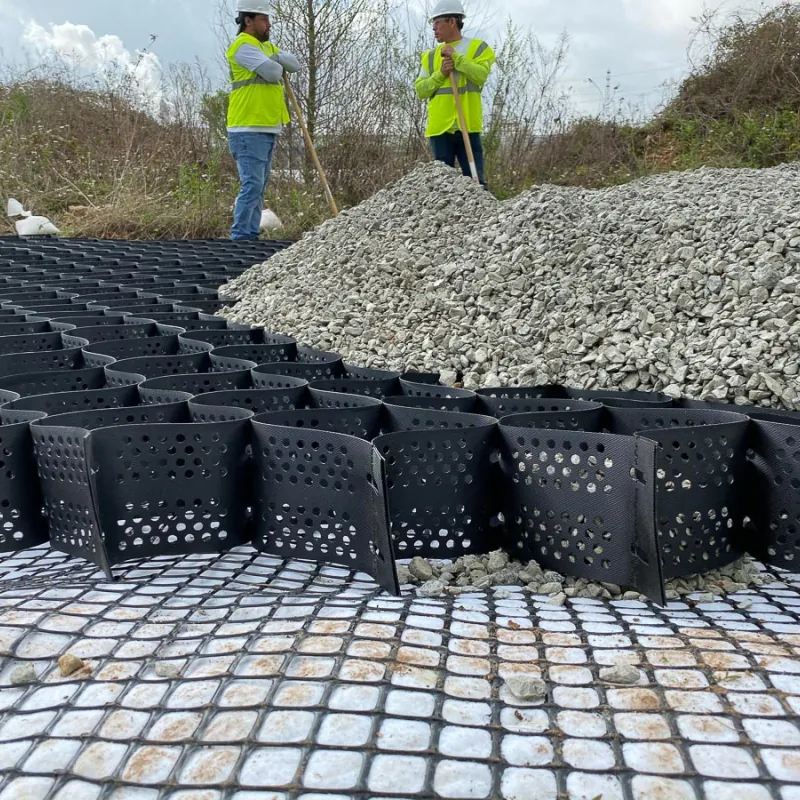
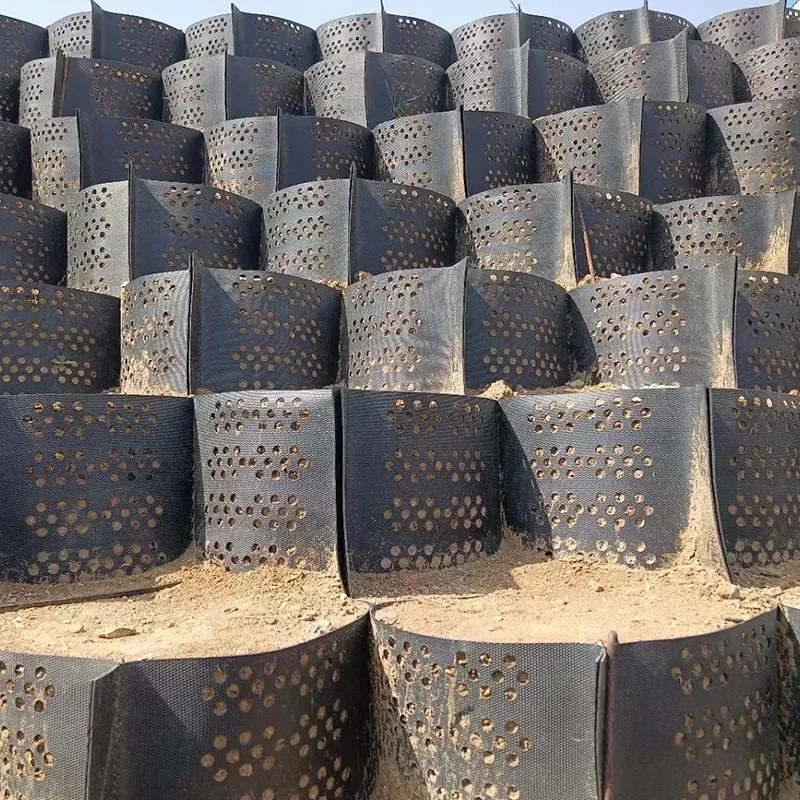
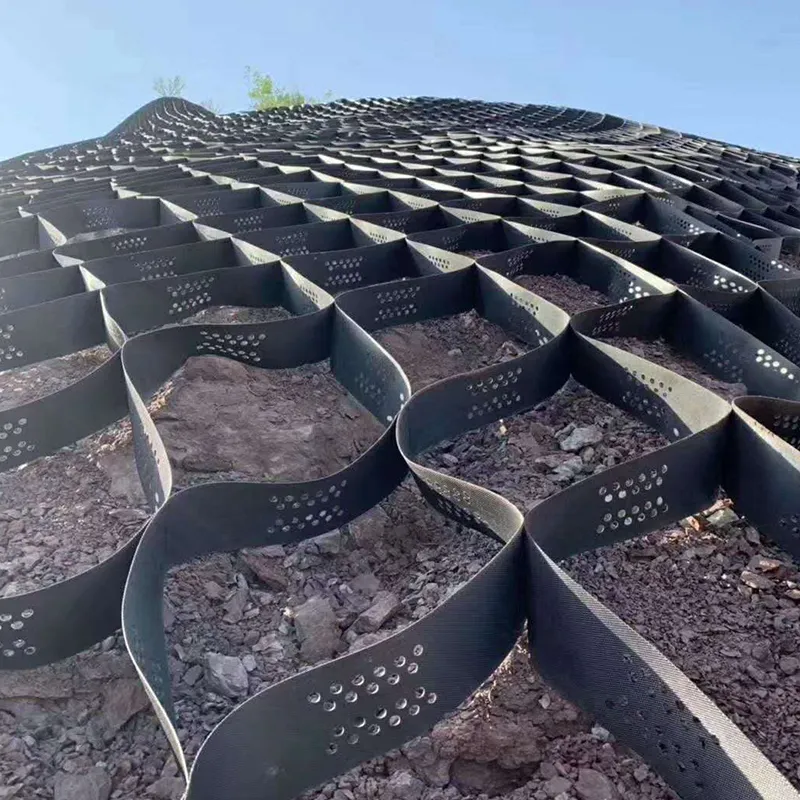
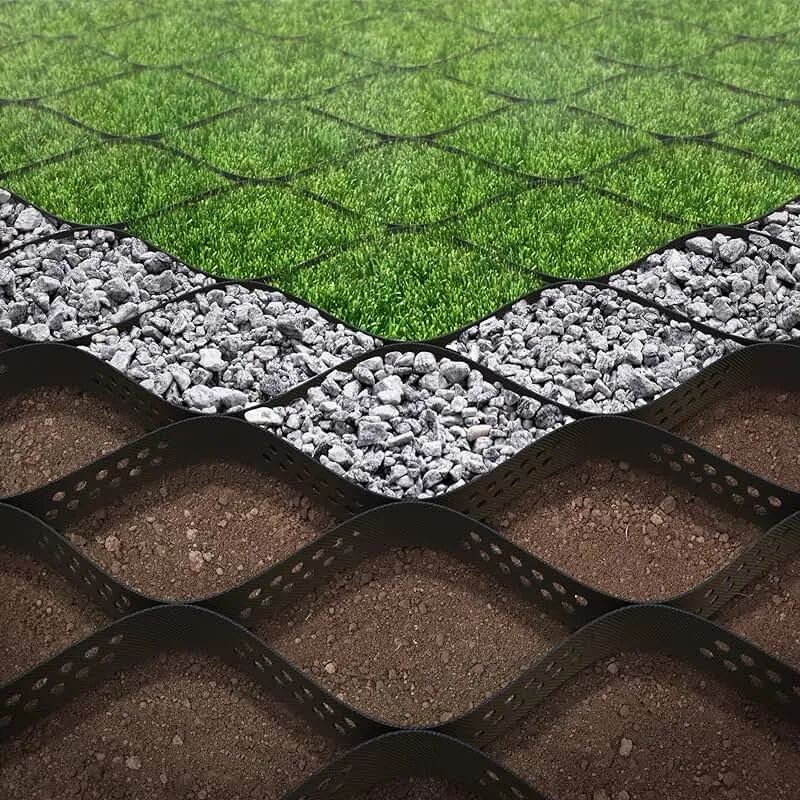
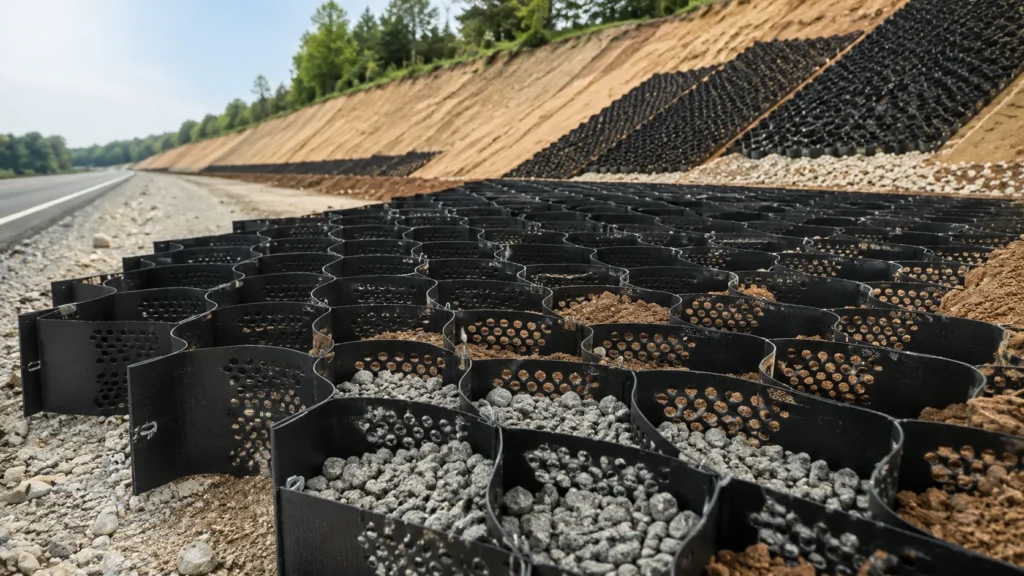
GeoSynSource supplies HDPE geocell systems manufactured from high-density polyethylene strips joined to form an expandable three-dimensional cellular structure.
Once expanded on site, the cells can be filled with suitable materials such as soil, sand or gravel to create a confined layer. The geocell structure helps limit lateral movement of the infill and can improve the stability and load-support behavior of the complete soil or aggregate system under appropriate design and installation conditions.
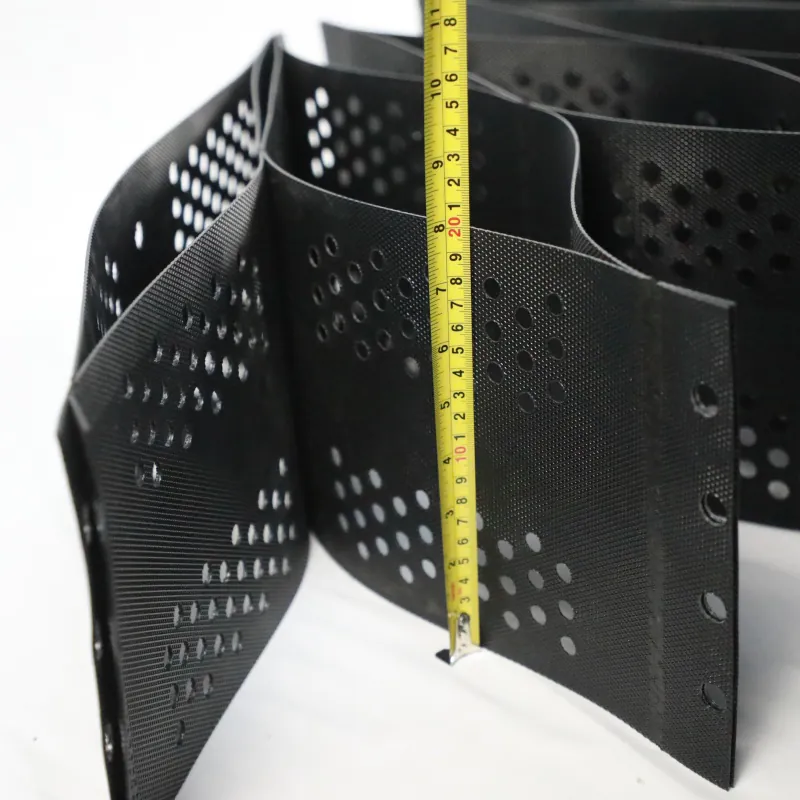
Available product configurations include 50–250 mm cell depths, 330–1000 mm welding distances, and smooth or textured sheet options.
50–250 mm Cell Depth
330–1000 mm Welding Distance
Smooth / Textured Sheet Options
Project & Bulk Supply
CTA:
Request Geocell Technical Data & Quote
HDPE geocell is a three-dimensional cellular confinement system made from polymer strips welded at defined intervals.
The panels are supplied in a collapsed form for transportation and expanded into a cellular network during installation.
The cells are then filled with suitable project materials such as:
The geocell and the infill act together as a confined system rather than as two completely independent materials.
| Property | Available Product Data |
|---|---|
| Product | HDPE Geocell |
| Product Type | Cellular Confinement System |
| Polymer | High-Density Polyethylene |
| Density | 0.935–0.965 g/cm³ |
| Cell Depth | 50–250 mm |
| Welding Distance | 330–1000 mm |
| Sheet Surface | Smooth / Textured |
| Smooth Sheet Thickness | 1.0–2.0 mm |
| Textured Sheet Thickness | 1.5–2.5 mm |
| Carbon Black Content | 1.5%–2.0% |
| Environmental Stress Crack Resistance | >4,000 hours |
| Infill | Soil / Sand / Gravel / Project-Specified Material |
| Color | Black, Brown, Green |
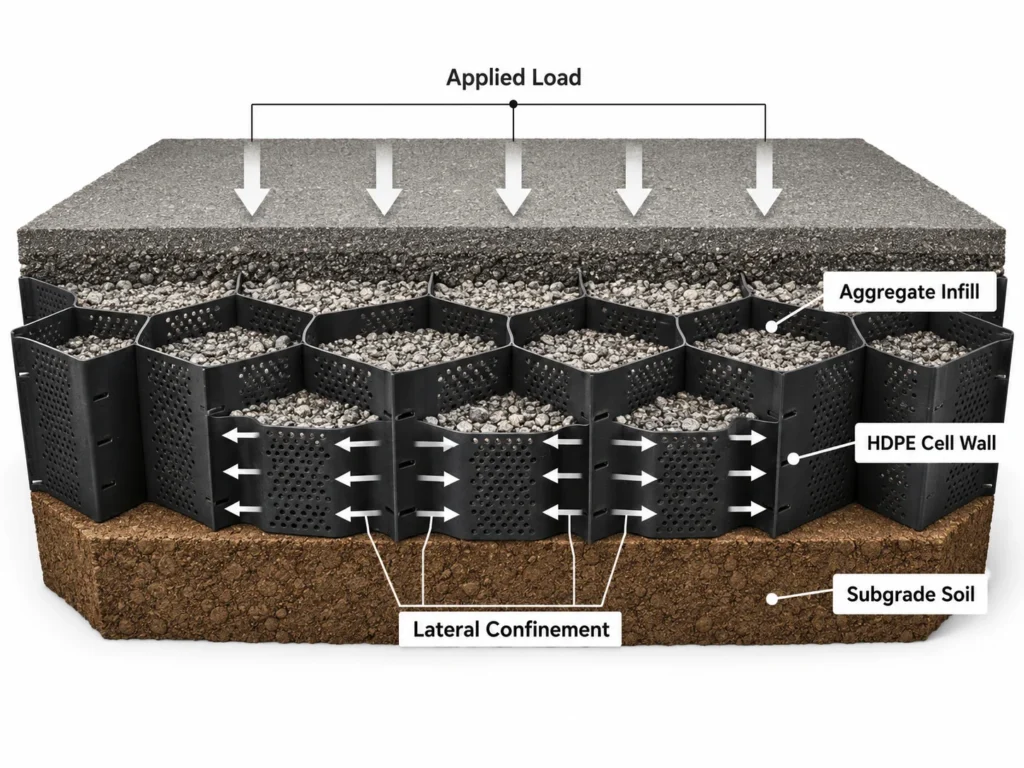
When the cells are filled, the cell walls help restrict lateral displacement of the infill material.
This confinement can contribute to improved stability of the filled layer.
Under suitable road or load-support conditions, the confined infill can distribute applied loads through the geocell–infill system.
Performance still depends on:
On slopes and erosion-prone areas, the cellular structure can help retain soil or granular materials and reduce uncontrolled surface movement.
However, geocell should not be presented as a substitute for:
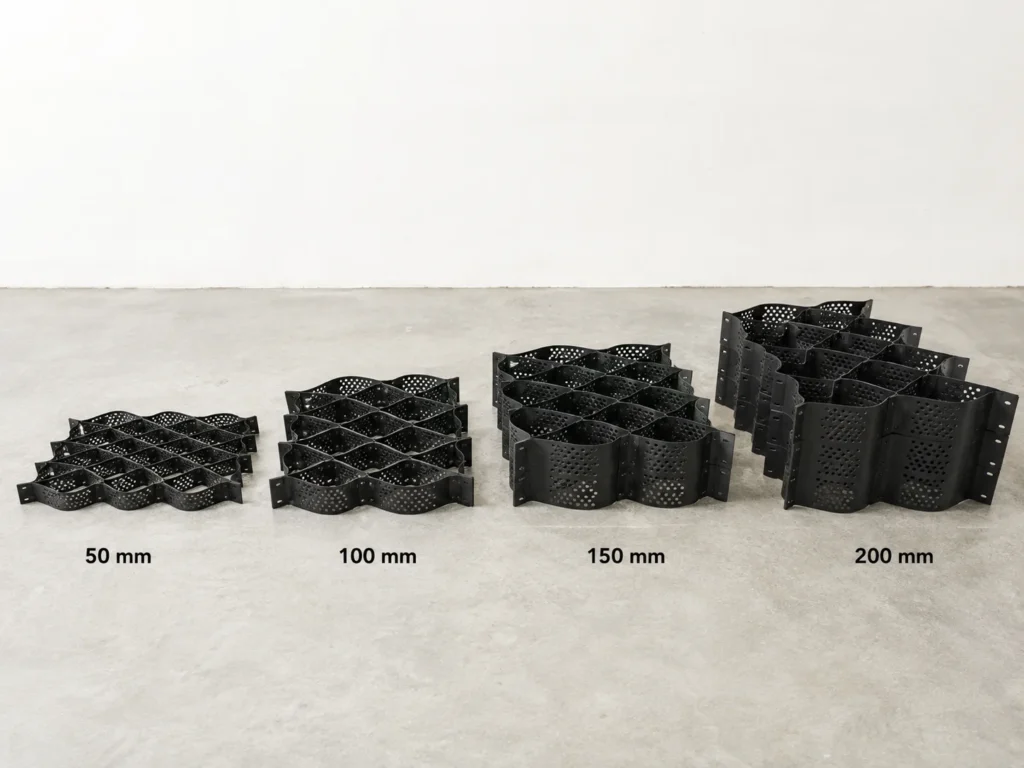
Available catalog range:
50–250 mm
Different cell depths may be selected according to the required confinement depth and project specification.
Available:
330–1000 mm
Welding distance affects the expanded cell geometry and should be selected together with cell depth, infill and project requirements.
Available options:
Smooth
and
Textured
Your catalog identifies:
| Item | Test Method | Catalog Index |
|---|---|---|
| Polymer Density | ASTM D1505 | HDPE, 0.935–0.965 g/cm³ |
| Environmental Stress Crack Resistance | ASTM D1693 | >4,000 hours |
| Carbon Black Content | ASTM D1603 | 1.5%–2.0% |
| Sheet Thickness | ASTM D5199 | Smooth: 1.0–2.0 mm; Textured: 1.5–2.5 mm |
| Welding Distance | — | 330–1000 mm |
| Cell Depth | — | 50–250 mm |
The supplied catalog also references a long-duration seam load check using a 100 mm wide seam specimen. For engineering procurement, the exact test procedure and acceptance criterion should be confirmed in the current TDS or quality documentation.
Collapsed panels are compact for transport and expand into a three-dimensional cellular network on site.
Multiple cell depths and welding distances allow the product configuration to be matched to different project requirements.
Surface configuration can be selected according to the specified product and application requirements.
The supplied technical data identifies high-density polyethylene with carbon black content and environmental stress crack resistance data.
Geocell can be filled with compatible soil, sand or gravel depending on the complete project design.
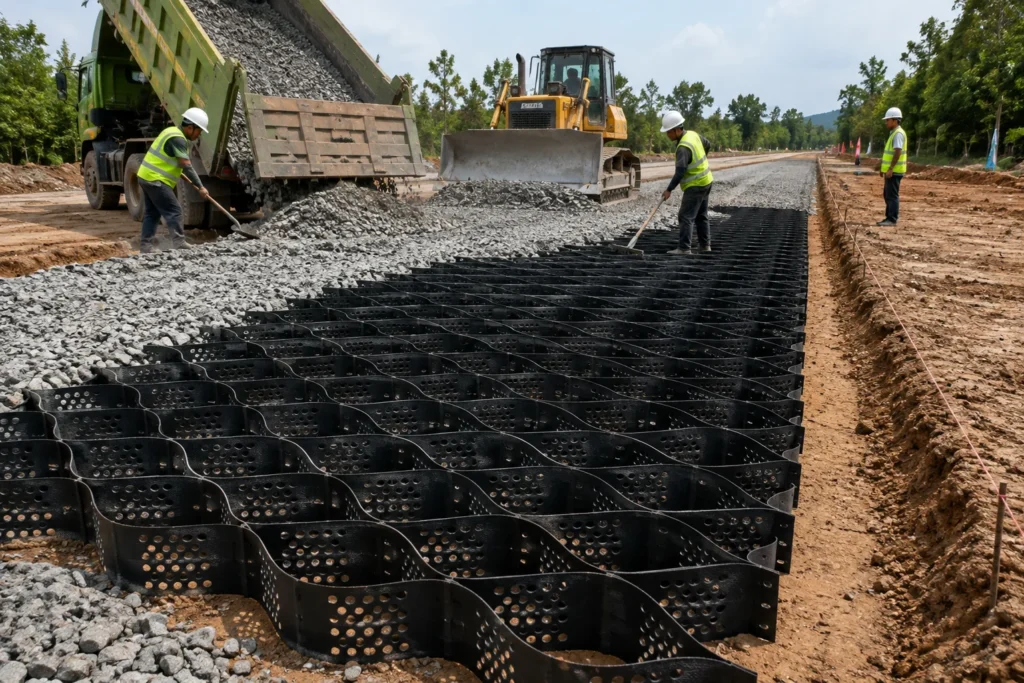
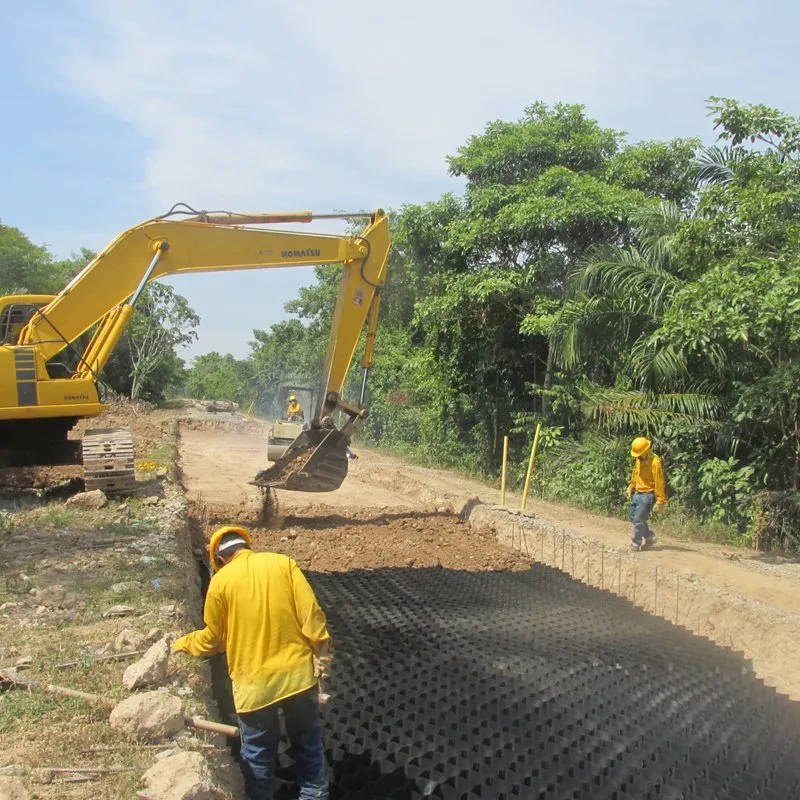
The supplied product catalog identifies geocell for the stabilization of road and railway foundation systems.
Once filled with suitable granular material, the geocell can form a confined layer that helps limit lateral movement of the fill.
Typical considerations include:
Your catalog also identifies desert highway stabilization as an application.
In loose or sandy ground conditions, cellular confinement can help retain fill and improve the integrity of the constructed layer.
Final performance depends on the subgrade, selected infill and complete section design.
HDPE geocell can be expanded over a prepared slope and filled with soil, gravel or another suitable material.
The cellular structure helps retain the surface fill and can form part of a slope-protection or erosion-control system.
HDPE geocell can be used in selected channel and hydraulic surface-protection systems where cellular confinement of soil, aggregate or another specified infill is required.
The supplied catalog also identifies foundation reinforcement or stabilization for:
| Factor | Geocell | Geogrid |
|---|---|---|
| Structure | 3D cellular system | Planar grid |
| Main Mechanism | Confinement of infill | Reinforcement or stabilization through interaction with soil/aggregate |
| Common Focus | Lateral confinement, load support, surface stabilization | Reinforced soil or granular-layer stabilization |
| Typical Applications | Roads, slopes, channels, erosion control | Roads, retaining walls, slopes, reinforced soil |
| Selection Basis | Cell geometry + infill + system | Grid structure + soil/aggregate interaction + system |
Geocell and geogrid should not be treated as interchangeable products. The appropriate geosynthetic depends on the required engineering function and complete system conditions.
First determine whether the primary requirement is:
Your available product range is:
50–250 mm
The appropriate depth depends on the project specification and complete system requirements.
Welding distance:
330–1000 mm
should be evaluated together with panel expansion geometry and infill requirements.
Choose between:
smooth
or
textured
sheet according to the selected product specification.
The geocell is only one part of the system.
Infill properties influence the behavior of the completed structure.
Water, subgrade condition, anchorage, compaction and installation sequence can materially affect performance.
Grade and prepare the foundation or slope according to project requirements.
Expand the collapsed panel to the required geometry.
Use the project-specified anchoring or connection method.
Fill the cells progressively with the selected soil, sand or aggregate.
Compact or finish the infill according to the selected material and engineering requirements.
Check anchorage, edge confinement, drainage and transitions before final acceptance.
A deeper cell is not automatically better for every project.
The geocell and infill work as a system.
They use different geometries and mechanisms.
Geocell confinement does not eliminate the need for drainage.
Cell geometry and system requirements vary by project.
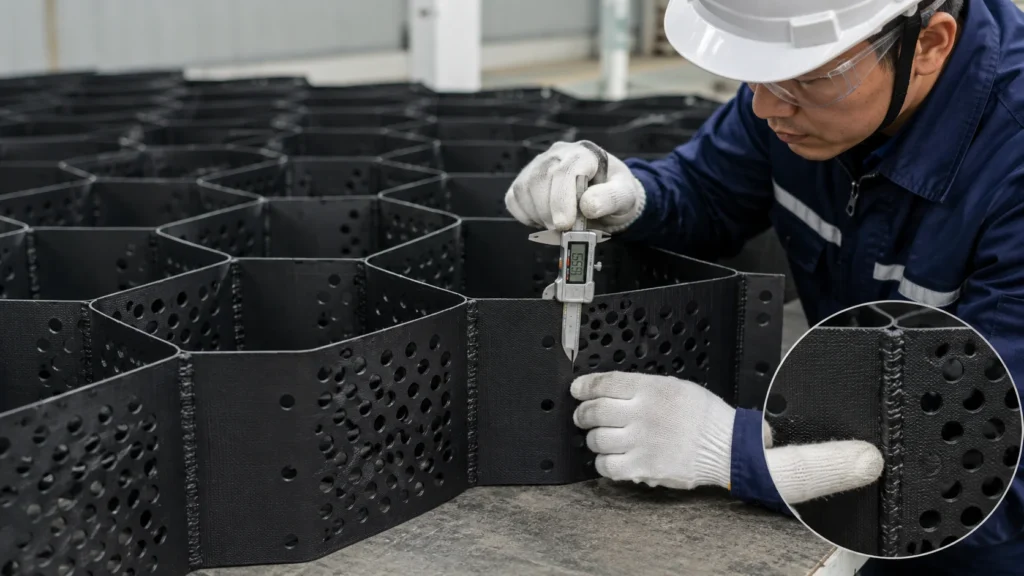
Based on your catalog, product-level quality information can include:
CTA:
Request Geocell TDS & Test Data
GeoSynSource supplies HDPE geocell for contractors, distributors and infrastructure projects.
Available supply options include:
For a useful quotation, provide:
CTA:
HDPE geocell is a three-dimensional cellular confinement system manufactured from high-density polyethylene strips. The panels are expanded on site and filled with soil, sand, aggregate or another suitable material to form a confined layer.
Geocell is commonly used in selected road and railway stabilization, slope protection, erosion-control, channel, embankment and other soil or aggregate confinement applications.
According to the current GeoSynSource catalog, available cell depths range from 50 to 250 mm, while welding distances range from 330 to 1000 mm.
The main difference is the sheet surface configuration. Your current catalog lists smooth sheet thicknesses of 1.0–2.0 mm and textured sheet thicknesses of 1.5–2.5 mm. The appropriate option should be selected according to product and project requirements.
The technical data supplied in your catalog identifies the product material as high-density polyethylene (HDPE) with a density of 0.935–0.965 g/cm³.
Geocell forms a three-dimensional cellular confinement structure around infill material. Geogrid is a planar geosynthetic used for reinforcement or stabilization through interaction with soil or aggregate. Selection depends on the required engineering function.
Yes, geocell is used in selected slope-protection and erosion-control systems. The required configuration depends on slope geometry, soil conditions, drainage, anchorage, infill and project design.
Provide the required cell depth, welding distance, surface type, project quantity, application and delivery destination. If a specification or BOQ is available, send it with the inquiry.