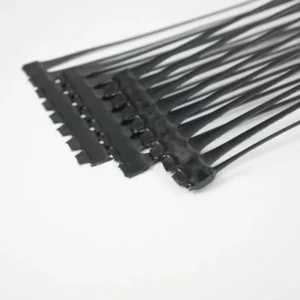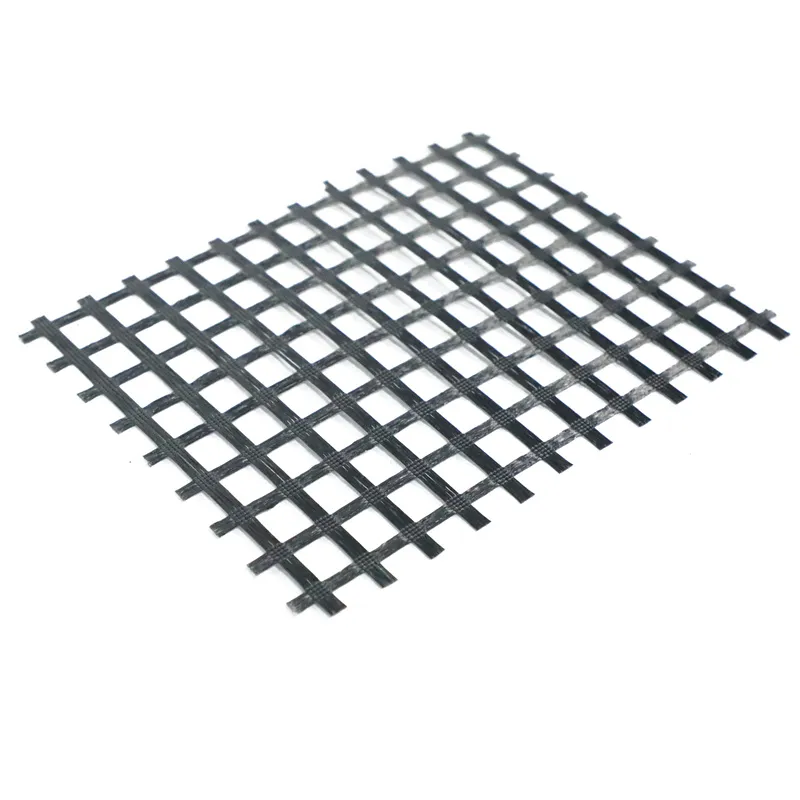
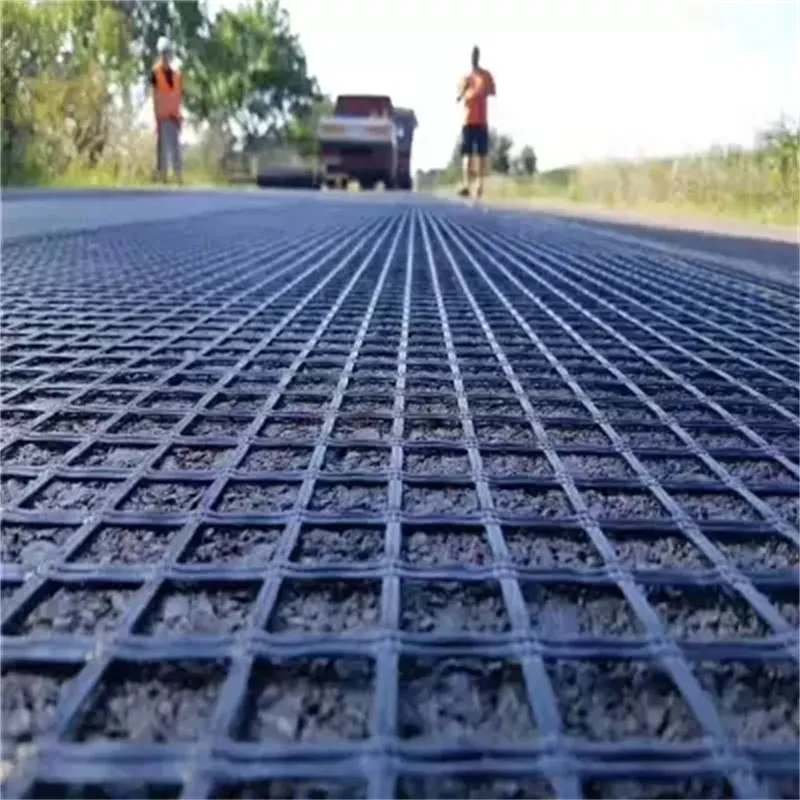
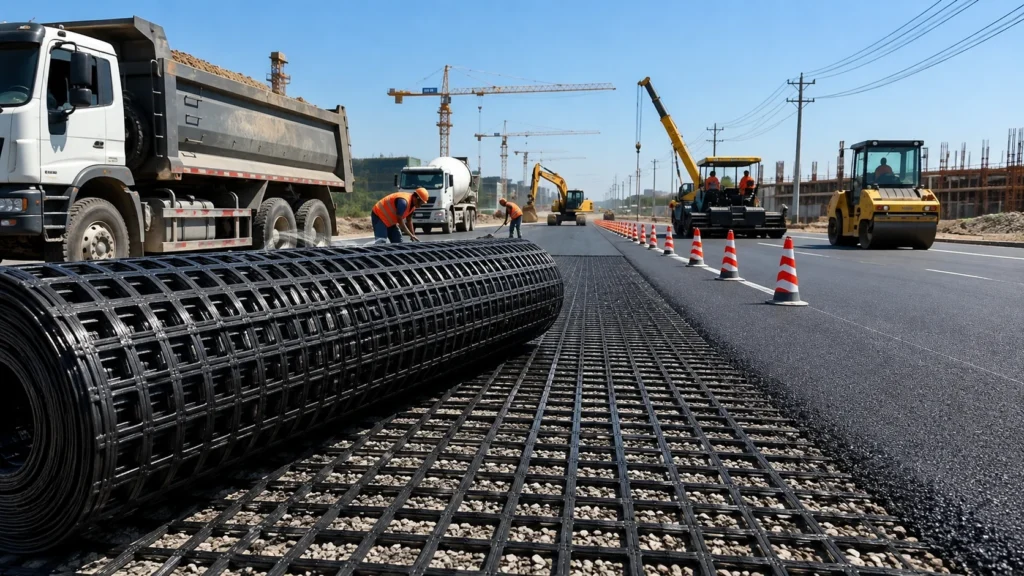
Coated fiberglass geogrid designed for asphalt overlays, pavement rehabilitation and reflective crack control.
Geosynsource supplies fiberglass geogrid in multiple MD/CD tensile-strength grades for highway, municipal road, airport pavement and heavy-duty asphalt rehabilitation projects. Technical data, roll specifications and supporting documents are available for project and procurement review.
30–150 kN/m Grades · Low Elongation · Asphalt-Compatible Coating · Technical Data Available
[Request Technical Data & Quote]
Fiberglass geogrid is a coated grid reinforcement manufactured from high-strength glass-fiber yarns. It is primarily used as an interlayer reinforcement in asphalt pavement systems where tensile reinforcement and reflective crack control are required.
Unlike geogrids commonly selected for aggregate-base stabilization or reinforced-soil structures, fiberglass geogrid is mainly intended for asphalt overlays and pavement rehabilitation applications.
| Property | Available Product Data |
|---|---|
| Product Type | Coated Fiberglass Geogrid |
| Tensile Strength | 30–150 kN/m |
| Strength Direction | MD / CD |
| Elongation at Break | 4%* |
| Mesh Size | 12.5 × 12.5 mm / 25.4 × 25.4 mm / 50.8 × 50.8 mm* |
| Maximum Roll Width | Up to 6 m* |
| Color | Black |
| Primary Function | Asphalt pavement reinforcement |
| Common Applications | Asphalt overlay, rehabilitation, reflective crack control |
| Documentation | TDS / COA / Relevant Test Reports upon request |
*Available dimensions and reported values should be confirmed against the current product data sheet for the selected grade.
Different pavement projects may specify different tensile-strength requirements. Geosynsource supplies multiple MD/CD strength grades so procurement can be matched to the project specification rather than selected only by a general product name.
| Grade | MD Tensile Strength | CD Tensile Strength | Elongation at Break |
| FG 30-30 | 30 kN/m | 30 kN/m | 4%* |
| FG 50-50 | 50 kN/m | 50 kN/m | 4%* |
| FG 80-80 | 80 kN/m | 80 kN/m | 4%* |
| FG 100-100 | 100 kN/m | 100 kN/m | 4%* |
| FG 120-120 | 120 kN/m | 120 kN/m | 4%* |
| FG 150-150 | 150 kN/m | 150 kN/m | 4%* |
Engineering Note: Reported tensile strength and elongation are product test properties. They should not automatically be interpreted as project design values. Final grade selection should follow the applicable pavement design, project specification and verified product test data.
Need a specific strength or roll configuration?
Fiberglass geogrid provides tensile reinforcement in both machine and cross-machine directions. Multiple strength grades allow the supplied product to be matched to different pavement specifications and procurement requirements.
Fiberglass has relatively low elongation compared with many polymer reinforcement materials. This allows tensile resistance to develop at relatively small deformation levels, which can be useful where movement around existing pavement cracks or joints needs to be controlled.
The grid is supplied with a coating intended to protect the fiberglass yarn structure and support its use within asphalt pavement systems.
Coating type, bonding requirements and installation procedures should always be checked against the selected product grade and pavement specification.
When properly selected and installed within an appropriate asphalt overlay system, fiberglass geogrid can help delay the propagation of existing cracks or joints into the new pavement layer.
It should be treated as one component of the pavement rehabilitation system rather than as a stand-alone guarantee against future cracking.
Fiberglass geogrid can be installed between pavement layers as a tensile reinforcement interlayer in asphalt overlay and rehabilitation systems.
It is commonly considered where cracks or joints in an existing pavement may propagate upward into a new asphalt overlay.
Fiberglass geogrid can be used in selected highway, municipal road and industrial pavement rehabilitation projects where an engineered asphalt reinforcement interlayer is specified.
It may also be considered for airport pavements, logistics areas and other heavy-duty asphalt rehabilitation projects where the product and installation system meet the applicable project requirements.
Fiberglass geogrid is not a universal replacement for every type of geogrid. The appropriate product should be selected according to the function required in the pavement or reinforced-soil system.
| Project Condition | Typical Fit |
| Asphalt overlay over existing cracked pavement | Common application |
| Reflective crack control | Common application |
| Asphalt pavement rehabilitation | Common application |
| Existing pavement joints beneath an overlay | May be suitable |
| Heavy-duty asphalt rehabilitation | Project-specific |
| Aggregate-base stabilization | Consider a base-stabilization geogrid |
| Weak subgrade stabilization | Usually another geogrid system is more appropriate |
| Retaining-wall reinforcement | Use a soil-reinforcement geogrid designed for the wall system |
| Reinforced soil slopes | Normally another geogrid type is required |
Key Point:
Fiberglass geogrid is primarily an asphalt pavement reinforcement product. Biaxial, multiaxial, PET, HDPE and other geogrids perform different functions and should not be treated as interchangeable based only on tensile strength.
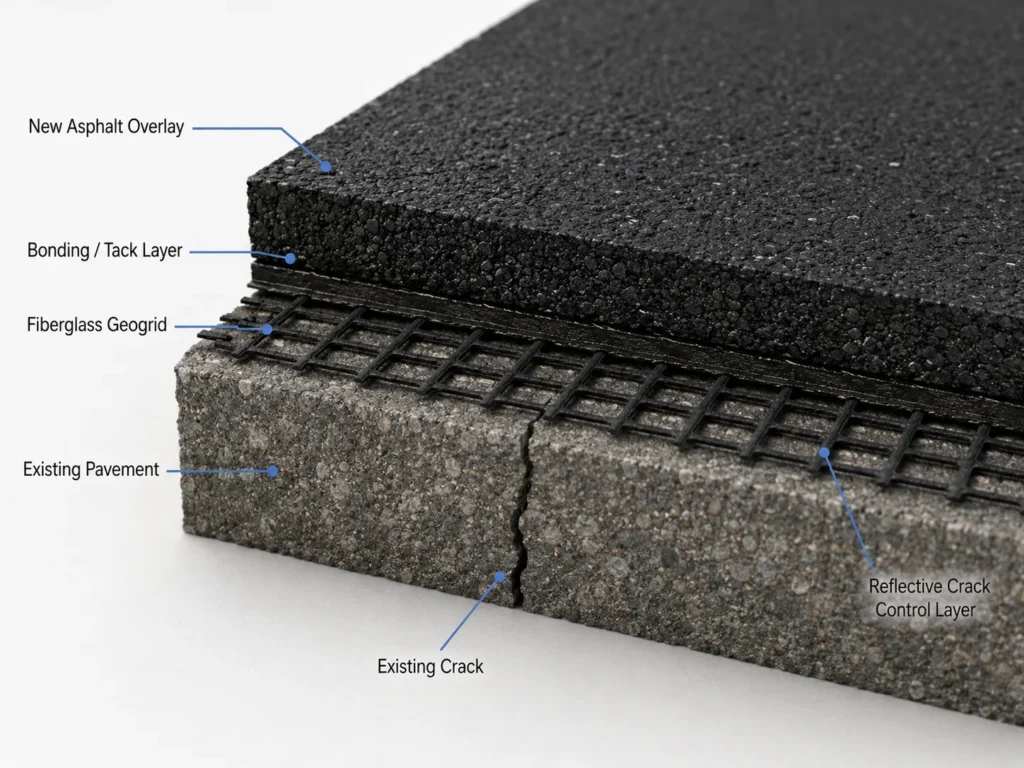
Fiberglass geogrid works as part of the complete pavement system.
When installed at the specified position within an asphalt overlay, the grid can develop tensile resistance as movement occurs around existing pavement cracks, joints or localized stress concentrations.
This reinforcement may help redistribute tensile stresses and delay crack propagation into the new overlay.
Performance depends on the complete system, including:
Engineering Note: A higher nominal tensile strength does not automatically mean better pavement performance in every project. The selected grade should be evaluated together with pavement condition, required function, product data and the applicable project specification.
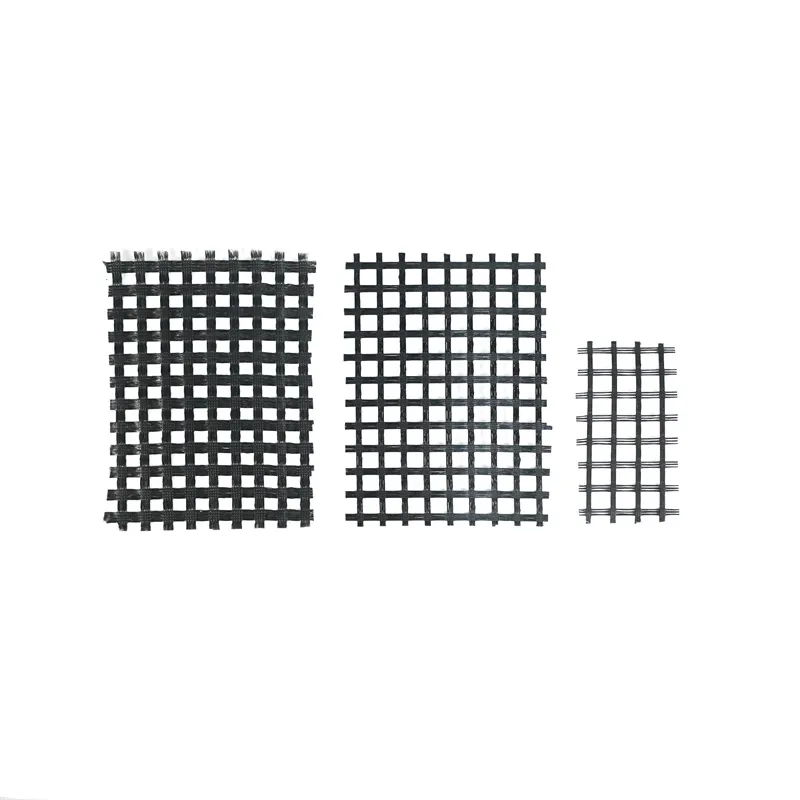
Fiberglass geogrid may be supplied with different mesh configurations according to product grade and project requirements.
| Mesh Size | Selection Consideration |
| 12.5 × 12.5 mm | Available for selected product specifications |
| 25.4 × 25.4 mm | Common product configuration |
| 50.8 × 50.8 mm | Available for selected applications |
Mesh size should not be evaluated as an isolated indicator of pavement performance. Selection should also consider product grade, coating, pavement structure and installation requirements.
Standard fiberglass geogrid and fiberglass geogrid composite products are related, but they are not the same product.
| Factor | Fiberglass Geogrid | Fiberglass Geogrid Composite |
| Structure | Open fiberglass grid | Fiberglass grid combined with a geotextile layer |
| Main Function | Asphalt reinforcement and crack control | Reinforcement plus functions provided by the composite layer |
| Product Form | Open-grid structure | Composite interlayer |
| Selection Basis | Pavement reinforcement requirement | Complete interlayer function required |
| Best Approach | Follow pavement specification | Follow pavement specification |
A composite structure should not automatically be considered an upgrade from standard fiberglass geogrid. The appropriate choice depends on the required function and pavement design.
[View Fiberglass Geogrid Composite]
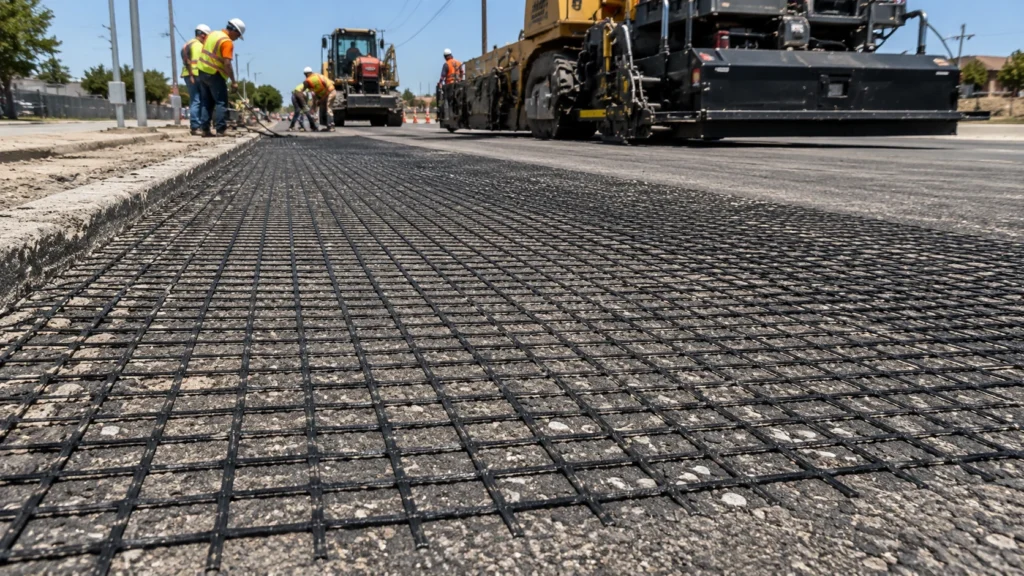
Proper installation is important to achieving the intended pavement reinforcement function.
The surface should be reasonably clean, dry and free from loose material that could interfere with grid placement or interlayer bonding.
Fiberglass geogrid should not be expected to compensate for structural pavement failures that require separate repair.
Use the tack coat, adhesive or bonding procedure specified for the selected product and pavement system.
The grid should be installed without excessive wrinkles, folds or distortion.
Avoid unnecessary turning, braking or other vehicle movements that may displace or damage the exposed grid before covering.
Cover the installed geogrid according to the approved paving procedure and project specification.
Installation Note: Exact tack-coat type, application rate, overlap, paving temperature and installation sequence should follow the current product installation guidance and project requirements.
Loose debris, excessive moisture or severe pavement defects can affect placement and bonding.
The grid should remain reasonably flat and stable before the asphalt overlay is placed.
Coating and bonding requirements can differ between fiberglass geogrid products and paving systems.
Construction vehicles may displace or physically damage the grid before it is covered.
Nominal tensile strength is an important product property, but it is not the only consideration in pavement reinforcement selection.
Technical documentation can be provided to support product evaluation, supplier comparison and project procurement.
Depending on the selected grade and order requirements, available documentation may include:
When comparing fiberglass geogrid suppliers, test results should be compared using a consistent test method, direction and reporting basis.
| Procurement Item | Supply Information |
| Tensile-Strength Grades | 30–150 kN/m* |
| Direction | MD / CD |
| Mesh Size | Multiple options available |
| Roll Width | Up to 6 m* |
| Roll Length | According to selected product specification |
| Color | Black |
| Packaging | Roll packaging for export |
| Project / Bulk Supply | Available |
| Technical Documents | TDS / COA / Relevant Test Reports |
| Custom Requirements | Subject to technical confirmation |
| International Shipping | Export supply support |
*Confirm current availability against the selected grade and quotation.
A meaningful fiberglass geogrid quotation requires more than the product name or tensile strength.
For a faster and more useful quotation, please provide:
Send it to our team so we can match the quotation to the required product grade and supply conditions.
[Send BOQ / Specification]
Product options are available for different tensile-strength and pavement specification requirements.
Product data and relevant quality documentation can be provided for engineering, supplier and procurement review.
Production, batch inspection, product identification and export preparation can be supported with relevant factory and QC documentation.
Quotations can be prepared according to grade, roll dimensions, quantity, destination and specification rather than only a generic unit price.
Support is available for project quantities, export packaging and international shipment requirements.
Fiberglass geogrid is primarily used for asphalt pavement reinforcement, pavement rehabilitation and reflective crack control. It is normally installed within an asphalt overlay system rather than used as a substitute for all other geogrid types.
Based on the currently provided product data, fiberglass geogrid is available in MD/CD strength grades from 30 kN/m to 150 kN/m. Current grade availability should be confirmed before specification or ordering.
The provided product data lists approximately 4% elongation at break for the referenced grades. The applicable value and test method should be confirmed using the current product data sheet or test report.
Fiberglass geogrid can help delay or control reflective crack propagation when it is properly selected and installed within a suitable asphalt pavement system. It does not guarantee that all future pavement cracking will be eliminated.
Fiberglass geogrid is mainly intended for asphalt-layer reinforcement. Weak subgrade or aggregate-base stabilization normally requires a geogrid selected specifically for granular-layer interaction and the relevant pavement design.
Start with the project specification, existing pavement condition and required reinforcement function. Tensile strength is important, but coating, mesh configuration, installation system and verified product data should also be considered.