
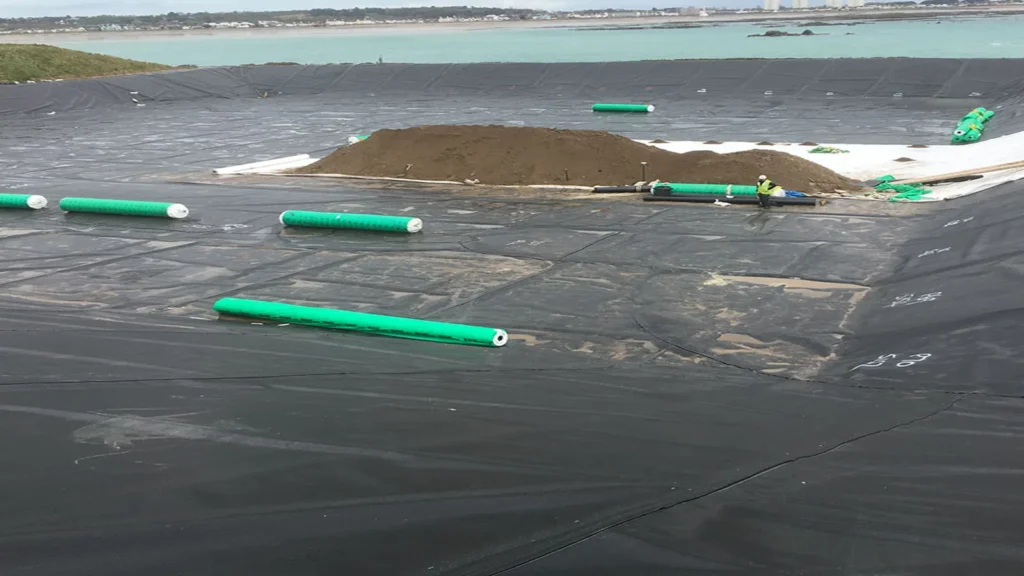
When looking for geomembrane liners, many customers come across the term HDPE. While related, they are not the same. Understanding the difference helps you choose the right solution for your project.
HDPE vs. Geomembrane
| Item | HDPE | Geomembrane |
|---|---|---|
| Definition | High-Density Polyethylene – a thermoplastic resin material | A geosynthetic product used for impermeability and containment |
| Nature | Raw material (polymer pellets) | Finished product (manufactured sheets/rolls) |
| Relationship | Can be used to produce geomembranes | Can be made from HDPE, LLDPE, PVC, EVA, etc. |
| Form / Thickness | Supplied as resin pellets | Rolls of liner, typically 0.5mm–3.0mm thick |
| Applications | Requires further processing | Landfills, reservoirs, canals, heap leach pads, wastewater ponds, tunnels |
| Summary | HDPE = Material | Geomembrane = Product; HDPE Geomembrane = the most widely used geomembrane type |
Why Choose HDPE Geomembrane?
Among all geomembrane types, HDPE Geomembrane is the most popular choice because it combines:
✅ Excellent impermeability
✅ High chemical resistance
✅ Outstanding UV and aging resistance
✅ Long service life and cost-effectiveness
This makes it the preferred liner for environmental protection projects, mining, water conservancy, and civil engineering applications.
👉 In summary:
HDPE is the material.
Geomembrane is the product.
HDPE Geomembrane is the solution — reliable, durable, and trusted worldwide.
👉 From landfill leakage risks to mining heap leach containment, HDPE Geomembrane solves the toughest impermeability challenges—Contact Us today to get the right solution for your project.


