Short Answer
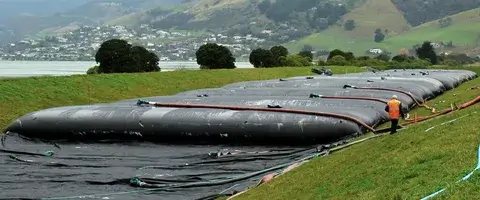
A geotube is a large geosynthetic tube made from high-strength permeable geotextile fabric. It is primarily used for dewatering, sediment containment, sludge treatment, and dredging operations. Water drains through the fabric while solids are retained inside the tube.
Introduction
Geotubes, also known as geotextile tubes or dewatering tubes, are widely used in environmental and civil engineering projects.
They provide a passive filtration solution for separating solids from liquids in large-volume slurry applications.
Unlike mechanical dewatering systems such as centrifuges or filter presses, geotubes rely on fabric permeability and gravity-driven drainage, making them cost-effective and scalable for industrial and municipal projects.
What Is a Geotube Made Of?

A geotube is constructed from:
-
Woven or nonwoven geotextile fabric
-
UV-stabilized synthetic fibers
-
High-strength stitched seams
-
Engineered inlet ports for slurry pumping
The fabric is designed to allow water to pass through while retaining suspended solids inside the tube.
The strength and permeability of the fabric are selected based on:
-
Slurry particle size
-
Solids concentration
-
Project duration
-
Environmental exposure conditions
How Does a Geotube Work?
Geotubes operate through controlled filtration and consolidation.
Step 1: Slurry Filling
Slurry or dredged material is pumped into the geotube through inlet ports.
Step 2: Water Drainage
Water permeates through the geotextile fabric due to hydraulic pressure.
Step 3: Solids Retention
Solid particles are trapped inside the tube, forming a consolidated mass.
Step 4: Volume Reduction
As drainage continues, the retained material becomes denser and more manageable.
This process significantly reduces the volume of material requiring disposal or further treatment.
What Is a Geotube Used For?
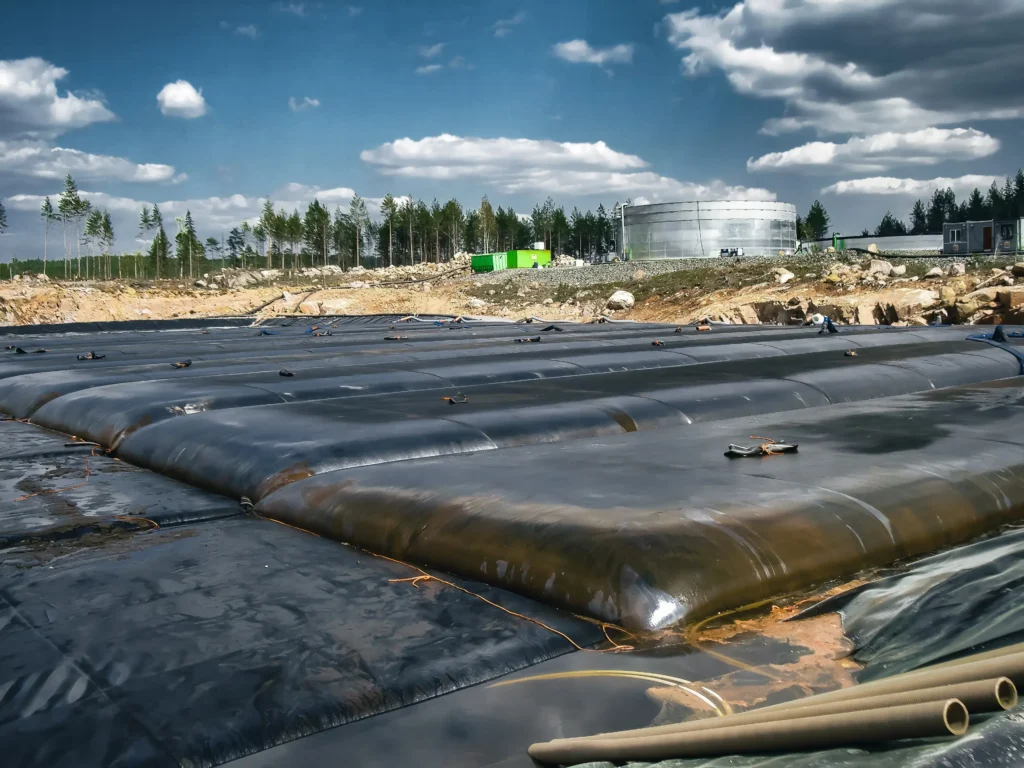
Geotubes are primarily used in:
1. Dewatering
Separating water from sludge, slurry, or sediment in wastewater and industrial processes.
2. Dredging Projects
Managing dredged sediments from ports, rivers, and lagoons.
3. Sludge Treatment
Reducing water content in municipal and industrial sludge.
4. Mining Tailings Management
Dewatering tailings to improve storage stability and reduce environmental impact.
5. Construction Site Water Control
Managing groundwater or stormwater containing suspended solids.
What Is the Difference Between a Geotube and a Geobag?
Although both are geosynthetic containers:
-
Geotubes are designed for large-volume dewatering and containment.
-
Geobags are typically used for coastal protection and erosion control.
Geotubes are longer and larger in diameter, making them suitable for continuous slurry pumping and industrial-scale operations.
Advantages of Geotubes
-
Efficient solid-liquid separation
-
Lower energy requirements compared to mechanical systems
-
Scalable for large projects
-
Flexible installation on temporary or remote sites
-
Reduced sludge disposal costs
Because geotubes operate passively, they are often selected for projects where operational simplicity and cost control are priorities.
Are Geotubes Reusable?
Reusability depends on:
-
Fabric condition after use
-
Type of slurry processed
-
Structural integrity of seams
-
Environmental exposure
In many cases, geotubes are considered project-specific solutions, though reuse may be possible under certain conditions.
Conclusion
A geotube is a geosynthetic containment system used primarily for dewatering and sediment management. By combining permeable geotextile fabric with engineered containment design, geotubes offer a practical solution for large-scale slurry and sludge applications.
For detailed technical specifications, project-based supply, and customized engineering solutions, visit our Geotube Manufacturer Page: