Quick Answer
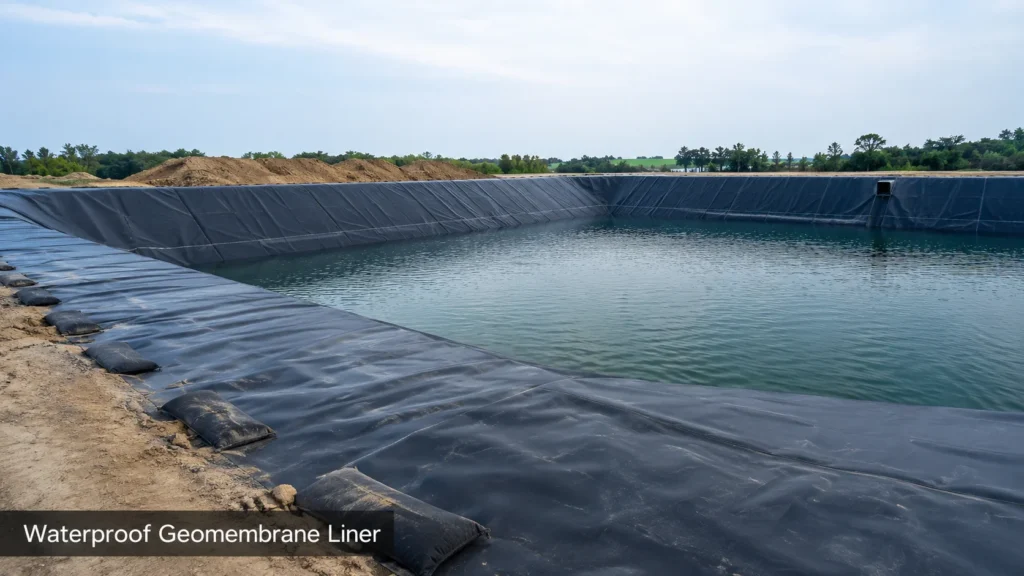
Yes. Geomembrane is waterproof in practical engineering use, but more accurately it is a very low-permeability barrier liner. Reliable waterproofing depends on the complete liner system, including material type, liner thickness, seam welding, subgrade preparation, geotextile protection, anchoring, and inspection.
In simple terms:
Geomembrane blocks leakage. Geotextile protects the liner. A reliable waterproof liner system depends on correct material selection and proper installation.
Key Takeaways
- Geomembrane is designed as a waterproof or very low-permeability barrier.
- It is commonly used for ponds, landfills, wastewater lagoons, mining ponds, canals, reservoirs, and secondary containment.
- HDPE, LLDPE, PVC, EPDM, and PP geomembranes can all provide waterproofing, but they perform differently.
- The liner sheet itself may be waterproof, but leaks can still happen at seams, punctures, wrinkles, penetrations, anchor trenches, or damaged areas.
- Geotextile is not waterproof, but it is often used under or above geomembrane to protect the liner from puncture.
- Long-term waterproof performance depends on the full liner system, not only the geomembrane sheet.
What Does “Waterproof Geomembrane” Mean?
A waterproof geomembrane is a synthetic liner used to stop or greatly reduce liquid movement. In engineering terms, geomembranes are usually described as low-permeability barriers rather than ordinary waterproof sheets.
This means the liner is designed to control the movement of:
- Water
- Wastewater
- Landfill leachate
- Mining process solutions
- Industrial liquids
- Agricultural pond water
- Contaminated runoff
- Biogas or vapor in some cover systems
Geomembrane is different from geotextile. A geotextile is permeable and allows water to pass through for filtration, drainage, separation, or protection. A geomembrane is used when the project needs a barrier.
For example:
- A pond needs a geomembrane to stop water loss.
- A landfill needs a geomembrane to contain leachate.
- A drainage trench needs geotextile to filter soil and allow water flow.
- A complete liner system may use both geomembrane and geotextile.
Internal link suggestion:
If users may confuse these two materials, link to your geomembrane vs geotextile guide:
Anchor text: geomembrane vs geotextile
Is Geomembrane 100% Waterproof?
A geomembrane is designed to provide a waterproof or very low-permeability barrier, but no installed liner system should be treated as automatically 100% leak-proof without proper design, installation, and quality control.
The geomembrane sheet itself is usually the main waterproof layer. However, leakage may still occur at:
- Field seams
- Pipe penetrations
- Anchor trenches
- Puncture points
- Wrinkled areas
- Damaged sections
- Poorly prepared subgrade
- Incorrectly repaired patches
This is why geomembrane waterproofing should be evaluated as a complete system, not only as a single sheet of material.
A reliable waterproof geomembrane system requires:
- Suitable liner material
- Correct liner thickness
- Smooth and compacted subgrade
- Proper seam welding
- Geotextile protection when needed
- Secure anchoring
- Careful inspection before filling or covering
How Does a Geomembrane Stop Water Leakage?
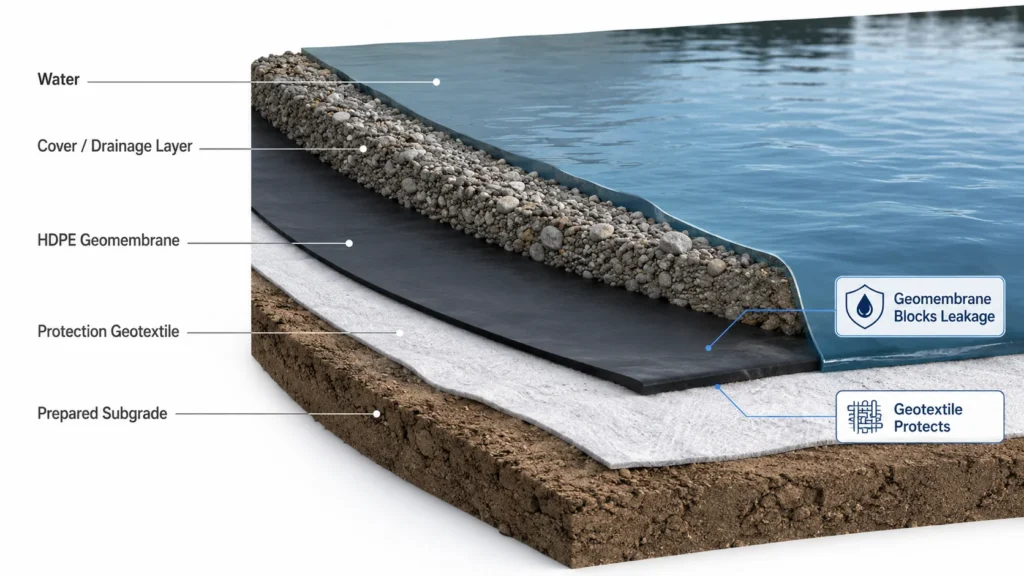
A geomembrane stops water leakage by forming a continuous barrier between the liquid and the soil or structure below it.
A typical waterproof liner system may include:
Prepared subgrade
↓
Protection geotextile
↓
Geomembrane liner
↓
Cover geotextile or drainage layer
↓
Water, waste, soil cover, or process liquid
In this system:
- The geomembrane blocks water or contaminant migration.
- The geotextile protects the geomembrane from puncture.
- The subgrade supports the liner.
- The seams connect liner panels into one continuous barrier.
- The cover layer protects the liner from UV exposure, mechanical damage, or traffic when required.
The most important point is simple:
A geomembrane works best when it is installed as part of a designed liner system.
Is HDPE Geomembrane Waterproof?
Yes. HDPE geomembrane is one of the most widely used waterproof geomembrane materials.
It is commonly used in:
- Landfill liners
- Mining ponds
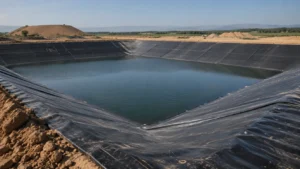
- Wastewater lagoons
- Farm ponds
- Reservoirs
- Canal lining
- Secondary containment
- Industrial wastewater containment
HDPE geomembrane is valued because it offers:
- Very low permeability
- Strong chemical resistance
- Good UV resistance
- Long-term containment performance
- Strong field-welded seams when installed correctly
However, HDPE is relatively stiff compared with some other geomembrane materials. This means proper subgrade preparation, wrinkle control, and seam welding are very important.
HDPE geomembrane is waterproof in function, but the installed system can still leak if it is punctured, poorly welded, installed over sharp stones, or damaged during construction.
Internal link suggestion:
Anchor text: HDPE geomembrane properties and tensile strength
Are All Geomembranes Waterproof?
Most geomembranes are designed to provide waterproof or very low-permeability performance, but not all geomembranes perform the same way.
Different materials have different strengths.
| Geomembrane Type | Waterproof Function | Main Strength | Common Use |
|---|---|---|---|
| HDPE geomembrane | Very strong barrier | Chemical resistance and durability | Landfills, mining, wastewater, ponds |
| LLDPE geomembrane | Strong barrier | Better flexibility than HDPE | Irregular surfaces, ponds, covers |
| PVC geomembrane | Flexible barrier | Conformance and prefabrication | Canals, ponds, tanks, complex shapes |
| EPDM liner | Flexible waterproof liner | Elasticity and flexibility | Decorative ponds, water features |
| PP geomembrane | Barrier liner | Depends on formulation | Industrial and containment projects |
The right waterproof geomembrane depends on the project environment.
For demanding chemical containment or large-scale outdoor projects, HDPE is often the first material to evaluate. For irregular surfaces or projects requiring more flexibility, LLDPE, PVC, or EPDM may be considered.
Internal link suggestion:
Anchor text: HDPE vs LLDPE geomembrane
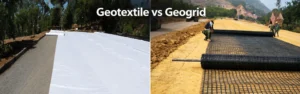
Geomembrane vs Geotextile: Which One Is Waterproof?
Geomembrane is waterproof or very low-permeability. Geotextile is not waterproof.
This is one of the most common misunderstandings in geosynthetic material selection.
| Material | Waterproof? | Main Function |
| Geomembrane | Yes, used as a barrier | Stops liquid or gas migration |
| Geotextile | No, permeable | Filtration, drainage, separation, protection |
| Geogrid | No | Soil reinforcement and stabilization |
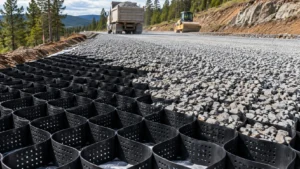
| Geocell | No | Confinement and load support |
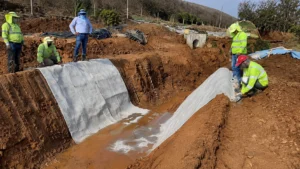
A thick geotextile fabric still allows water to pass through. It can protect a geomembrane, but it cannot replace the geomembrane as the waterproof layer.
Use geomembrane when you need to stop leakage.
Use geotextile when you need filtration, drainage, separation, cushioning, or protection.
Where Are Waterproof Geomembranes Used?
Waterproof geomembranes are used wherever water, liquid, gas, or contaminants must be contained or controlled.
Pond Liners
Geomembranes are used in farm ponds, fish ponds, irrigation ponds, aquaculture ponds, and decorative ponds to reduce water loss through soil seepage.
Internal link suggestion:
Anchor text: best pond liner guide
Landfill Liners
Landfills use geomembrane liners to help contain leachate and reduce the risk of groundwater contamination.
Wastewater Lagoons
Wastewater treatment ponds and lagoons use geomembranes to prevent wastewater from leaking into surrounding soil.
Mining Ponds
Mining projects use geomembranes for heap leach pads, tailings storage, process ponds, and chemical containment.
Canal and Reservoir Lining
Geomembranes can reduce seepage loss in canals, reservoirs, and water storage systems.
Secondary Containment
Industrial sites use geomembranes under tanks, chemical storage areas, and containment basins to control accidental leaks.
Biogas and Gas Barrier Systems
Some geomembranes are used as covers or barriers in biogas, methane, and vapor control systems.
Why Can a Waterproof Geomembrane Still Leak?
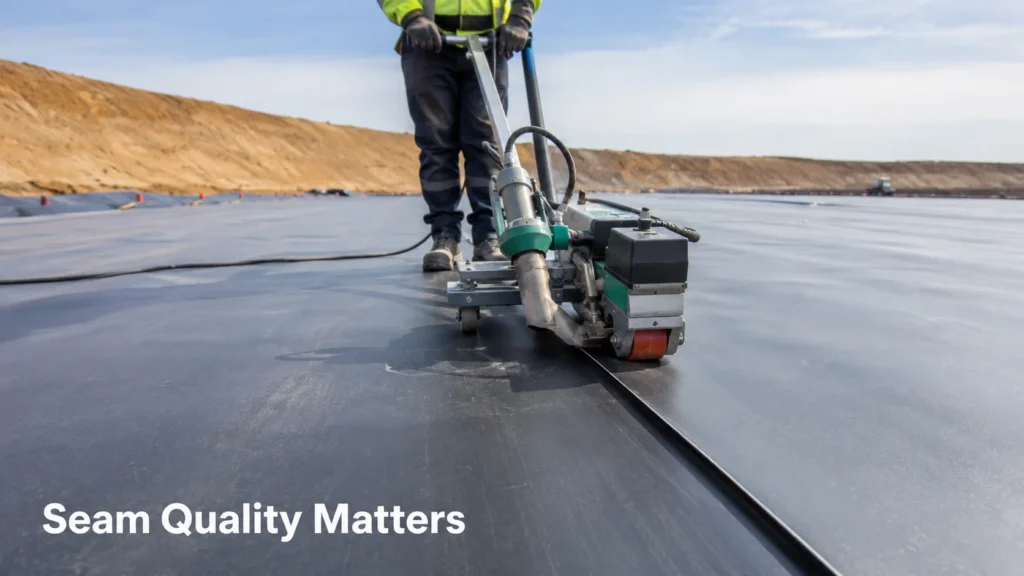
A geomembrane liner may be waterproof as a material, but the installed system can fail if design or installation quality is poor.
1. Poor Seam Welding
Most large geomembrane projects use multiple liner panels. These panels must be welded or joined correctly. A weak seam can become the main leakage path.
2. Puncture Damage
Sharp stones, roots, rough subgrade, construction tools, equipment traffic, or cover material can puncture the liner.
3. Poor Subgrade Preparation
If the ground surface contains sharp rocks, voids, uneven areas, roots, or debris, the liner may be damaged during or after installation.
4. Wrong Liner Thickness
A liner that is too thin may not provide enough puncture resistance or long-term durability for the site conditions.
5. No Geotextile Protection Layer
In rocky or rough subgrade conditions, a nonwoven geotextile protection layer is often needed under or above the geomembrane.
6. Wrinkles and Stress Concentration
Wrinkles can create stress points, trap air, affect cover placement, or increase the risk of damage. HDPE liners especially need good wrinkle control during installation.
7. Chemical Incompatibility
Some liquids may not be suitable for every geomembrane material. Chemical type, concentration, temperature, and exposure time must be considered.
8. UV or Mechanical Damage
Exposed liners may be affected by long-term sunlight, wind uplift, animals, maintenance tools, or equipment traffic if they are not properly designed and protected.
How to Improve Geomembrane Waterproof Performance
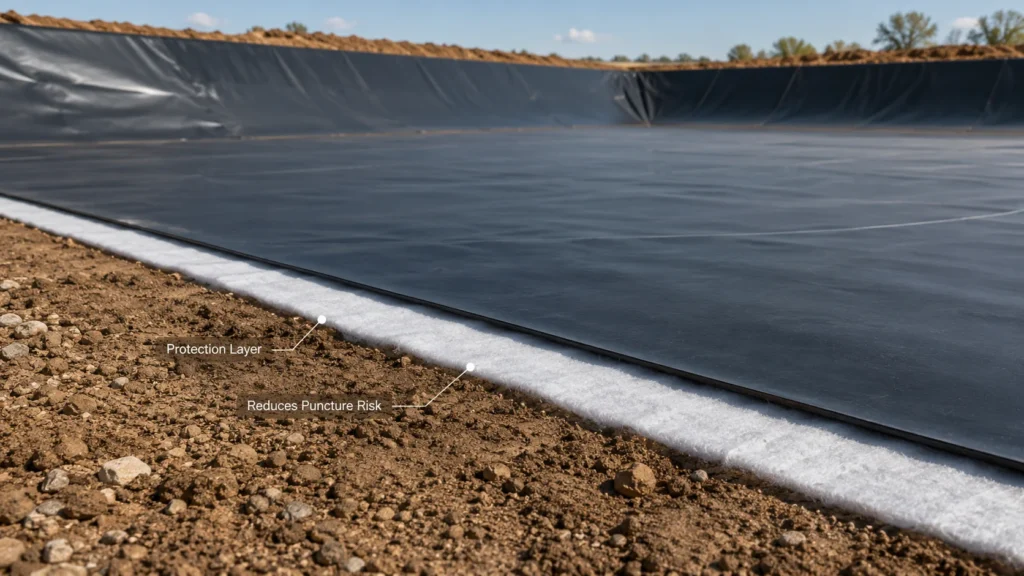
To make a geomembrane system perform as a reliable waterproof barrier, focus on the full liner system.
Choose the Right Material
Select HDPE, LLDPE, PVC, EPDM, PP, or another geomembrane material based on chemical exposure, flexibility needs, UV exposure, temperature, and project type.
Choose the Right Thickness
Thicker liners usually provide better puncture resistance and durability, but thickness alone is not enough. The liner must match the project conditions.
Prepare the Subgrade Properly
The subgrade should be smooth, compacted, and free from sharp rocks, roots, debris, and standing water before liner placement.
Use Geotextile Protection When Needed
Nonwoven geotextile can cushion the geomembrane and reduce puncture risk from rough soil, stones, or cover material.
Control Seam Quality
Seams should be welded or joined according to the material and project specification. Field seams should be tested when required.
Protect the Liner After Installation
Avoid dragging sharp tools, equipment, rocks, or debris across the liner. Use proper cover soil, ballast, or protection layers when needed.
Design Edge Anchoring Correctly
A geomembrane should be anchored properly at slopes, edges, trenches, and penetrations to prevent movement, pullout, or wind uplift.
Inspect and Repair Damage
Small punctures or seam defects can often be repaired, but they must be detected before the system is filled or covered.
Internal link suggestion:
Anchor text: key factors that influence geomembrane performance
Waterproof Geomembrane vs Clay, Concrete, and Geotextile
Geomembrane is often chosen because it provides a more controlled waterproof barrier than many traditional methods.
| Material | Waterproof Performance | Main Limitation |
| Geomembrane | Very low permeability when properly installed | Requires seam quality and puncture protection |
| Compacted clay | Reduces seepage | Can crack, dry out, or vary by soil quality |
| Concrete | Can hold water | May crack over time |
| Geotextile | Not waterproof | Permeable by design |
| Gravel layer | Not waterproof | Used for drainage only |
This is why many modern containment systems use geomembrane as the main barrier and geotextile as a protection or drainage layer.
Is Geomembrane Good for Pond Waterproofing?
Yes. Geomembrane is one of the most common solutions for pond waterproofing.
It is used in:
- Farm ponds
- Irrigation ponds
- Fish ponds
- Aquaculture ponds
- Golf course ponds
- Wastewater ponds
- Decorative ponds
- Industrial water storage ponds
For pond projects, the best geomembrane depends on:
- Pond size
- Soil condition
- Water depth
- Slope angle
- UV exposure
- Fish or aquatic life requirements
- Installation method
- Budget
- Expected service life
HDPE is often used for large farm ponds and industrial ponds. LLDPE may be used when flexibility is needed. PVC or EPDM may be considered for smaller or more irregular pond shapes.
If the pond base contains stones or rough soil, geotextile protection under the geomembrane is often recommended.
When Geomembrane Alone Is Not Enough
Geomembrane is the barrier layer, but some projects need additional layers or design measures to keep the system waterproof over time.
Geomembrane alone may not be enough when:
- The subgrade contains sharp stones or rough soil.
- The liner will be exposed to heavy cover soil.
- The site has steep slopes or movement risk.
- The liquid contains aggressive chemicals.
- The liner will remain exposed to UV for a long time.
- There are pipes, drains, corners, or penetrations.
- Equipment or maintenance traffic may damage the liner.
In these cases, the waterproofing system may need:
- Nonwoven geotextile protection
- Drainage layer
- Thicker geomembrane
- Chemical-resistant liner material
- Proper anchoring
- Seam testing
- Regular inspection
- Repair plan
This is an important difference between a waterproof material and a reliable waterproof engineering system.
Is Geomembrane Permanently Waterproof?
A geomembrane can provide long-term waterproofing, but no liner system should be treated as permanent without proper design, protection, inspection, or maintenance.
Service life depends on:
- Material type
- Thickness
- UV exposure
- Chemical exposure
- Temperature
- Installation quality
- Protection layer
- Mechanical damage
- Seam quality
- Site movement
- Maintenance
A buried or protected geomembrane usually lasts longer than an exposed liner. A liner exposed to sunlight, traffic, animals, or sharp objects may need more protection and inspection.
The better question is not only “Is the geomembrane waterproof?” but also:
How long will the complete liner system remain watertight under real site conditions?
Internal link suggestion:
Anchor text: how long a geomembrane lasts
Can a Damaged Geomembrane Be Repaired?
Yes. Many geomembrane liners can be repaired if the damage is found.
Common repair methods include:
- Patch welding
- Extrusion welding
- Hot air welding
- Adhesive bonding for some flexible liners
- Replacing damaged sections
- Seam repair
- Penetration sealing
The correct repair method depends on the material. HDPE and LLDPE are usually repaired by welding. PVC and EPDM may use different repair methods depending on product formulation and site conditions.
Repairs should be inspected or tested when required, especially in landfill, mining, wastewater, or industrial containment projects.
How to Choose a Waterproof Geomembrane
Choose a geomembrane based on the real project conditions, not only price.
Ask these questions before selecting the liner:
1. What liquid needs to be contained?
Clean water, wastewater, chemical solution, leachate, or mining liquid may require different materials.
2. Will the liner be exposed to sunlight?
Exposed liners need UV-resistant materials or protective cover.
3. Is the subgrade smooth or rocky?
Rocky or rough subgrade may require thicker liner and nonwoven geotextile protection.
4. Does the project need flexibility?
Irregular surfaces may need LLDPE, PVC, EPDM, or another flexible liner instead of a stiff material.
5. Will the liner be welded on site?
Large HDPE and LLDPE projects usually require field welding and seam testing.
6. What is the expected service life?
Long-term containment projects need stronger material selection, proper QA/QC, and protection design.
7. Is chemical compatibility important?
Industrial, landfill, mining, and wastewater projects should check chemical compatibility before material selection.
Final Recommendation
Yes, geomembrane is waterproof in practical engineering use. More precisely, it is a very low-permeability barrier liner designed to prevent water, liquid, gas, or contaminant migration.
However, reliable waterproofing depends on more than the liner sheet.
To achieve long-term waterproof performance, the project must use the right geomembrane material, correct thickness, proper subgrade preparation, strong seam welding, puncture protection, edge anchoring, and quality inspection.
Use geomembrane when your project needs:
- Pond waterproofing
- Anti-seepage control
- Liquid containment
- Landfill leachate containment
- Wastewater lagoon lining
- Mining pond lining
- Canal seepage reduction
- Secondary containment
- Environmental protection
Use geotextile together with geomembrane when the liner needs protection, cushioning, filtration, or drainage support.
The simplest answer is:
Geomembrane blocks leakage. Geotextile protects and filters. A reliable waterproof liner system often uses both correctly.
FAQ
Is geomembrane waterproof?
Yes. Geomembrane is designed to be waterproof or very low-permeability. It is used as a barrier to prevent water, liquids, gases, or contaminants from passing through.
Is HDPE geomembrane waterproof?
Yes. HDPE geomembrane is widely used as a waterproof liner for ponds, landfills, wastewater lagoons, mining ponds, canals, and secondary containment systems. Its waterproof performance depends on proper welding and installation.
Is geomembrane 100% waterproof?
The geomembrane sheet itself is designed to be very low-permeability, but an installed system should not be treated as automatically 100% leak-proof. Seams, punctures, penetrations, wrinkles, and installation defects can cause leakage.
Can geomembrane stop water leakage?
Yes. A properly selected and installed geomembrane can stop or greatly reduce water leakage. It must be welded, protected, anchored, and inspected correctly.
Why does a geomembrane liner leak?
A geomembrane liner may leak because of punctures, poor seam welding, damaged material, rough subgrade, wrong material selection, chemical incompatibility, or poor installation quality.
Is geotextile waterproof like geomembrane?
No. Geotextile is permeable and allows water to pass through. It is used for filtration, drainage, separation, cushioning, and protection. Geomembrane is the waterproof barrier.
Do I need geotextile under geomembrane?
In many projects, yes. Nonwoven geotextile is often used under geomembrane to protect the liner from puncture caused by stones, rough soil, or uneven subgrade.
Which geomembrane is best for waterproofing?
HDPE is often used for large and demanding waterproofing projects because of its durability and chemical resistance. LLDPE, PVC, and EPDM may be better when flexibility or irregular shapes are important.
Is geomembrane better than concrete for waterproofing?
Geomembrane is often better for flexible, large-area, and soil-based waterproofing because it provides a continuous low-permeability barrier. Concrete can hold water, but it may crack over time.
Can geomembrane be repaired if it leaks?
Yes. Many geomembrane materials can be repaired using patches, welding, or material-specific repair methods. The repair method depends on the geomembrane type and damage condition.
How long does a waterproof geomembrane last?
Geomembrane service life depends on material type, thickness, UV exposure, chemical exposure, installation quality, protection layer, and maintenance. Protected or buried geomembranes usually lasts longer than exposed liners.
What is the difference between waterproof geomembrane and pond liner?
A pond liner is one application of waterproof geomembrane. Geomembrane is a broader category used for ponds, landfills, wastewater lagoons, mining ponds, canals, reservoirs, and industrial containment.
Can geomembrane be used for drinking water ponds?
Some geomembranes can be used for potable water or drinking water storage if the product is specifically manufactured and certified for that use. Always confirm the liner specification and local project requirements before selection.