Short Answer
Soil stabilization with geogrid is a geotechnical reinforcement method used to strengthen weak soils and improve load distribution. By installing geogrid layers within compacted aggregate or soil, engineers create a reinforced soil structure that increases bearing capacity, reduces deformation, and extends the lifespan of infrastructure.
This method is widely used in road construction, embankments, industrial yards, and infrastructure projects where natural soil strength is insufficient.
For a broader overview of where geogrids are used in engineering projects, see our guide on geogrid applications, which explains when geogrid reinforcement is most effective and when other stabilization methods may be more appropriate.
What Is Soil Stabilization with Geogrid
Soil stabilization with geogrid refers to a reinforcement technique used in geotechnical engineering to improve the performance of weak soils.
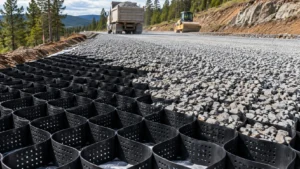
Geogrids are polymer grid structures that interlock with surrounding soil or aggregate particles. When placed within compacted layers, they create a reinforced composite material where soil and geogrid work together as a structural system.
This reinforced soil mass provides improved shear strength, increased load distribution, and greater resistance to deformation.
In engineering practice, soil stabilization geogrids are commonly used when the natural soil cannot support infrastructure loads without reinforcement.
Typical conditions where geogrid stabilization is required include:
-
weak subgrade soils
-
high traffic loads
-
soft clay or silty soils
-
embankment construction
-
industrial storage areas
In these situations, geogrid reinforcement allows engineers to construct stable foundations while reducing the amount of imported aggregate.
How Geogrid Stabilizes Weak Soil
Geogrids stabilize soil through mechanical interaction between the reinforcement and the surrounding soil mass.
Three main mechanisms contribute to soil stabilization.
Soil Confinement
The open grid structure allows soil particles to interlock with the reinforcement. This interlocking effect restricts lateral movement and improves internal soil stability.
Load Distribution
Geogrids distribute loads across a wider area within the soil structure. Instead of concentrating stress in one location, reinforcement spreads loads more evenly across the subgrade.
Tensile Reinforcement
Unlike soil, geogrids provide tensile strength. When placed within compacted layers, the reinforcement resists deformation and helps maintain structural stability under loading.
Together, these mechanisms transform weak soil into a reinforced structural layer capable of supporting infrastructure loads.
Applications of Soil Stabilization Geogrid
Geogrid soil stabilization is widely used in civil engineering projects where weak soil conditions could otherwise cause settlement, deformation, or structural failure.
Road Construction
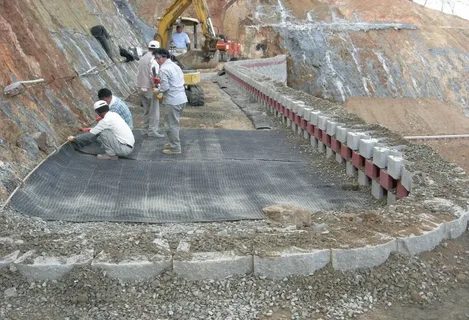
One of the most common uses of soil stabilization geogrid is in road construction. Reinforcement layers are placed within the base layer to improve load distribution and reduce rutting caused by repeated traffic.
This method can reduce aggregate thickness while improving long-term pavement performance.
You can learn more about pavement reinforcement in our guide on geogrid for road construction.
Railway Embankments
Railway systems require stable foundations to maintain track alignment and safety. Geogrids reinforce railway embankments by increasing soil strength and preventing long-term settlement.
Industrial Yards and Storage Areas
Heavy equipment yards and container storage areas often rely on geogrid reinforcement to prevent rutting and foundation failure under heavy loads.
Reinforced Soil Slopes
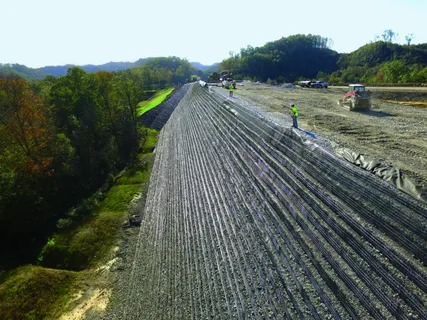
Geogrids are also widely used in reinforced soil slopes and embankments where slope stability is critical.
See our article on geogrid slope stabilization to understand how reinforcement improves slope performance.
Types of Geogrid Used for Soil Stabilization
Different types of geogrid are used depending on the direction of loading and project design requirements.
| Geogrid Type | Typical Application |
|---|---|
| Biaxial Geogrid | Soil stabilization and road bases |
| Uniaxial Geogrid | Retaining walls and reinforced soil structures |
| Triaxial Geogrid | Multi-directional load distribution |
Biaxial geogrids are most commonly used for soil stabilization because they provide reinforcement in two directions, improving load distribution in pavement structures.
In structural applications such as reinforced soil walls, engineers often use geogrid retaining wall systems designed specifically for lateral soil reinforcement.
Installation Process for Soil Stabilization Geogrid
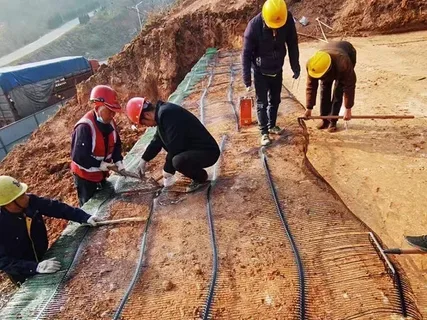
Proper installation is essential to achieve effective soil reinforcement.
Step 1 — Subgrade Preparation
The existing soil surface should be leveled and compacted to create a stable base for reinforcement.
Step 2 — Geogrid Placement
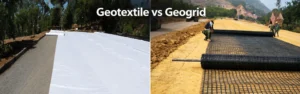
Geogrid rolls are placed over the prepared surface and aligned according to the design layout.
Step 3 — Aggregate Placement
A layer of aggregate or engineered fill is placed above the geogrid layer.
Step 4 — Compaction
The fill material is compacted using rollers or compactors to create strong interaction between soil and reinforcement.
Step 5 — Layer Construction
Additional reinforcement layers may be installed depending on the design and load requirements.
Proper compaction and material selection are essential for effective reinforcement.
Common Mistakes in Soil Stabilization
Improper installation can reduce the performance of geogrid reinforcement systems.
Common mistakes include:
-
incorrect orientation of the geogrid
-
insufficient reinforcement length
-
poor soil compaction
-
unsuitable fill materials
-
inadequate drainage design
Avoiding these errors ensures that the reinforced soil system performs as intended over the long term.
Advantages of Geogrid Soil Stabilization
Compared with traditional soil improvement methods, geogrid reinforcement offers several advantages.
-
increased soil bearing capacity
-
reduced aggregate thickness
-
improved load distribution
-
lower construction costs
-
faster installation
-
long-term structural stability
Because reinforced soil systems often use locally available materials, they are frequently more economical than rigid structural solutions.
Related Geogrid Applications
Soil stabilization is only one of several major engineering uses for geogrid reinforcement.
Other common geogrid applications include:
-
geogrid for road construction
-
geogrid slope stabilization
-
geogrid retaining wall systems
-
gravel driveway stabilization
Each application uses geogrid reinforcement to improve soil performance under different loading conditions.
A broader explanation of these engineering uses can be found in our guide on geogrid applications, which explains where geogrids provide the most value in infrastructure projects.
Conclusion
Soil stabilization with geogrid is a proven engineering solution for improving weak soil conditions.
By reinforcing soil with geogrid layers, engineers can increase bearing capacity, distribute loads more effectively, and reduce deformation in infrastructure foundations.
From roads and railways to slopes and industrial yards, geogrid reinforcement provides a flexible and cost-effective approach to modern ground stabilization.
When properly designed and installed, reinforced soil systems can significantly extend the lifespan and reliability of civil engineering structures.
FAQ
What is soil stabilization geogrid?
Soil stabilization geogrid is a geosynthetic reinforcement system used to improve the strength and stability of weak soils by embedding geogrid layers within compacted soil or aggregate.
Where is geogrid used for soil stabilization?
Geogrid reinforcement is commonly used in roads, railway embankments, industrial yards, slopes, and infrastructure foundations.
How does geogrid improve weak soil?
Geogrids interlock with soil particles, distribute loads more evenly, and provide tensile reinforcement that soil alone cannot provide.
How long does geogrid soil stabilization last?
High-quality geogrids are designed for long-term durability and can last several decades when installed properly within soil layers.