The Most Comprehensive Real-World Guide for Engineers, Contractors, and Homeowners (2026)
-
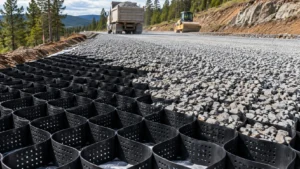
Geogrid is a polymer reinforcement placed in compacted backfill to create a reinforced soil mass that improves retaining wall stability and reduces deformation.
-
For retaining walls, uniaxial geogrid is most commonly used when tensile demand is primarily perpendicular to the wall face; selection and spacing should follow a recognized design method and wall system requirements.
-
Key success factors include reinforcement length, vertical spacing, facing connection, backfill quality, compaction, and drainage.
Introduction
Retaining walls face one major challenge: lateral soil pressure.
As walls get taller or soil conditions get weaker, even a perfectly built block wall can fail without proper reinforcement.
This is where geogrid becomes the most reliable, cost-effective structural solution.
This ultimate authority guide explains everything about geogrid for retaining walls, including types, spacing, strength selection, installation methods, design principles, common mistakes, cost, lifespan, and real-world engineering rules.
This is the only guide you need before building or reinforcing a retaining wall.
1. What Is Geogrid and Why It’s Essential for Retaining Walls

1.1 What Is Geogrid?
Geogrid is a high-strength polymer reinforcement material used to stabilize soil.
It works by creating a “reinforced soil mass” behind the wall, dramatically increasing stability.
1.2 Why Retaining Walls Fail Without Geogrid

Studies show that walls over 1 meter (3 ft) without geogrid reinforcement commonly fail due to:
-
Forward wall rotation
-
Sliding
-
Bulging
-
Soil shear failure
-
Water pressure buildup
1.3 What Geogrid Actually Does
Geogrid:
-
Locks soil particles together
-
Increases shear strength
-
Extends the “gravity mass” of the wall
-
Reduces lateral pressure
-
Allows taller walls with fewer blocks
-
Saves 30–60% material cost vs concrete alone
If your wall is taller than 4 ft (1.2 m) → geogrid is no longer optional.
It becomes a structural requirement in engineering design.
2. Types of Geogrid: Biaxial vs. Uniaxial (and Which You Need)
2.1 Biaxial Geogrid (BX)
-
Strength in both directions
-
Used for roads, driveways, ground stabilization
-
Not designed for retaining walls
2.2 Uniaxial Geogrid (UX)
-
High tensile strength in one direction
-
The direction must face away from the retaining wall
-
Industry standard for retaining wall reinforcement
For retaining walls, geogrid selection depends strongly on load direction. See our explanation of uniaxial vs biaxial geogrid for reinforced soil walls.
2.3 Woven vs Extruded vs Polyester Geogrid
| Type | Advantages | Common Use |
|---|---|---|
| Extruded (PP/HDPE) | High stiffness, long lifespan | Most retaining walls |
| Woven PET | High tensile strength, flexible | Tall engineered walls |
| Fiberglass | Stable but lower durability | Not recommended for walls |
For retaining wall reinforcement projects, HDPE geogrid is commonly used to create a reinforced soil mass and improve wall stability.
For reinforced-soil retaining walls that require high-strength tensile reinforcement, PET geogrid for retaining wall reinforcement is one product category commonly considered. Product selection should also account for long-term strength requirements, fill interaction, connection conditions, installation damage and the project design method.
3. Geogrid Strength Selection (Engineer-Level Guide)
Geogrid is available in different tensile strengths:
-
20 kN/m – low walls under ideal soil
-
35–55 kN/m – standard residential walls
-
80–120 kN/m – engineered or commercial walls
-
>150 kN/m – extremely tall or heavy load cases
Factors affecting strength selection:
-
Wall height
-
Soil quality
-
Surcharge load (cars, slopes, driveways)
-
Block type (solid vs hollow)
-
Water drainage conditions
General rule:
If in doubt, choose a stronger geogrid — cost difference is small, but safety margin is huge.
4. Geogrid Spacing Guide for Retaining Walls
4.1 Standard Spacing
For most walls:
-
Every 2–3 rows of blocks
-
Vertical spacing: 16″–24″ (40–60 cm)
4.2 By Wall Height
| Wall Height | Recommended Geogrid Layers |
|---|---|
| <1 m (3 ft) | Optional (unless load/slope present) |
| 1–1.5 m (3–5 ft) | 1–2 layers |
| 1.5–2 m (5–7 ft) | 2–3 layers |
| 2–3 m (7–10 ft) | 3–5 layers |
| >3 m | Requires engineering design |
4.3 Length of Geogrid (Most Ignored Factor)
Geogrid must extend 0.6–0.8 × wall height behind the wall.
Example:
2 m wall → geogrid length = 1.2–1.6 m.
Short geogrid = guaranteed wall failure.
One common question is whether you need geogrid for a 4 ft retaining wall, since height alone does not always determine reinforcement requirements.
5. How to Install Geogrid in a Retaining Wall (Step-by-Step)

5.1 Tools Needed
-
Plate compactor
-
Level
-
Stakes
-
Utility knife
-
Soil tamper
-
Shovels
5.2 Step-by-Step Process
Step 1 — Build the base row
A perfectly level base is the foundation of the entire structure.
Step 2 — Backfill and compact
Use ¾” crushed gravel (not soil).
Compact in 10–15 cm (4–6 inch) lifts.
Step 3 — Roll out the geogrid
-
Smooth side facing down
-
Strong direction facing the soil
-
Extend to required design length
Step 4 — Secure geogrid into block cores
Ensure friction lock with the block system.
Step 5 — Add next layers
Repeat installation every 2–3 block rows.
Step 6 — Continue compaction
Compaction is 50% of the wall’s strength.
6. Most Common Geogrid Installation Mistakes (Avoid These!)
This is one of the highest keyword-value sections.
❌ Using the wrong type of geogrid (BX instead of UX)
❌ Incorrect orientation (strength direction wrong)
❌ Too-short geogrid length
❌ Spacing layers too far apart
❌ Using un-compacted soil
❌ No drainage pipe or gravel backfill
❌ Building on soft or uneven foundation
❌ Not overlapping geogrid where required
❌ Installing geogrid directly over loose soil
Each mistake can cause wall failure within 1–3 years.
7. Drainage Requirements (Most Overlooked Structural Element)
A reinforced wall is only as strong as its drainage.
Drainage must include:
-
Perforated drain pipe (4″)
-
12″ (30 cm) gravel drainage zone
-
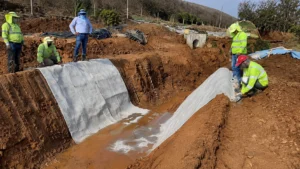
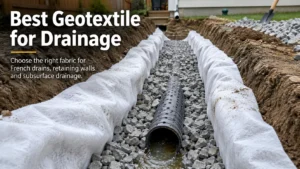
Geotextile fabric between soil & gravel
-
Weep holes if needed
Water is the #1 enemy of retaining walls.
Even with geogrid, poor drainage = failure.
8. Cost of Geogrid for Retaining Walls
Average geogrid cost:
-
$1.50–$3.50 per square meter for PP/HDPE UX
-
$2.5–$5.5 per square meter for PET woven geogrid
Total added cost for a 2–3 m wall:
Only 8–15% extra, but structural strength increases 300–600%.
9. How Long Does Geogrid Last?
High-quality geogrid lasts:
-
PP/HDPE UX: 50–100 years
-
Woven PET: 75–120 years
Factors affecting lifespan:
-
UV exposure (buried = 0% effect)
-
Chemical soil conditions
-
Installation quality
-
Load + drainage
You can confidently expect multi-decade performance.
You may also want to read our guide on how long driveway grids last if you are evaluating geogrid performance beyond retaining wall systems.
10. How to Choose the Right Geogrid Supplier (2025 Guide)
What to check:
-
Tensile strength certification (ASTM or ISO)
-
Long-term creep performance
-
Durability test reports
-
Country of manufacture
-
Availability of uniaxial products
-
Engineering support
You can also reference your existing article:
Top Geotextile Suppliers in the World (2025 Edition).
11. Complete Checklist Before Building a Geogrid Retaining Wall
✔ Soil test completed
✔ Wall height measured
✔ Correct UX geogrid selected
✔ Proper grid length designed
✔ Drainage plan included
✔ Compaction plan ready
✔ Block system compatible
✔ Layer spacing calculated
✔ Contractor trained in geogrid installation
If any one of these is missing → Do NOT start building.
Conclusion: Why This Ultimate Guide Matters
A retaining wall reinforced with correctly installed geogrid:
-
Supports greater loads
-
Stays stable for decades
-
Resists bulging, sliding, and overturning
-
Requires far fewer blocks and materials
-
Costs less than traditional concrete solutions
With proper geogrid engineering and installation, your retaining wall becomes a permanent structure, not a temporary landscaping feature.
If you follow this guide, your wall will surpass most residential installations and meet professional engineering standards.
FAQ: Geogrid for Retaining Walls (2025)
Q1. What is geogrid and what does it do in a retaining wall?
Geogrid is a polymer reinforcement placed in compacted backfill to improve soil confinement and mobilize tensile resistance. In retaining walls, it helps form a reinforced soil mass that resists lateral earth pressures and reduces deformation when designed and installed correctly.
Q2. When is geogrid required for a retaining wall?
Reinforcement is often required or recommended as wall height increases, or when surcharge loads, slopes, weak foundations, or poor backfill conditions exist. The exact requirement depends on local codes, the wall system, and the governing design method, so project-specific design criteria should be followed.
Q3. Uniaxial vs biaxial geogrid—what’s typically used for retaining walls?
Uniaxial geogrid is commonly used for reinforced soil retaining walls where the main tensile demand is perpendicular to the wall face. Biaxial geogrid is more commonly used for base stabilization; for retaining walls, suitability depends on the wall system and design approach.
Q4. How do I choose the right geogrid strength for a retaining wall?
Strength selection depends on wall height, backfill quality, surcharge loads, drainage conditions, and the wall/facing connection. Designers typically use long-term design strength (accounting for creep and durability) rather than ultimate strength alone, and confirm the required reinforcement layout by calculation.
Q5. How many layers of geogrid does a retaining wall need?
The number of layers depends on wall height and the design method. Many systems place geogrid at regular vertical spacing (often every few block courses), but exact spacing and the total number of layers must match the project design to meet internal, external, and global stability requirements.
Q6. What is the recommended vertical spacing for geogrid in a wall?
Vertical spacing is set by design and wall system requirements and may vary with wall height, backfill, and facing type. Many segmental block systems use a consistent spacing pattern, but the final spacing should be confirmed by the design calculations and manufacturer guidance.
Q7. How long should geogrid extend behind the wall?
Embedment length is a critical design parameter and is commonly related to wall height, soil properties, surcharge, and stability checks. Using geogrid that is too short is a frequent cause of poor performance; length must be set by the design method and verified against internal/external stability.
Q8. How is geogrid installed in a retaining wall?
Geogrid is typically rolled out perpendicular to the wall face, kept taut and free of wrinkles, connected to the facing per system requirements, and embedded into compacted backfill. Proper lift thickness, compaction, alignment, and connection details are key construction quality controls.
Q9. Which direction should geogrid face when installing it?
Orientation depends on the product type. Uniaxial geogrid has a primary strength direction that must align with the tensile demand (commonly perpendicular to the wall face in reinforced walls). Install according to the manufacturer’s markings and the project design.
Q10. Do geogrid retaining walls need drainage?
Yes. Drainage is essential to prevent hydrostatic pressure buildup, which can cause wall distress even when reinforcement is used. Typical drainage measures include free-draining aggregate zones, filter layers (often geotextile), and toe/chimney drainage details as specified by design.
Q11. What backfill should be used with geogrid retaining walls?
Well-graded granular backfill with controlled fines is commonly specified to achieve compaction and drainage performance. Poor backfill quality or high fines can reduce frictional interaction with geogrid and increase water retention, so backfill should meet the project specification.
Q12. What are the most common geogrid installation mistakes?
Common issues include incorrect geogrid orientation, slack/wrinkles, insufficient embedment length, improper connection to the facing, inadequate compaction, oversized lift thickness, and missing/ineffective drainage. These problems can lead to excessive deformation or instability over time.
Q13. Can I use geogrid for tall retaining walls?
Yes, but taller walls typically require engineered design and careful checks for internal, external, and global stability. Wall height alone does not determine feasibility; soil conditions, surcharge loads, drainage, and construction quality must be evaluated.
Q14. How long does geogrid last underground?
Service life depends on polymer type, soil chemistry, installation conditions, and design reduction factors for creep and durability. Engineering practice typically uses long-term design strength values rather than assuming a fixed lifespan, and performance expectations should follow the governing design method and product data.
Q15. What should I ask a geogrid supplier before buying?
Request verified tensile properties, long-term creep information, durability data, applicable test standards, and compatibility details with your wall system. A reliable supplier should also provide clear installation guidance and supporting technical documentation for design and quality control.