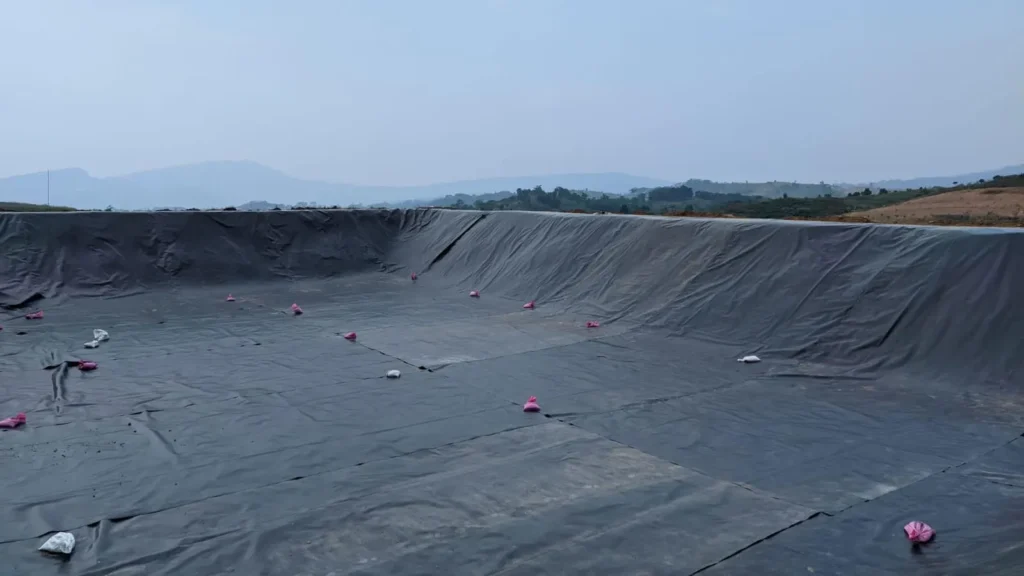
If you have ever been involved in landfill construction, pond lining, or even setting up a simple aquaculture reservoir, you’ve probably heard the word geomembrane being thrown around. But what exactly is it, and how do you decide which type is right for your project?
As a supplier working with engineers, contractors and government projects for years, I’ve seen too many cases where the wrong membrane was chosen, leading to cracks, leaks, or costly repairs. In this article, I want to share a practical breakdown of geomembrane types, their properties, and how they are actually used in real projects.
What is a Geomembrane in Simple Terms?
Think of it as a synthetic waterproof barrier. It looks like a plastic sheet, but engineered with specific polymers so that water, leachate, or chemicals can’t pass through. In other words:
-
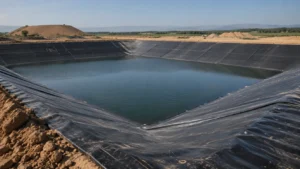
In a landfill, it keeps toxic liquids from polluting groundwater.
-
In aquaculture, it helps farmers maintain water levels and quality.
-
In mining, it protects the environment from acidic tailings.
Different projects demand different materials, and that’s where the “types” come in.
Main Types of Geomembranes You’ll See in the Market
HDPE (High-Density Polyethylene)

This is the workhorse of the industry. If someone calls us about lining a landfill or a tailings dam, nine times out of ten, HDPE is the answer. It’s stiff, chemically resistant, and lasts decades under sunlight.
Typical specs: tensile strength around 27 MPa, elongation up to 700%, thickness usually 1.0–2.5 mm.
Best for: landfills, reservoirs, mining ponds, industrial wastewater containment.
If HDPE is being considered for your project, you can review our available smooth and textured HDPE geomembrane liner options, thickness ranges and technical data before selecting a specification.
LLDPE (Linear Low-Density Polyethylene)
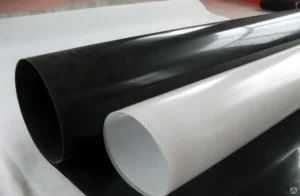
When the project site has uneven ground or sharp curves, contractors prefer LLDPE. It’s softer, more flexible, and won’t crack under settlement or temperature change.
Specs: tensile strength around 20 MPa, elongation up to 500–800%.
Best for: fish ponds, farm reservoirs, cold climate projects where flexibility matters.
PVC (Polyvinyl Chloride)

PVC geomembrane has been used for decades, especially in construction. It’s easy to weld, very flexible, and adapts to complex shapes. The downside? It doesn’t last as long in direct sunlight compared to HDPE.
Best for: tunnels, underground waterproofing, rooftop gardens, decorative ponds.
Reinforced Polypropylene (RPP) & EPDM Rubber
For demanding projects or very irregular designs, these come into play. Reinforced PP liners are strong and dimensionally stable, while EPDM is extremely elastic—perfect for landscaping ponds or green roofs.
Beyond the Specs – What Really Matters on Site
Many articles will show you long tables of data. But in the field, I’ve learned that three things matter most:
-
Permeability: a good geomembrane has almost zero seepage. In landfills we target ≤1.0×10⁻¹³ cm/s.
-
UV resistance: if your liner is exposed, UV stabilizers are critical. A cheap PVC sheet left under the sun for 2 years will start to crack.
-
Welding quality: even the best HDPE sheet is useless if the weld seam fails. Always test seam strength—it should be at least 75% of the parent material.
Real-World Applications
-
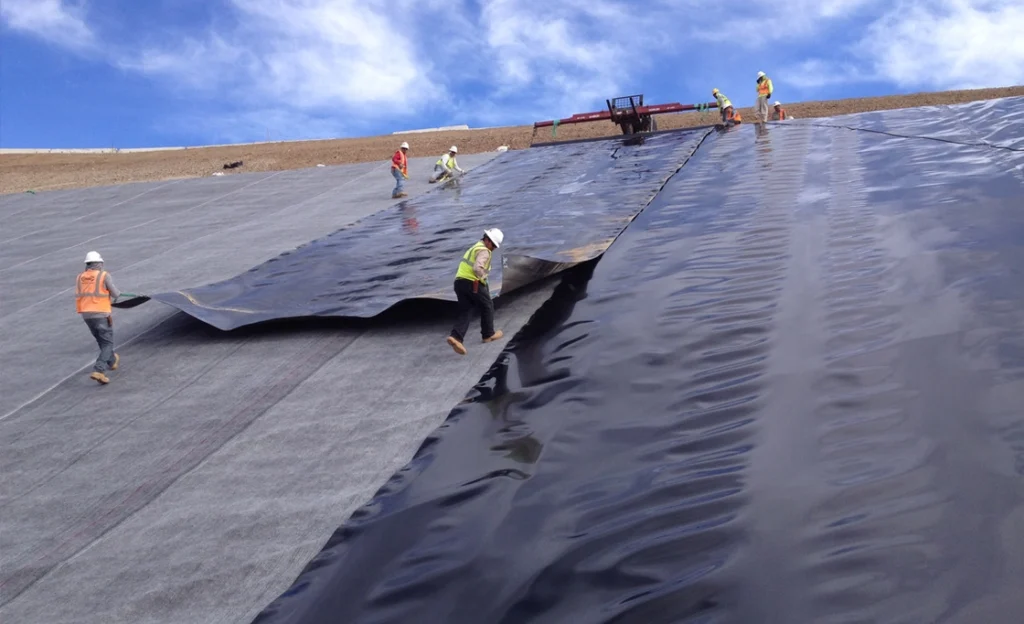
Landfill liners: In one municipal landfill project in Southeast Asia, a 2.0 mm HDPE liner reduced leachate leakage and saved the operator over 30% in groundwater treatment costs.
-
Aquaculture ponds: Farmers using 1.0 mm LLDPE liners reported better water retention and improved fish survival rates, especially in sandy soils.
-
Green roofs: Lightweight PVC liners make rooftop gardens possible without water seepage into the structure below.
How to Choose the Right Geomembrane
Here’s my rule of thumb after supplying for hundreds of projects:
-
Go HDPE if you need long-term, outdoor, chemical-resistant performance.
-
Go LLDPE if your ground moves, or you’re in a cold region.
-
Go PVC if cost and easy installation matter more than 20+ year durability.
-
Go EPDM/RPP if you’re in landscaping or special architectural designs.
And always, always get proper QC reports from your supplier. A liner without a test certificate is a risk you don’t want.
Once you have narrowed down the suitable material, compare our geomembrane liner specifications, smooth and textured options, available thicknesses and procurement information.
Final Thoughts
Geomembranes may look simple—just big rolls of plastic sheets—but they are engineered barriers that protect our water, soil, and environment.
Whether you’re an engineer working on a landfill, a contractor building a pond, or a farmer looking for a cost-effective reservoir liner, the choice of geomembrane will directly impact your project’s safety, durability, and cost-effectiveness.
If you are ready to compare available specifications, view our HDPE and LLDPE geomembrane products for smooth and textured options, thickness ranges and technical data.
For project pricing, send us your application, required thickness, quantity and delivery destination for a quotation.