How Much Does Geogrid Material Cost in 2026?
Introduction
If you are comparing geogrid prices, the first thing to know is that geogrid cost is not determined by product name alone. The final price depends on the geogrid type, tensile strength, raw material, coating, roll dimensions, application scenario, and order quantity.
For example, a biaxial geogrid used for base stabilization is priced differently from a fiberglass geogrid designed for asphalt reinforcement, and both are different from a uniaxial geogrid used in retaining wall systems. That is why buyers who only ask for a “geogrid price” often receive quotations that vary widely.
This guide explains what actually affects geogrid cost, how different geogrid products are priced, and how to choose the right option without paying for specifications your project does not need.
Quick Answer: What Affects Geogrid Cost Most?
The biggest factors behind geogrid pricing are:
- geogrid type
- tensile strength
- raw material
- coating or surface treatment
- application scenario
- roll width and roll length
- quantity ordered
- testing and certification requirements
- shipping destination
In most cases, the price difference is not random. Higher-performance products usually cost more because they are made for more demanding engineering conditions, not simply because they are labeled differently.
If you want an accurate quote, it is better to describe the project application first, then match the product grade to the job.
Geogrid Price by Type
Different geogrid types are built for different uses, so their prices follow different logic.
Biaxial Geogrid
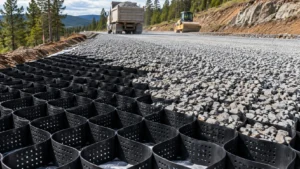
Biaxial geogrid is commonly used for road base reinforcement, aggregate confinement, and subgrade stabilization. It is often selected for projects where the goal is to improve load distribution and reduce deformation in paved or unpaved surfaces.
Because it is widely used and relatively standardized in many applications, biaxial geogrid is often one of the more cost-efficient choices for general ground stabilization work.
Uniaxial Geogrid
Uniaxial geogrid is designed for higher load-bearing applications in one principal direction. It is commonly used in retaining walls, steep slopes, embankments, and reinforced soil structures.
Compared with general-purpose biaxial products, uniaxial geogrid often costs more because structural applications usually require higher tensile performance and stricter engineering requirements.
Fiberglass Geogrid
Fiberglass geogrid is mainly used in asphalt reinforcement and reflective crack control. It is commonly applied in roads, highways, municipal pavements, airport surfaces, and railway-related asphalt systems.
Its price is usually influenced by reinforcement performance, coating type, and pavement application requirements. For asphalt overlay projects, fiberglass geogrid is often chosen for performance value rather than lowest unit cost.
H3: Polyester Geogrid
Polyester geogrid is used in reinforced soil structures and certain civil engineering applications where flexibility and strength retention are important.
Its price level depends heavily on strength grade, coating, and intended use. It is generally evaluated more as an engineered reinforcement material than as a basic ground stabilization product.
Cost by Application
Geogrid cost also changes depending on where and how the product will be used.
Retaining Walls
Retaining wall applications often require higher tensile strength, design support, and longer-term structural reliability. Because of that, the selected geogrid is usually more specialized than the product used in light-duty road base projects.
Road Base Reinforcement
For road base reinforcement, buyers often focus on load distribution, aggregate confinement, and cost efficiency. In these projects, biaxial geogrid is often considered when balancing performance and budget.
Asphalt Reinforcement
Asphalt reinforcement usually uses fiberglass geogrid rather than standard plastic geogrids. Here, the key value is not just material cost, but how effectively the grid helps delay reflective cracking and extend pavement service life.
Slope Stabilization
Slope projects often depend on project geometry, soil conditions, and design loads. The cost can vary significantly because geogrid selection must align with the engineering purpose rather than only with area coverage.
This is why two geogrid quotations for the same square meter quantity may look very different if the applications are different.
How Tensile Strength Impacts Price
Tensile strength is one of the most important price drivers.
In simple terms, stronger geogrid products usually require different raw materials, manufacturing controls, or reinforcement design. That means higher strength grades generally come with higher prices.
However, higher strength does not always mean better value.
If the project only needs moderate reinforcement, over-specifying the product can raise material cost without creating meaningful project benefits. On the other hand, choosing a product that is too weak may lead to poor performance, costly repairs, or the need for redesign.
The right approach is to match strength to project demand, not to choose the highest grade by default.
What Other Costs Should Buyers Consider?
Many buyers focus only on the product unit price, but the final procurement cost often includes several additional factors.
Roll Width and Roll Length
Larger roll dimensions may reduce installation joints, but they can also affect transport, handling, and packaging requirements.
MOQ
Small quantity orders often have a higher effective cost per square meter because production and logistics are less efficient.
Coating and Surface Treatment
For products such as fiberglass geogrid, coating compatibility can influence both performance and price.
Testing and Certification
If your project requires third-party testing, compliance documents, or specific certifications, this can affect the final quotation.
Packaging and Shipping
Export packaging, loading method, and destination port all influence landed cost. A material that looks cheaper at the factory level may not be the lowest-cost option after shipping is included.
Technical Support and Customization
Project-based recommendations, custom roll sizes, and engineering communication may also change the pricing structure, especially for B2B orders.
Cheapest vs Best-Value Geogrid
The cheapest geogrid is not always the best buying decision.
A lower unit price may look attractive at first, but if the product is not suited to the project, the total cost can become much higher through installation issues, reduced service life, or underperformance.
Best value usually means:
- the product matches the application
- the strength is appropriate, not excessive
- the roll size works for the installation plan
- the supplier can provide stable quality and documentation
- the quotation reflects the full delivered cost, not just ex-factory price
For procurement teams, the best-value choice is usually the one that balances material price, service life, and project suitability.
How to Choose the Right Geogrid Without Overpaying
Before requesting a quote, prepare the following information:
- project application
- soil or pavement condition
- required reinforcement goal
- estimated quantity
- preferred roll size
- destination country or port
- documentation requirements
This makes it much easier to compare quotations fairly.
A good supplier should not only give a price, but also explain why a certain geogrid type is recommended for your application. That is often the difference between a useful quotation and a generic one.
Which Geogrid Type Is Usually Chosen for Different Projects?
Here is a simple decision framework buyers often use:
- Biaxial geogrid: road base reinforcement, driveways, aggregate confinement
- Uniaxial geogrid: retaining walls, steep slopes, reinforced soil structures
- Fiberglass geogrid: asphalt pavement reinforcement, reflective crack control
- Polyester geogrid: engineered soil reinforcement and structural civil applications
This does not replace engineering design, but it helps buyers avoid comparing unrelated product categories as if they were interchangeable.
Why Geogrid Quotes Can Vary Between Suppliers
Buyers often notice that quotations differ significantly from one supplier to another. Common reasons include:
- different raw material quality
- different strength grades
- different coating systems
- different roll sizes
- different testing standards
- different packaging terms
- different shipping assumptions
- different after-sales support levels
That is why quotation comparison should not be based on price alone. Always compare the actual product basis behind the quote.
Request a Project Quote
If you want a more accurate geogrid quotation, send the following details with your inquiry:
- application type
- required strength or performance target
- estimated quantity
- preferred roll width and length
- delivery location
- timeline
- any testing or certification requirement
With this information, it is much easier to recommend the right geogrid type and avoid unnecessary cost.
Need pricing for a specific project? Contact us for product recommendation, technical support, and quotation assistance.
FAQ :
Frequently Asked Questions
How much does geogrid cost per square meter?
Geogrid cost per square meter depends on the type of geogrid, tensile strength, raw material, coating, order quantity, and shipping destination. There is no single universal price for all geogrid products.
Is biaxial geogrid cheaper than uniaxial geogrid?
In many general applications, biaxial geogrid is often more cost-efficient than uniaxial geogrid, but the right choice depends on the project purpose. Uniaxial geogrid is typically selected for structural reinforcement applications that require higher directional strength.
What affects geogrid pricing the most?
The main price factors are geogrid type, tensile strength, raw material, coating, application, roll size, MOQ, certification, and shipping.
Is fiberglass geogrid more expensive?
Fiberglass geogrid is evaluated differently because it is mainly used for asphalt reinforcement and crack control. Its price depends on pavement application requirements and coating performance, not just on area quantity.
Can I get a quote based on project requirements?
Yes. If you provide your application, required quantity, destination, and performance needs, a supplier can recommend a suitable geogrid type and provide a more accurate quotation.
If you’re planning a road project, slope protection, or landfill construction, one of the first questions that comes up is:
👉 “How much does geogrid cost?”
I’ve been supplying geosynthetics for over a decade, and in this post I’ll share real price ranges, what affects the cost, and what you should keep in mind before you buy.