
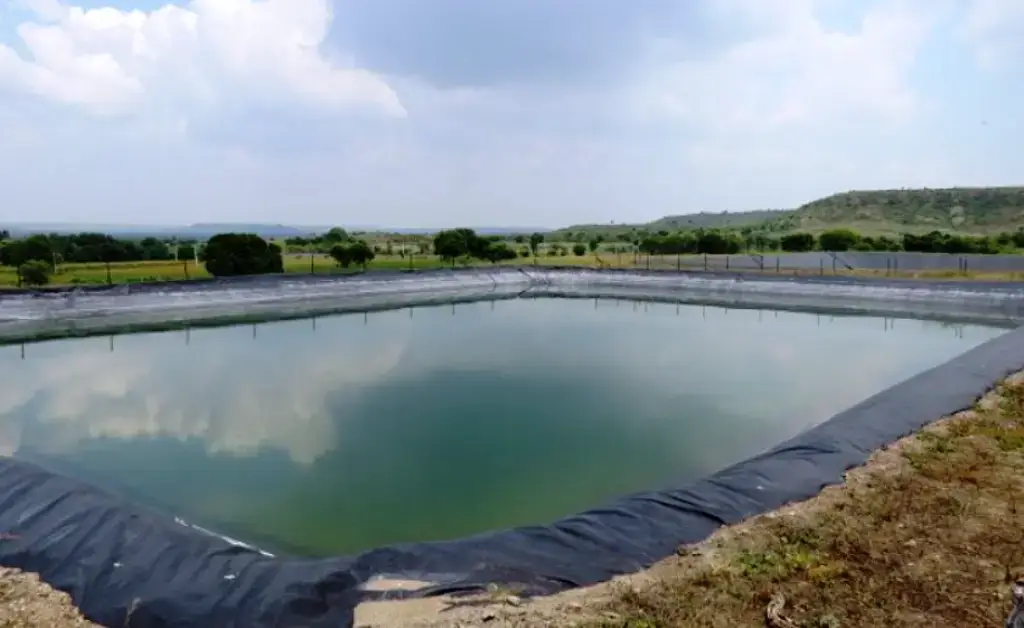
After years working on different projects, I’ve realized one thing: when it comes to pond liners, the numbers on a datasheet only tell part of the story. The real performance depends on the site conditions, the right material choice, and how the installation is done.
A lot of people ask me: “What’s the best pond liner?” The truth is, there’s no single answer. It’s not about “the best,” it’s about what fits your project. Let me share some real cases we’ve done and lessons learned along the way.
Common Materials We Use

HDPE (High-Density Polyethylene)
This is the workhorse. We use it most often for fish ponds, reservoirs, and landfill projects.
Pros: Long lifespan, strong UV and chemical resistance, cost-effective.
Cons: Stiffer, needs professional welding.
LLDPE (Linear Low-Density Polyethylene)
More flexible than HDPE, good for uneven ground. We’ve used it in mining ponds.
Pros: Flexibility, better performance on rough terrain.
Cons: Slightly lower tensile strength, shorter life in extreme conditions.
PVC
Cheap and easy to install, but not durable. Honestly, I don’t recommend it for aquaculture.
Works fine for small garden ponds, short-term use.
Not suitable for large-scale projects.
EPDM Rubber
Very flexible and safe for fish. Excellent for decorative or koi ponds.
Pros: Elastic, durable in cold climates, long life.
Cons: Expensive and heavy, not cost-effective for big projects.
Real Project Experience
Case 1: Fish Farm in Nigeria (HDPE 1.5 mm, 30,000㎡)

Challenge: Soil had lots of sharp stones; the farmer previously tried thin PVC which failed in months.
Solution: We laid a 300 g/m² geotextile underlay, then welded 1.5 mm HDPE sheets.
Result: After 2 years, no leakage; farmer reported stable water and healthy fish.
👉 Lesson: For aquaculture ponds, always use underlay plus at least 1.5 mm HDPE.
Case 2: Landfill in Saudi Arabia (HDPE 2.0 mm, 50,000㎡)
Challenge: Tight schedule, strict compliance with GRI GM13.
Solution: We shipped within 7 days from stock, sent a welding technician for seam testing. All seams passed vacuum and spark tests.
Result: Project delivered on time, fully compliant.
👉 Lesson: For environmental projects, certifications and test reports are just as important as the material itself.
Case 3: Mining Heap Leach Pond in Indonesia (LLDPE 1.5 mm, 80,000㎡)
Challenge: Uneven terrain and acidic solution storage.
Solution: Used 1.5 mm LLDPE with dual-layer protection (liner + geotextile).
Result: Excellent performance under chemical exposure, fewer seam issues than previous HDPE use.
👉 Lesson: Always match the liner material to both terrain and chemical environment, not just cost.
Quality and Certifications
Some people think certificates are just paperwork. From my experience, they’re non-negotiable. Our factory can provide:
ASTM D5321 / D6693 test reports
GRI GM13 compliance for HDPE
ISO 9001 certification
CE certification
SGS lab testing (tensile strength, puncture, UV stability)
These documents are often the first thing project owners and consultants ask for.
Pricing and Delivery
To give a rough idea for HDPE pond liners:
1.0 mm: around $0.7–0.9 / m²
1.5 mm: around $1.0–1.2 / m²
2.0 mm: around $1.3–1.5 / m²
(It depends on quantity, port, and shipping terms.)
Stock items usually ship within 7 days; customized orders take 7–15 days. Small samples are free.
Key Takeaways
Small decorative ponds: PVC or EPDM.
Koi ponds: EPDM, more flexible and long-lasting.
Large fish ponds & reservoirs: HDPE 1.0–1.5 mm, always with underlay.
Uneven ground / acidic environment: LLDPE is better.
Landfills & environmental projects: HDPE 2.0 mm+, with full certifications.
Advice for Buyers
Before purchasing, prepare these three things:
Project purpose and size
Environmental conditions (UV, terrain, chemical exposure)
Ask the supplier for datasheet + certificates + case studies
This will save you trouble later and help you pick the right partner.
📩 If you need a tailored recommendation or a quote, reach out and I’ll be glad to share specific advice for your project.


