For project-based supply, technical specifications, and custom manufacturing options, please visit our Geobag Manufacturer Page.
In Indonesia and across Southeast Asia, engineers and contractors often face recurring challenges:
-
coastlines gradually disappearing under constant wave attack,
-
riverbanks collapsing during the rainy season,
-
slopes failing and threatening roads or villages.
Traditional measures such as rock revetments or concrete blocks are robust but expensive, complicated to install, and not always environmentally sustainable. Geobags have emerged as a flexible and cost-effective alternative.
What is a Geobag?
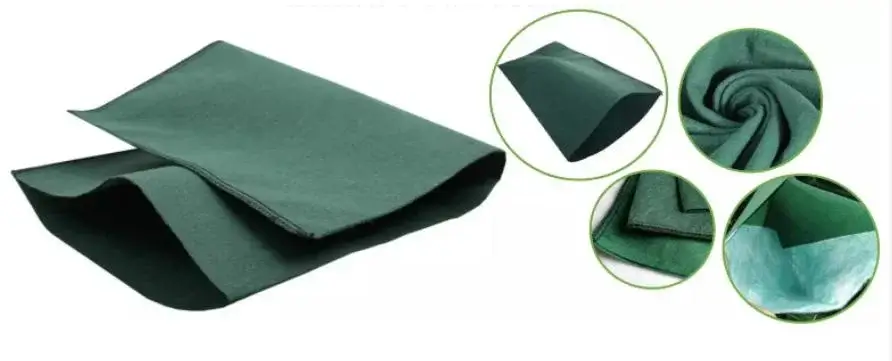
Put simply, a geobag is a sewn container made from geotextile fabric (woven or nonwoven). Once filled with sand, soil, or gravel, it is placed in situ to stabilize slopes, protect shorelines, or form temporary or permanent retaining structures.
Although the concept appears straightforward, geobags have proven to be a reliable, economical, and environmentally friendly engineering solution in numerous real-world projects.
Depending on project requirements, geobags can be manufactured from different nonwoven geotextile materials. Learn more about our PET and PP nonwoven geobag products.
Where Can Geobags Be Used?
Drawing on our project experience, geobags can be applied in a wide range of civil works:
-
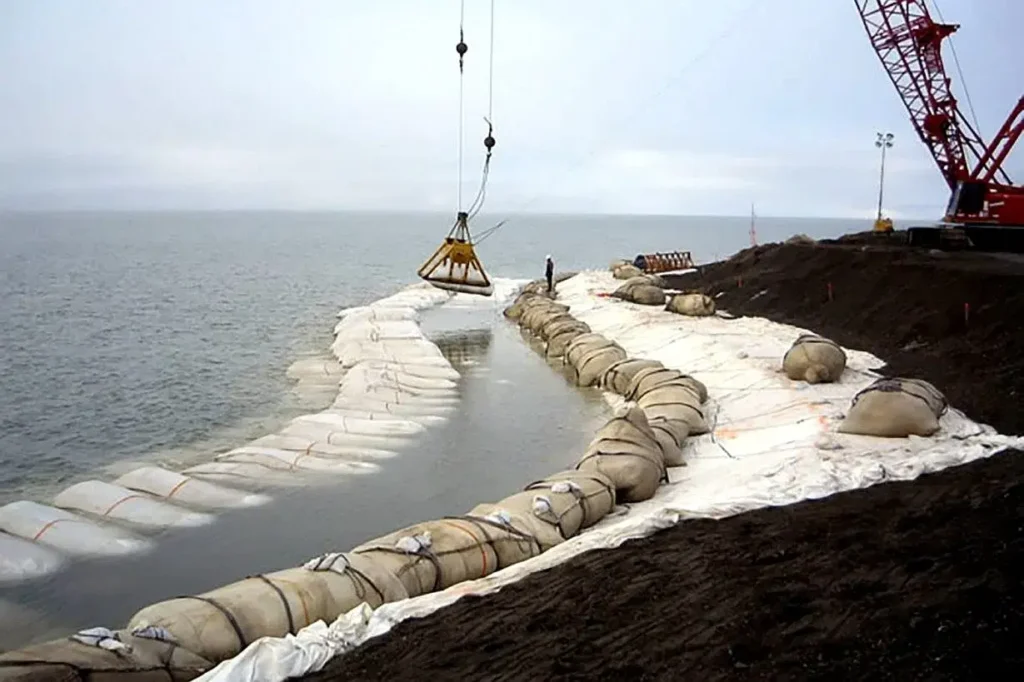
🌊 Coastal Protection: mitigating shoreline erosion and reducing land loss. Villages along the north coast of Java rely on geobags to safeguard farmland and houses.
-
🏞 Riverbanks & Embankments: providing reinforcement during high water levels to prevent scouring and slope failure.
-
🏗 Retaining Walls: stacked like masonry blocks, geobags can form stable retaining structures for roads or housing developments.
-
⛰ Slope Stabilization: protecting hillsides and cut slopes, especially in areas prone to landslides during the monsoon season.
-
🌱 Ecological & Landscape Works: once covered with soil, geobags can support vegetation, creating green and natural-looking structures.
Verified Technical Performance
Clients usually ask the same question: “What strength can your geobags actually provide?”
Below are typical performance ranges for our nonwoven geobags (custom designs available upon request):
-
Tensile Strength (MD/CD): 50–120 kN/m
-
Elongation at Break: 10–30%
-
Seam Strength: ≥80% of fabric strength (up to ≥90% achievable)
-
Apparent Opening Size (O90): 0.2–0.6 mm
-
Vertical Permeability: 10–80 L/m²·s (10⁻³ m/s order of magnitude)
-
Mass per Unit Area (GSM): 200–600 g/m²
-
Thickness: 1.5–4.5 mm, depending on GSM
-
UV Resistance: ≥80–90% strength retention after 500 h; ≥70–85% after 1000 h
-
Service Life: 10–15 years with proper cover in exposed conditions; longer in submerged applications
All values are supported by international test standards (ASTM/ISO) and third-party laboratory verification.
Practical Issues Observed on Site
Numbers on a datasheet matter, but construction reality is where projects succeed or fail. Over the years, we have encountered several recurring issues and developed recommendations:
-
Uneven or Excessive Filling
-
Bags filled too tightly may split at the seams; underfilled bags lose stability.
-
👉 Optimal filling: around 70–80% of capacity for balance between firmness and flexibility.
-
-
Seam Failure During Handling
-
Bags can tear if dragged or hooked by machinery.
-
👉 Use UV-resistant polyester sewing thread; seam strength reaches 80–90% of fabric. Avoid direct lifting with steel hooks—use slings or chutes.
-
-
Displacement During Installation
-
Currents or waves may shift improperly placed bags.
-
👉 Stagger stacking in a brick-like pattern and apply anchoring if necessary.
-
-
UV Degradation
-
In tropical climates, prolonged sunlight weakens exposed bags.
-
👉 Always recommend a 20–30 cm soil or stone cover to extend service life to 10–15 years.
-
-
Damage in Transport or Placement
-
Sharp objects can puncture or abrade the fabric.
-
👉 Provide protective packaging and advise contractors to use sliding cloths or lifting belts on site.
-
Anticipating these issues at the design and planning stage ensures geobags achieve their intended performance.
Project References

-
Central Java, Indonesia: 400 gsm geobags installed for coastal protection, covered with armor stone, remain intact after more than 10 years.
-
Selangor River, Malaysia: 500 gsm geobags reinforced embankments successfully withstood seasonal flooding.
-
Highway Project, India: geobags served as temporary retaining walls, replacing concrete and significantly reducing costs and construction time.
Frequently Asked Questions
Q: Can geobags be used without cover?
A: Yes, but long-term durability will be compromised. Covering with soil or stone is strongly recommended.
Q: What is the expected service life?
A: Typically 10–15 years with protection; longer in submerged conditions.
Q: Do you provide test certificates?
A: Yes, ISO and SGS third-party reports are available for tensile, seam, permeability, and UV resistance.
Q: What if installation problems occur?
A: Beyond supplying the product, we provide installation guidelines and remote technical support to help contractors avoid common pitfalls.
Conclusion
Geobags are not merely bags of fabric—they represent a proven engineering solution.
They address coastal erosion, embankment reinforcement, and slope stabilization with a balance of cost-efficiency, ease of installation, and environmental compatibility.
As a supplier with field experience, we do more than ship rolls of fabric. We share the lessons learned from real projects, highlight practical challenges, and offer guidance to ensure that our clients achieve durable results.
👉 If you are looking for a reliable geobag supplier for projects in Indonesia or abroad, contact us today for detailed specifications, samples, and competitive quotations.