Short Answer
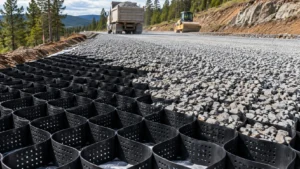
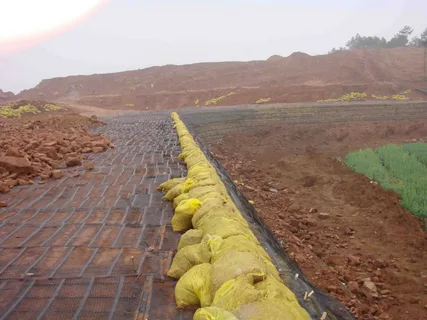
Soil stabilization using geogrid reinforcement improves the performance of weak soils by increasing load distribution, reducing deformation, and enhancing soil confinement. By placing geogrid layers within aggregate or soil layers, engineers create a mechanically stabilized base that increases bearing capacity and reduces rutting.
Geogrid soil stabilization is widely used in road construction, working platforms, construction access roads, and infrastructure built on weak subgrade conditions.
Soil stabilization is one of the major engineering applications of geogrid reinforcement. While geogrids are widely used to improve weak subgrades and ground performance, they are also applied in retaining walls, road construction, and slope reinforcement systems. A broader overview of these engineering uses can be found in our guide on geogrid applications, which explains where geogrids work best in civil infrastructure projects.
What Is Soil Stabilization?
Soil stabilization refers to engineering techniques used to improve the strength and performance of weak ground so it can support structural loads.
Many construction sites contain soils with low bearing capacity, such as:
-
soft clay
-
loose sand
-
organic soils
-
saturated subgrades
Without reinforcement, these soils may deform under load, causing:
-
excessive settlement
-
rutting
-
pavement failure
-
construction delays
To address these problems, engineers often use soil stabilization geogrid systems to reinforce the soil structure and improve its load-bearing capacity.
How Geogrid Stabilizes Weak Soil
Geogrid stabilization works through several key mechanical mechanisms.
Load Distribution
Geogrids distribute applied loads over a larger area.
This reduces stress concentrations on weak soil and improves the performance of the base layer.
Soil Confinement
The open grid structure allows aggregates to interlock with the geogrid apertures.
This confinement restricts lateral movement of soil particles and increases overall stiffness.
Reduced Rutting
By reinforcing the base layer, geogrids reduce deformation caused by repeated loads from vehicles or equipment.
These combined effects allow engineers to build stable platforms even on weak soils.
Applications of Soil Stabilization Geogrid
Geogrid soil stabilization is widely used across many infrastructure projects.
Road Base Stabilization
In road construction, geogrids are installed within aggregate layers to stabilize weak subgrades and reduce pavement deformation.
This technique is commonly used in geogrid for road construction applications where traffic loads must be supported over long periods.
In transportation infrastructure, soil stabilization is commonly combined with base reinforcement techniques. Geogrids installed within aggregate layers help distribute traffic loads and reduce pavement deformation. These reinforcement methods are widely discussed in geogrid for road construction, where geogrids improve pavement performance and reduce long-term maintenance.
Construction Working Platforms
Temporary working platforms for cranes or heavy equipment often require reinforcement when the ground is weak or saturated.
Geogrids provide a fast and effective solution for improving ground stability in construction sites.
Access Roads and Temporary Roads
Construction access roads built over soft ground often suffer from rutting and aggregate displacement.
Geogrid reinforcement helps maintain road performance and reduce maintenance costs.
Industrial Yards and Storage Areas
Heavy equipment yards and container storage areas often require stabilized ground to support repeated loading.
Geogrids are commonly used in these environments to improve ground performance.
Soil Stabilization vs Slope Stabilization
Although both systems use geogrid reinforcement, they address different engineering problems.
| Application | Purpose |
|---|---|
| Soil Stabilization | Improve ground bearing capacity |
| Slope Stabilization | Prevent slope failure |
Soil stabilization typically focuses on horizontal ground layers, while geogrid slope stabilization is used for reinforcing embankments or hillsides.
Although soil stabilization focuses on improving weak ground conditions, some projects involve reinforcing embankments or hillside slopes instead of flat ground. In those cases, engineers typically use geogrid slope stabilization techniques designed to prevent slope failure and improve the stability of reinforced soil slopes.
Design Considerations for Geogrid Soil Stabilization
Successful stabilization requires proper engineering design.
Key factors include:
Subgrade Strength
The condition of the underlying soil determines the reinforcement requirements.
Aggregate Thickness
Geogrids can reduce the required thickness of aggregate layers in many projects.
Traffic Loading
The expected traffic load influences the design of the stabilized base.
Drainage Conditions
Proper drainage prevents water accumulation that can weaken the soil structure.
Advantages of Geogrid Soil Stabilization
Using geogrid reinforcement offers several benefits in construction projects.
-
improved load distribution
-
reduced aggregate requirements
-
lower construction costs
-
faster construction time
-
improved long-term ground performance
Because of these advantages, geogrids are widely used in modern infrastructure development.
Related Geogrid Applications
Geogrid reinforcement is used in several major civil engineering applications.
For example:
-
geogrid slope stabilization for reinforcing embankments and slopes
-
geogrid retaining wall systems for reinforced earth structures
-
geogrid driveway stabilization for gravel surfaces
-
geogrid road construction for improving pavement performance
Each application uses geogrid reinforcement to improve soil stability under different conditions.
Reinforced soil systems are widely used in civil engineering structures. In addition to ground stabilization, geogrids are also used in reinforced earth structures such as geogrid retaining wall systems, where reinforcement layers extend into the backfill to resist lateral earth pressure.
Conclusion
The same soil reinforcement principles are also used in smaller-scale ground stabilization projects. For example, geogrids are often installed beneath gravel layers to reduce rutting and improve aggregate confinement in residential surfaces such as geogrid for gravel driveways.
Soil stabilization geogrid systems provide an effective method for improving weak ground performance. By reinforcing soil layers and improving load distribution, geogrids allow engineers to build stable infrastructure even in challenging soil conditions.
When properly designed and installed, geogrid stabilization significantly improves soil strength, reduces deformation, and extends the lifespan of infrastructure projects.
FAQ
What is soil stabilization geogrid?
Soil stabilization geogrid is a geosynthetic reinforcement system used to improve weak ground conditions. By placing geogrid within aggregate or soil layers, engineers increase load distribution, reduce deformation, and improve the bearing capacity of the subgrade.
How does geogrid stabilize weak soil?
Geogrids stabilize weak soil by interlocking with aggregate particles and distributing loads across a wider area. This interaction improves soil confinement, reduces lateral movement, and increases the stiffness of the reinforced layer.
When should geogrid be used for soil stabilization?
Geogrids are typically used when soil has low bearing capacity, when rutting occurs under repeated loading, or when construction is taking place over soft or saturated subgrade conditions.
What types of geogrid are used for soil stabilization?
Biaxial geogrids are most commonly used for soil stabilization because they provide reinforcement in two directions. This allows loads to be distributed more evenly across weak ground.
What is the difference between soil stabilization and slope stabilization?
Soil stabilization focuses on improving the strength of horizontal ground layers, such as road bases or working platforms. Slope stabilization, on the other hand, reinforces inclined surfaces to prevent landslides or slope failure.
Can geogrid reduce aggregate thickness?
Yes. In many road and ground stabilization projects, geogrid reinforcement can reduce the required thickness of aggregate layers by improving load distribution and subgrade performance.
How long does geogrid soil stabilization last?
High-quality geogrids are designed for long-term durability and can last for several decades when properly installed and protected within soil layers.
Is geogrid better than geotextile for soil stabilization?
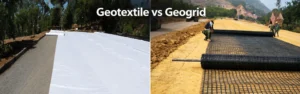
Geogrids and geotextiles serve different purposes. Geogrids provide structural reinforcement and load distribution, while geotextiles are mainly used for separation, filtration, and drainage.