By Geosynsource | www.geosynsource.com
🧱 Introduction
In today’s construction and environmental industries, geotextiles have become essential materials for building stronger, safer, and more sustainable projects.
They are used everywhere — from highways and landfills to ponds and riverbanks — helping engineers manage water, stabilize soil, and prevent erosion.
At Geosynsource, we specialize in providing reliable geotextile and geomembrane solutions that meet international standards and real-world performance demands.
🧵 What Is a Geotextile?

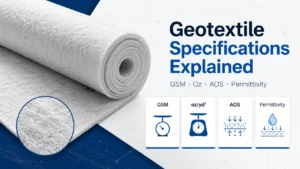
A geotextile is a permeable fabric made from synthetic polymers such as polypropylene or polyester.
It is designed to separate, filter, reinforce, protect, or drain soil and other construction materials.
There are two main types:
Woven geotextile: Produced by weaving fibers together. It provides high tensile strength and is ideal for soil separation, reinforcement, and load support — for example, under roads or retaining walls.
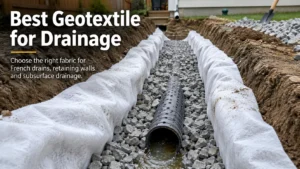
Nonwoven geotextile: Made by bonding fibers randomly. It is more porous and is commonly used for filtration and drainage — such as in stormwater channels, under riprap, or behind retaining walls.
Both types are critical for improving the performance and lifespan of civil and environmental engineering systems.
💧 What Is a Geotextile Used For?

Geotextiles play an important role in erosion control, drainage, and soil stabilization.
They allow water to pass through while retaining soil particles, which prevents sediment from washing away during heavy rain or runoff.
Common geotextile applications include:
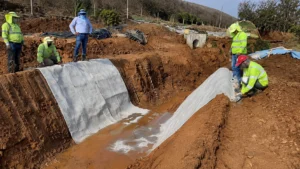
Preventing soil erosion on slopes and riverbanks
Acting as a separator between soil and rock layers
Providing filtration in drainage and stormwater systems
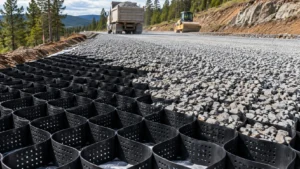
Stabilizing weak subgrades beneath roads or parking lots
Protecting HDPE geomembranes from puncture or damage
Supporting vegetation growth in landscaping and reclamation projects
By controlling water flow and soil movement, geotextiles help engineers reduce maintenance costs and extend the service life of infrastructure.
🧱 Geotextile vs. Geomembrane
Although both are geosynthetic materials, their functions differ:
Geotextiles are permeable and used for filtration, separation, and soil reinforcement.
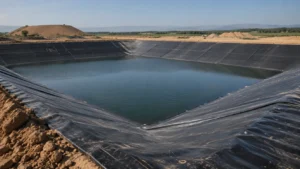
Geomembranes, such as HDPE liners, are impermeable and used to prevent fluid leakage.
In many designs, these two materials work together — the geotextile provides cushioning and filtration, while the HDPE geomembrane ensures complete waterproofing for ponds, dams, and landfills.
🌿 Geotextiles for Erosion Control
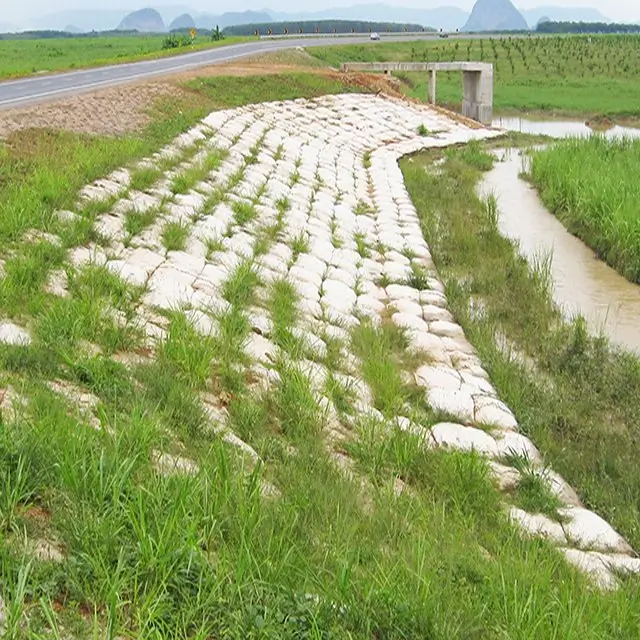
Erosion is one of the biggest challenges in earthwork and stormwater management.
By covering exposed soil with geotextile fabric, engineers can protect slopes and embankments from rainfall and runoff, allowing new vegetation to take root safely.
Erosion control geotextiles are often used alongside biodegradable matting or netting made from jute or coir.
This combination stabilizes soil naturally while supporting environmental restoration efforts.
🧮 Geotextile Cost and Installation

The cost of geotextile installation depends on the fabric type, strength, and project scale.
According to the U.S. Environmental Protection Agency (EPA) Stormwater BMP guidelines, typical installation costs range from USD $1–$3 per square yard, including materials and labor.
To ensure effectiveness:
The geotextile must maintain firm contact with the soil.
Edges should be overlapped and anchored securely.
The material should not be exposed to sunlight for long periods before covering.
Regular inspections should be conducted after storms or heavy use.
Properly installed, a geotextile can provide long-term protection and cost savings for any infrastructure project.
🏗️ Why Choose Geosynsource Geotextiles
At Geosynsource, we combine engineering experience with advanced manufacturing to deliver high-quality geotextiles for civil, environmental, and industrial applications.
Our geotextile fabrics are known for:
High tensile and tear strength
Excellent UV and chemical resistance
Easy installation and reliable performance
We serve clients in:
Road and bridge construction
Pond and dam lining
Mining and landfill containment
Stormwater and erosion control projects
Our mission is simple — to provide geosynthetic solutions that protect the environment and strengthen infrastructure.
Learn more at www.geosynsource.com
🔑 Key Takeaways
A geotextile is a permeable fabric used to separate, filter, reinforce, protect, or drain soil.
Woven geotextiles offer strength; nonwoven geotextiles offer filtration and drainage.
Geotextiles are essential for erosion control, soil stabilization, and stormwater management.
Combining geotextiles with HDPE geomembranes provides complete protection systems for ponds, dams, and landfills.
Choosing a trusted supplier like Geosynsource ensures performance, compliance, and long-term durability.
📚 References
U.S. Environmental Protection Agency (2021) – Stormwater Best Management Practice: Geotextiles, Matting, and Netting
Maryland Department of the Environment (2011) – Erosion and Sediment Control Standards
Washington State Department of Transportation (2019) – Standard Specifications for Road and Bridge Construction