
Short Answer
To understand the full range of geobag solutions and their applications, visit our Geobag Hub, where all related projects and guides are organized for easy reference.
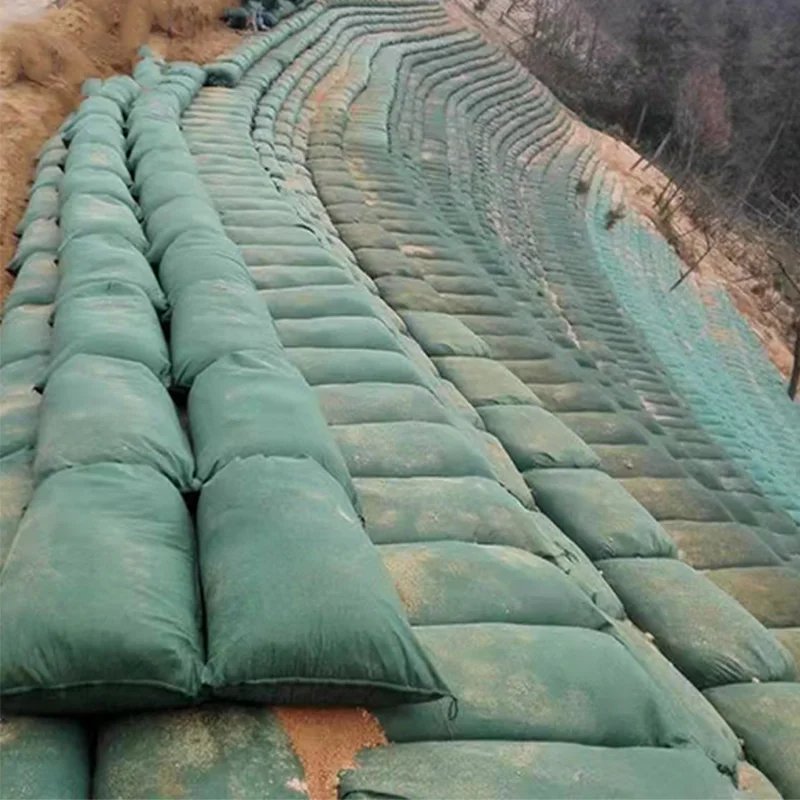
A geobag retaining wall is a soil containment structure built using geotextile bags filled with sand or soil. These bags are stacked in layers to form a stable mass that resists soil pressure and prevents erosion.
Geobag retaining walls are widely used in riverbank protection, coastal defense, slope stabilization, and temporary or permanent retaining structures. Compared with concrete or stone walls, geobag systems offer lower cost, easier installation, and better adaptability to uneven ground conditions.
What Is a Geobag Retaining Wall?
For a detailed overview of where geobags can be effectively used, explore our Geobag Applications page, covering roads, slopes, driveways, and retaining walls.
A geobag retaining wall is a flexible retaining structure constructed using geotextile bags filled with granular materials such as sand, gravel, or soil.
Each bag functions as a modular unit. When stacked together, the bags form a large reinforced mass capable of resisting lateral soil pressure and preventing slope failure.
Unlike traditional rigid walls, geobag walls rely on:
mass weight
friction between bags
soil confinement
to maintain structural stability.
Because of this design principle, geobag retaining walls are often used in locations where traditional retaining structures are difficult or expensive to build.
Typical applications include:
riverbank protection
slope stabilization
coastal protection
flood control systems
temporary retaining structures
How Geobag Retaining Walls Work

The performance of a geobag retaining wall comes from three key engineering mechanisms.
1. Mass Gravity Resistance
The filled bags create a heavy structure that resists soil pressure through gravity.
As additional layers are stacked, the overall wall weight increases, improving stability.
2. Friction Between Bags
Geotextile surfaces create friction between adjacent bags, preventing sliding and movement.
This friction is critical for maintaining wall integrity under load.
3. Soil Confinement
The geotextile fabric confines the fill material inside the bags. This confinement increases internal friction and prevents soil displacement.
Together, these mechanisms create a stable retaining structure capable of handling soil loads and hydraulic forces.
Common Applications of Geobag Retaining Walls
Geobag retaining walls are used in many civil engineering and environmental protection projects.
Riverbank Protection
To prevent riverbank erosion and collapse, geobag retaining walls are widely applied. Discover practical implementations in our Riverbank Protection guide.
One of the most common uses of geobag walls is stabilizing riverbanks.
Geobags help prevent:
bank erosion
soil collapse
sediment loss
They are especially useful in areas where traditional rock protection is unavailable.
Coastal Protection
Geobags are ideal for shoreline stabilization. Learn more about their role in Coastal Protection projects, including wave resistance and erosion control methods.
Geobag retaining walls are frequently used for shoreline stabilization.
Compared with rock revetments, geobags offer several advantages:
lower transportation cost
faster installation
adaptability to irregular coastlines
These systems are often used in emergency coastal protection projects.
Slope Stabilization
Geobag walls can also support slopes and prevent soil movement.
They are often installed at the base of slopes to provide additional support and reduce the risk of landslides.
Flood Control Structures
During flood events, geobag walls can function as temporary or permanent barriers.
Because installation is fast, they are widely used in emergency flood control systems.
Advantages of Geobag Retaining Walls
Geobag systems offer several advantages compared with conventional retaining structures.
Cost Efficiency
Geobag walls require less material and labor compared with concrete walls.
Transportation costs are also lower because empty bags are lightweight.
Flexible Structure
Unlike rigid retaining walls, geobag structures can adapt to minor ground movement without cracking.
This flexibility is particularly beneficial in soft soil conditions.
Easy Installation
Geobag walls can be constructed with basic equipment and minimal technical complexity.
This makes them suitable for remote locations and emergency projects.
Environmental Compatibility
Geobag systems blend more naturally into surrounding landscapes and allow vegetation growth in some cases.
Design Considerations for Geobag Retaining Walls
Proper design is critical for ensuring long-term stability.
Important design factors include:
Wall Height
The height of the retaining structure determines the number of bag layers required.
Higher walls require wider bases to maintain stability.
Fill Material
Common fill materials include:
sand
gravel
local soil
Granular materials typically provide better drainage and stability.
Foundation Stability
The ground beneath the wall must be properly prepared.
Soft or unstable soil may require additional ground improvement.
Drainage
Water pressure behind the wall can reduce stability.
Proper drainage systems should be included in the design to prevent hydrostatic pressure buildup.
Installation Process for Geobag Retaining Walls

Correct installation is key to geobag performance. Follow our step-by-step Installation Guide to ensure proper layering, compaction, and drainage.
Step 1: Site Preparation
The construction area should be cleared and leveled. A stable base layer is essential for the wall’s performance.
Step 2: Bag Filling
Geobags are filled with suitable materials such as sand or gravel.
Filling should ensure consistent bag size and weight.
Step 3: Layered Placement
Bags are stacked in layers similar to brick masonry.
Each layer should be offset from the previous one to improve stability.
Step 4: Compaction and Alignment
After placement, the bags are adjusted to ensure proper alignment and tight contact between units.
Step 5: Surface Protection
In some cases, additional protection such as vegetation or geotextile cover layers may be applied to improve durability.
Geobag Retaining Wall vs Traditional Retaining Wall
| Feature | Geobag Wall | Concrete Wall |
|---|---|---|
| Installation speed | Fast | Slow |
| Cost | Lower | Higher |
| Flexibility | High | Low |
| Equipment required | Minimal | Heavy machinery |
| Adaptability | Excellent | Limited |
Wondering how geobag walls compare to traditional concrete retaining structures? Explore the differences in cost, installation, and flexibility on our Geobag vs Concrete Wall page.
Because of these benefits, geobag walls are often used where traditional retaining walls are impractical.
Limitations of Geobag Retaining Walls
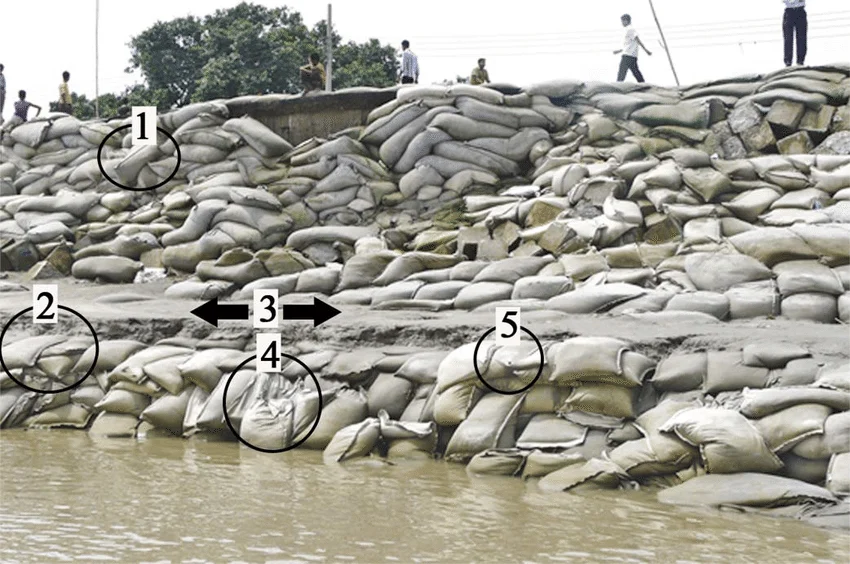
Although geobag systems offer many advantages, they are not suitable for all situations.
Potential limitations include:
limited height compared with engineered retaining walls
potential UV degradation if bags are exposed
dependence on proper installation
For large infrastructure projects, engineered retaining systems may still be required.
Conclusion
Geobag retaining walls provide a practical and cost-effective solution for soil retention and erosion control.
By using geotextile bags filled with granular materials, these systems create a flexible structure capable of resisting soil pressure and environmental forces.
Because of their adaptability, geobag walls are widely used in riverbank protection, coastal defense, slope stabilization, and flood control projects.
When properly designed and installed, geobag retaining walls offer a durable and efficient alternative to traditional retaining structures.
FAQ
What is a geobag retaining wall?
A geobag retaining wall is a soil containment structure built using geotextile bags filled with sand or soil and stacked to form a stable wall that resists soil pressure.
What materials are used in geobag retaining walls?
Geobags are typically filled with sand, gravel, or locally available soil materials. The bags themselves are made from high-strength geotextile fabric.
Where are geobag retaining walls used?
They are commonly used in riverbank protection, coastal defense, slope stabilization, and flood control projects.
Are geobag retaining walls permanent structures?
They can be used as both temporary and permanent structures depending on the project design and environmental conditions.
How long do geobag retaining walls last?
The lifespan depends on the geotextile material, environmental exposure, and installation quality, but properly installed systems can last for many years.


