Short Answer
Yes, gravel grids are worth it in many situations — but not in all.
Their value depends on soil conditions, traffic load, surface use, and long-term maintenance expectations. When used in the right context, gravel grids can significantly improve stability and reduce gravel movement. When used incorrectly, they add cost without meaningful benefit.
This guide explains when gravel grids are worth it, when they are not, and how they compare to geogrids and unreinforced gravel surfaces.
What Problems Are Gravel Grids Designed to Solve?
Loose gravel surfaces commonly fail due to a combination of material movement and weak subgrade support.
Gravel grids are intended to address these issues:
-
Gravel spreading and migration under vehicle traffic
-
Rutting and wheel-track formation
-
Surface settlement on soft or wet soils
-
Frequent regrading and gravel replacement
Without reinforcement, gravel behaves as an unconfined material. Over time, traffic pushes aggregate laterally, causing instability and uneven surfaces.
How Gravel Grids Work (In Simple Terms)
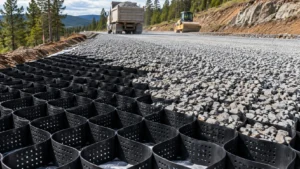
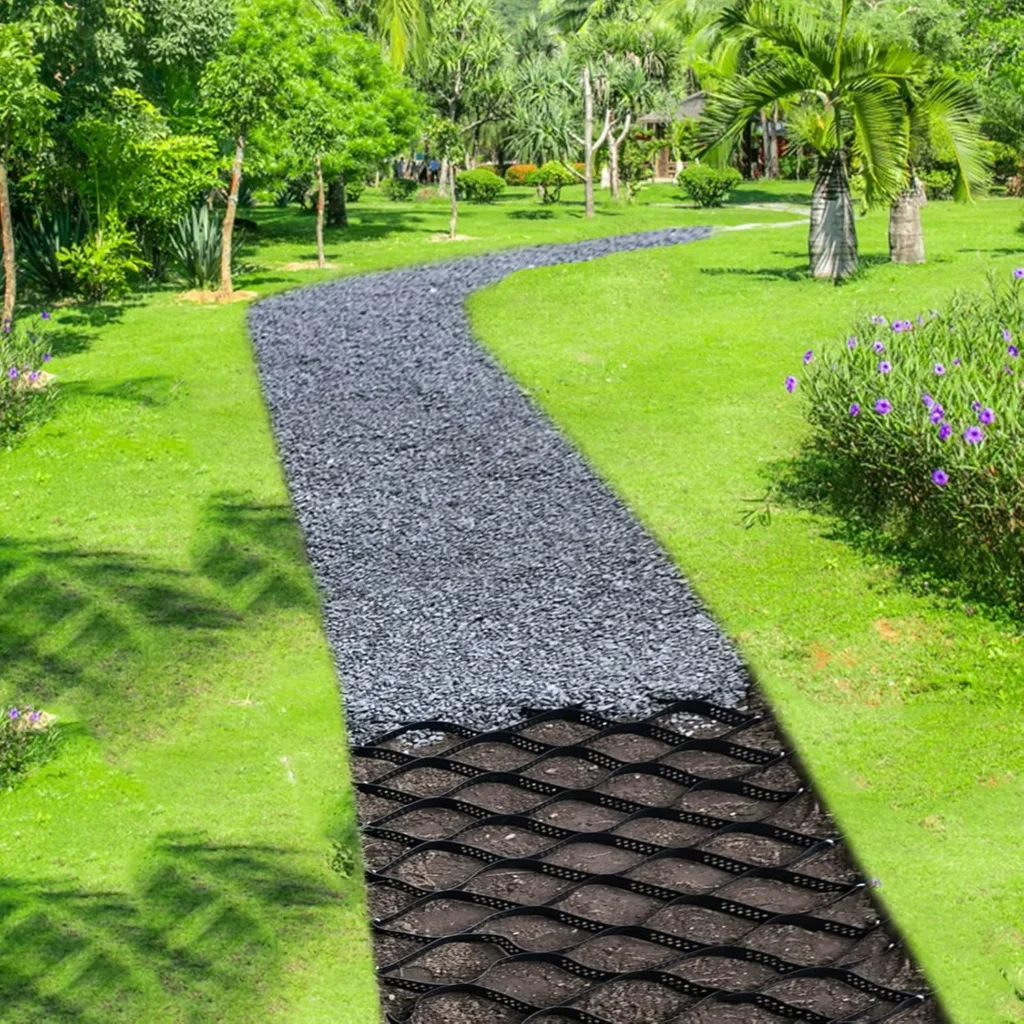
Gravel grids—often called cellular paving systems or gravel grid panels—use a three-dimensional honeycomb or cell structure to trap gravel in place.
They work through three main mechanisms:
-
Confinement
Individual cells prevent gravel from spreading sideways. -
Load Distribution
Vehicle loads are shared across multiple cells, reducing localized stress. -
Surface Stability
The gravel remains level and compacted, even with repeated use.
This creates a more stable, permeable surface compared to loose gravel alone.
Gravel Grid vs Geogrid vs No Reinforcement
One reason this topic causes confusion is that multiple reinforcement options exist. Each serves a different purpose.
Comparison Overview
| Solution | Best Used When | Key Characteristics |
|---|---|---|
| No reinforcement | Strong soil, very light traffic | Lowest cost, highest maintenance |
| Gravel grid (cellular system) | Driveways, light traffic, decorative gravel | Excellent surface confinement |
| Geogrid (flat polymer grid) | Weak subgrade, higher loads | Improves base strength & load distribution |
Key takeaway:
Gravel grids focus on surface confinement, while geogrids focus on structural reinforcement of the base layer.
Are Gravel Grids Worth It for Driveways?
In many cases, yes—especially for gravel driveways.
Gravel grids are worth considering for driveways when:
-
The driveway experiences regular vehicle traffic
-
Gravel frequently spreads or forms ruts
-
The soil below is soft, clay-rich, or moisture-sensitive
-
Appearance and long-term surface stability matter
For residential driveways with moderate use, gravel grids often reduce ongoing maintenance and help maintain a clean, even surface.
👉 For a deeper breakdown, see: Is Geogrid Good for Driveways?
Are Gravel Grids Worth It for Gravel Roads or Access Roads?
It depends on traffic intensity and soil conditions.
-
For light-duty access roads, parking areas, or temporary routes, gravel grids can provide sufficient surface stability.
-
For frequently trafficked or heavier vehicles, gravel grids alone may not offer enough structural support.
In those cases, geogrids installed within the base layer are often a better long-term solution.
Common Misconceptions About Gravel Grids
“Gravel grids replace the need for gravel”
❌ False. Gravel grids work with gravel, not instead of it.
“They work in all soil conditions”
❌ Not true. Very weak or saturated subgrades still require proper base preparation or geogrid reinforcement.
“They are only decorative”
❌ While often used for aesthetics, gravel grids provide real mechanical confinement when correctly installed.
What Can You Use to Hold Gravel in Place?
Several methods exist, but effectiveness varies:
-
Loose gravel only – low cost, high maintenance
-
Edging restraints – controls boundaries but not rutting
-
Gravel grids (cellular systems) – controls surface movement
-
Geogrids – strengthens the underlying structure
The best option depends on whether your main issue is surface movement or subgrade weakness.
Can You Use 20mm Gravel in Gravel Grids?
In most cases, yes.
Angular gravel in the 20mm range commonly works well with gravel grids, provided:
-
The aggregate fits within the cell depth
-
The gravel is angular rather than rounded
-
Proper compaction is performed
Always match aggregate size to the grid design for optimal performance.
Pros and Cons of Gravel Grids
Pros
-
Reduces gravel spread and rutting
-
Improves surface appearance
-
Lowers long-term maintenance
-
Permeable and drainage-friendly
Cons
-
Added upfront material cost
-
Requires proper installation
-
Not a substitute for structural base reinforcement in heavy-load applications
So, Are Gravel Grids Worth It?
Gravel grids are worth it when:
-
You want to stabilize a gravel surface
-
Traffic is light to moderate
-
Long-term maintenance reduction is a priority
They may not be worth it when:
-
The subgrade is extremely weak
-
Heavy vehicles are involved
-
Structural reinforcement is required at depth
In those cases, combining or replacing gravel grids with geogrid reinforcement is often the more effective solution.
Frequently Asked Questions
Are gravel grids worth the cost?
Often yes, especially when reduced maintenance and improved surface stability are considered over time.
What is the purpose of a geogrid compared to a gravel grid?
Geogrids reinforce the base layer and improve load distribution, while gravel grids mainly confine surface aggregate.
Do gravel grids stop gravel from spreading?
Yes. Their cellular structure significantly limits lateral gravel movement.
Can gravel grids be installed as a DIY project?
Yes, for many residential applications, provided proper subgrade preparation and compaction are followed.
Conclusion
Are gravel grids worth it?
They are neither a universal solution nor a gimmick.
When chosen for the right application—such as driveways, light-traffic areas, and gravel surfaces requiring improved stability—gravel grids can deliver real, long-term value. Understanding what problem you are trying to solve is the key to deciding whether they make sense for your project.