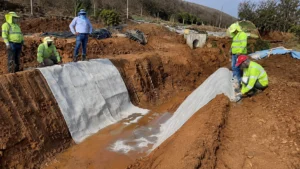
When purchasing geotextile fabric for an engineering project, the lowest quotation is not necessarily the most economical choice.
Different geotextile products can have different fiber structures, raw materials, mechanical properties and hydraulic performance. Even fabrics with the same mass per unit area may not be technically equivalent.
For contractors, distributors and engineering procurement teams, a reliable comparison should begin with the product specification, followed by roll configuration, quality documentation, delivery scope and installation requirements.
This guide explains what affects geotextile fabric supply costs, which technical properties buyers should compare, and how to evaluate supplier quotations before placing an order.
GeoCore supplies geosynthetic materials for infrastructure, environmental protection, drainage and civil engineering applications. The appropriate product and available specifications should be confirmed against the actual project requirements.
1. What Determines Geotextile Fabric Cost?
Geotextile fabric supply costs depend on more than GSM.
The main factors include:
| Factor | What Buyers Should Check |
|---|---|
| Product construction | Nonwoven, woven or composite structure |
| Raw material | Polypropylene (PP), polyester (PET) or other specified polymer |
| Mass per unit area | GSM and permitted tolerance |
| Mechanical performance | Tensile strength, elongation, puncture and tear resistance |
| Hydraulic performance | AOS, O90, permittivity and permeability, as required |
| Roll dimensions | Width, length, roll area and tolerances |
| Manufacturing requirements | Product grade, customization and production arrangements |
| Quality documentation | TDS, test reports and batch identification |
| Packaging | Roll protection, labeling and handling requirements |
| Delivery scope | Destination, transport arrangements and applicable charges |
Not every project requires the same combination of properties.
For example, a nonwoven geotextile used for soil filtration has different requirements from a geotextile used to protect a geomembrane or reinforce a road subgrade.
The first step is to identify the intended engineering function before comparing quotations.
2. Different Geotextile Types Have Different Purchasing Requirements
The product construction has a direct influence on its performance and suitability.
2.1 Short-Fiber Needle-Punched Nonwoven Geotextile
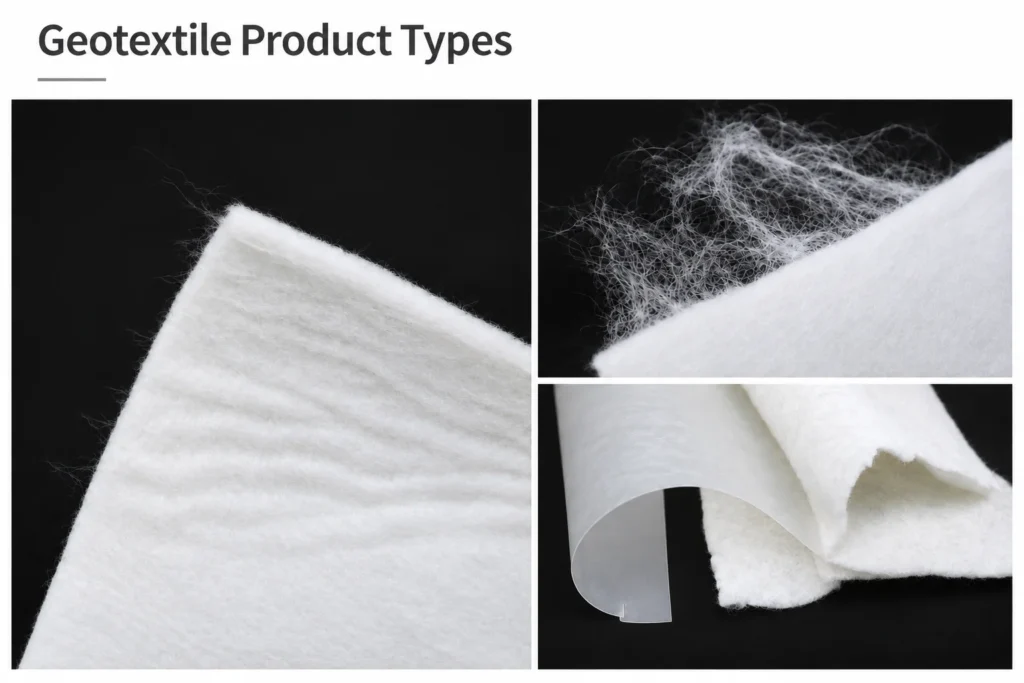
Short-fiber needle-punched nonwoven geotextile is produced by mechanically entangling fibers through a needle-punching process.
Depending on the polymer and product design, it can provide several functions:
- Soil separation
- Filtration
- Drainage
- Protection
- Cushioning
- Reinforcement in suitable applications
When evaluating this product, buyers should check:
- PP or PET raw material
- Mass per unit area
- Thickness
- Tensile strength
- Elongation
- CBR puncture resistance
- Tear strength
- Opening size
- Hydraulic properties
The same GSM does not guarantee equivalent performance between products made from different fibers or manufacturing processes.
2.2 Continuous-Filament Nonwoven Geotextile
Continuous-filament nonwoven geotextile is manufactured using continuous polymer filaments that are formed into a web and consolidated through needle punching.
Its technical evaluation should consider:
- Fiber material and manufacturing structure
- Tensile strength and elongation
- Thickness and dimensional stability
- Creep behavior where relevant
- Puncture and tear resistance
- Opening size
- Water permeability
- Durability under the intended exposure conditions
For reinforcement and long-term infrastructure applications, creep behavior and mechanical stability may be important additional considerations.
A continuous-filament product should not automatically be considered equivalent to a short-fiber product based only on GSM.
2.3 Woven Geotextile
Woven geotextile is produced by interlacing yarns or tapes.
Its purchasing specifications commonly include:
- Machine-direction tensile strength (MD)
- Cross-machine-direction tensile strength (CD)
- Elongation
- Opening characteristics
- Polymer type
- Fabric construction
- Roll dimensions
For woven geotextile, tensile strength must be evaluated in the specified directions.
A strength grade expressed in kN/m should not be confused with mass per unit area expressed in GSM.
2.4 Composite Geotextile and Drainage Products
Composite geosynthetics combine different materials to provide multiple engineering functions.
For example, a drainage composite may combine a polymer drainage core with geotextile filter layers.
When comparing composite products, check:
- Drainage-core structure and thickness
- Geotextile material and GSM
- Composite tensile strength
- Bonding or peel strength
- In-plane water flow capacity
- Compression behavior
- Filter-layer performance
- Roll dimensions
The total mass of a composite product cannot be directly compared with the GSM of a conventional nonwoven geotextile.
For relevant product information, explore GeoCore’s nonwoven geotextile products and composite drainage board.
3. Why GSM Alone Is Not Enough to Compare Geotextile Products
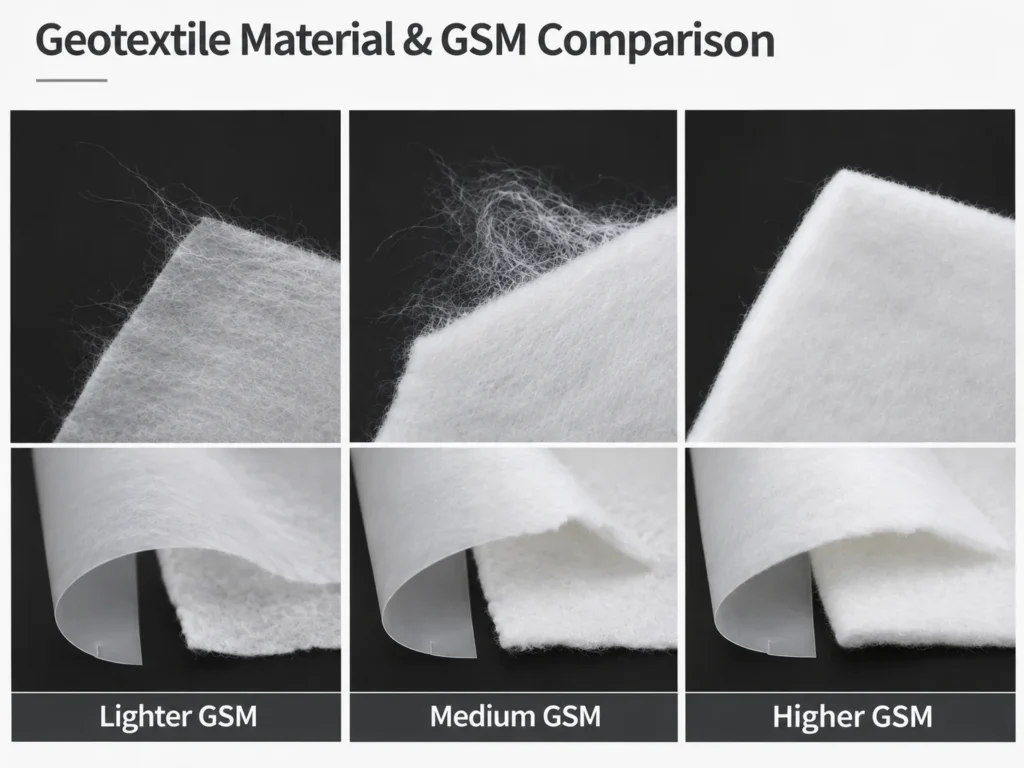
GSM means grams per square meter. It describes the mass of a geotextile per unit area.
It is one of the basic product identification parameters, but it does not establish the complete engineering performance of the fabric.
Two products with the same GSM may have different:
- Fiber structures
- Polymer materials
- Thickness
- Tensile strength
- Elongation
- CBR puncture resistance
- Tear resistance
- Opening size
- Hydraulic properties
For example, a drainage filter and a geomembrane protection layer may both use nonwoven geotextile, but their technical requirements are not necessarily the same.
Important Parameters Beyond GSM
| Parameter | Unit | Purchasing Significance |
|---|---|---|
| Mass per unit area | g/m² | Identifies the fabric weight |
| Thickness | mm | Indicates fabric thickness under specified test conditions |
| Tensile strength | kN/m | Evaluates resistance to tensile loading |
| Elongation | % | Describes deformation under tensile loading |
| Grab strength | N | Evaluates strength under a specified grab test |
| CBR puncture resistance | N | Evaluates resistance to a defined puncture test |
| Tear strength | N | Evaluates resistance to tearing |
| AOS / O90 | mm | Describes characteristic opening size |
| Permittivity | s⁻¹ | Describes through-thickness water flow under a defined hydraulic head |
| Hydraulic conductivity | m/s or cm/s | Describes the hydraulic conductivity of the material |
AOS and O90 should be compared using their respective test methods and definitions. They should not automatically be treated as identical values.
Similarly, permittivity and hydraulic conductivity describe related but different hydraulic properties.
For a more detailed technical explanation, read our Geotextile GSM, Oz, AOS and Permittivity Guide.
4. How to Evaluate a Geotextile Technical Data Sheet (TDS)
A product description is not sufficient for engineering procurement.
Ask the supplier for a product-specific Technical Data Sheet (TDS).
A useful TDS should identify the exact product and provide the relevant performance information.
What Should a Geotextile TDS Include?
| Section | Information to Verify |
|---|---|
| Product identification | Product name, grade and construction |
| Raw material | PP, PET or other polymer |
| Manufacturing structure | Needle-punched, woven or composite |
| Mass per unit area | GSM and tolerance |
| Thickness | Value and test conditions |
| Tensile properties | MD/CD strength and elongation |
| Mechanical resistance | Grab, tear and CBR puncture |
| Filtration properties | AOS or O90 |
| Hydraulic properties | Permittivity or permeability |
| Durability | UV and chemical resistance where required |
| Test methods | Standard designation and edition |
| Reporting basis | Typical value, minimum value or MARV |
Typical Value, Minimum Value and MARV Are Not the Same
This distinction is important when comparing suppliers.
- Typical value: A representative value under stated conditions. It is not automatically a guaranteed acceptance threshold.
- Minimum value: A specified lower limit that the product is required to meet.
- MARV: Minimum Average Roll Value, a statistical reporting and specification concept used for geosynthetic products.
Buyers should establish which reporting basis is required by the project specification.
A supplier’s typical value should not be compared directly with another supplier’s MARV as though they were equivalent guarantees.
Check the Test Method
The same technical property may be tested using different standards.
Relevant examples include:
| Property | Example Test Standard |
|---|---|
| Mass per unit area | ISO 9864 |
| Thickness | ISO 9863 |
| Wide-width tensile properties | ISO 10319 |
| CBR puncture resistance | ISO 12336 |
| Apparent opening size | ISO 12956 |
| Water permeability by permittivity | ASTM D4491 |
Always confirm the test standard, edition, units, test direction and reporting basis.
For project acceptance, the specified standard and applicable requirements take precedence over a general supplier brochure.
5. How Roll Width and Length Affect Geotextile Purchasing
Roll configuration affects material planning, transportation, handling and installation.
A quotation should clearly identify:
- Roll width
- Roll length
- Total area per roll
- Permitted dimensional tolerances
- Core diameter
- Roll weight
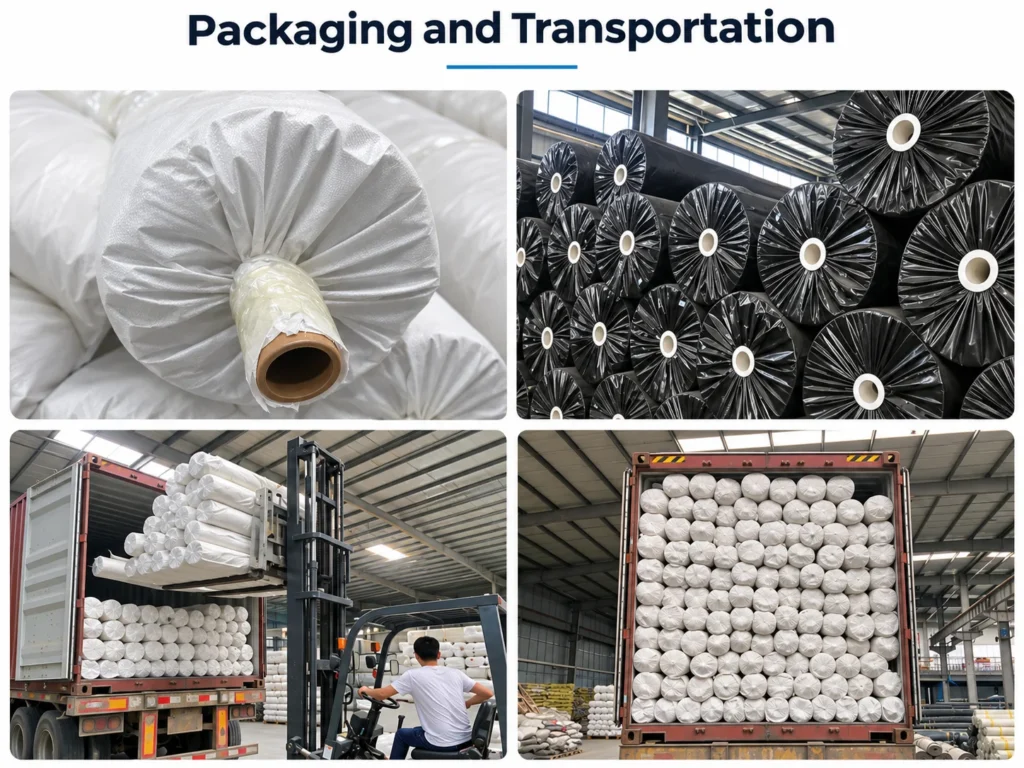
- Packaging method
- Product identification label
Why Roll Width Matters
Wider rolls may reduce the number of joints and overlaps in suitable installation layouts.
Potential benefits include:
- Fewer panel connections
- Less cutting and joint preparation
- More continuous coverage
- Improved installation efficiency
However, wider rolls may require larger handling equipment and more space for unloading, storage and deployment.
A narrower roll may be more suitable for restricted access or irregular project areas.
The best roll configuration depends on the project drawings and installation conditions.
What Should Be Checked Before Ordering?
| Item | Verification |
|---|---|
| Roll width | Confirm the actual available width |
| Roll length | Confirm the required length |
| Roll area | Calculate the total area per roll |
| Roll weight | Check handling and lifting requirements |
| Packaging | Confirm moisture protection and external wrapping |
| Label | Identify product grade and roll number |
| Loading | Confirm pallet, container and unloading arrangements |
Do not assume that all grades have identical roll dimensions.
Confirm the actual configuration for the selected product before approving the purchase order.
6. Compare the Same Product and Delivery Scope
A supplier quotation is only comparable when both suppliers are offering equivalent products and commercial conditions.
Before evaluating the quotations, confirm the following.
Product Comparison
- Same product construction
- Same polymer or approved material
- Same GSM and tolerance
- Equivalent mechanical performance
- Equivalent hydraulic properties
- Same test methods
- Same reporting basis
- Same roll configuration
Delivery Comparison
- Same destination
- Clearly stated delivery terms
- Packaging included or excluded
- Testing and inspection requirements
- Production and delivery schedule
- Applicable transport and destination charges
- Unloading responsibilities
A factory collection quotation and a delivered-to-site quotation are different supply arrangements.
Do not compare them as though they include the same services.
A Practical Supplier Comparison Table
| Evaluation Item | Supplier A | Supplier B |
|---|---|---|
| Product construction | To confirm | To confirm |
| Polymer | To confirm | To confirm |
| GSM | To confirm | To confirm |
| Tensile strength | To confirm | To confirm |
| CBR puncture resistance | To confirm | To confirm |
| AOS / O90 | To confirm | To confirm |
| Permittivity | To confirm | To confirm |
| Roll width and length | To confirm | To confirm |
| TDS available | Yes / No | Yes / No |
| Test report available | Yes / No | Yes / No |
| Batch identification | Yes / No | Yes / No |
| Packaging | To confirm | To confirm |
| Delivery scope | To confirm | To confirm |
Complete this table before making a purchasing decision.
An offer with missing technical information should be treated as pending verification, not automatically accepted as an equivalent alternative.
7. How to Calculate the Actual Geotextile Quantity Required
The area purchased is not always equal to the final surface area covered.
Additional material may be required for:
- Overlaps
- Seams
- Anchorage
- Terminations
- Cutting
- Irregular boundaries
- Penetrations
- Approved repair allowances
The required quantity should be calculated from the project drawings and installation details.
Basic Roll Area Calculation
Roll area = Roll width × Roll length
Purchasing Quantity
Total purchasing area = Net coverage area + Approved layout allowances
The allowance should be based on the actual installation plan rather than a universal waste percentage.
Why This Matters
Selecting a roll width that does not match the installation layout may increase cutting, joints and material handling.
A suitable roll configuration can help improve material utilization and reduce avoidable installation work.
The procurement team should coordinate with the installation contractor before confirming the final order quantity.
8. How Manufacturing and Quality Control Affect Product Reliability
A technical specification is only useful when the supplied product consistently meets its declared requirements.
When evaluating a geotextile supplier, ask about the manufacturing and quality-control process.
Raw Material Control
Confirm whether the supplier can identify:
- Polymer type
- Raw material batch
- Incoming material inspection
- Material documentation
Manufacturing Process
For needle-punched nonwoven geotextile, relevant production stages include:
- Fiber preparation.
- Web formation.
- Needle punching.
- Heat setting or finishing where applicable.
- Slitting and roll winding.
- Finished-product inspection.
Different geotextile constructions require different manufacturing processes.
The supplier should be able to explain which process is used for the specific product being offered.
Finished Product Inspection
Depending on the product specification, inspection may include:
- Mass per unit area
- Thickness
- Width and length
- Tensile properties
- Puncture resistance
- Tear resistance
- Appearance and uniformity
- Hydraulic properties
Request supporting documentation for the exact grade being purchased.
Product and Batch Traceability
For specification-controlled engineering projects, ask whether the supplied rolls can be linked through:
Product Grade → Production Batch → Roll Identification → Quality Documentation → Packing List
This helps buyers verify which product was delivered and whether the supporting documentation corresponds to the supplied material.
A general company profile or product catalogue cannot replace product-specific inspection and batch records.
9. How to Select a Geotextile According to Its Application
The lowest GSM or the highest strength value does not automatically identify the most suitable product.
Different engineering functions require different combinations of mechanical and hydraulic properties.
| Application | Main Selection Considerations |
|---|---|
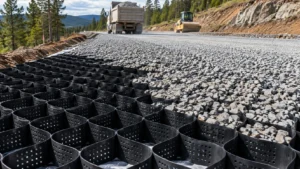
| Road construction | Separation, tensile performance and subgrade conditions |
| Railway construction | Mechanical stability, deformation and project-specific interface requirements |
| Drainage filtration | Soil retention, opening size and water passage |
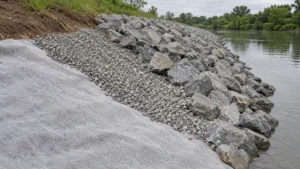
| Riverbank protection | Filtration, erosion conditions and installation resistance |
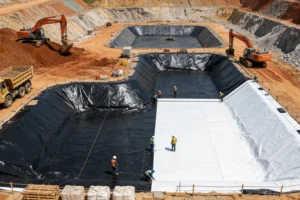
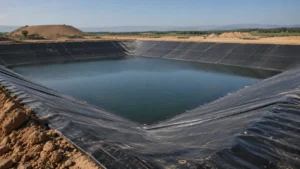
| Geomembrane protection | Puncture resistance and compatibility with the liner system |
| Landfill engineering | Filtration, protection, chemical exposure and durability |
| Composite drainage systems | Drainage-core capacity, compression behavior and filter performance |
Geotextile for Drainage
A drainage filter must retain the surrounding soil while allowing water to pass through.
Important considerations include:
- Soil particle-size distribution
- Opening size
- Hydraulic performance
- Clogging resistance
- Long-term loading conditions
Read our Geotextile Selection Guide for Drainage Applications.
Geotextile for Geomembrane Protection
When a geotextile is installed next to a geomembrane, its protection function must be evaluated as part of the complete lining system.
Relevant considerations include:
- Geomembrane material and thickness
- Subgrade conditions
- Contact materials
- Applied pressure
- Puncture resistance
- Installation conditions
Read our Geotextile Underlayment for Geomembranes Guide.
10. What Should Buyers Request from a Geotextile Supplier?
Before placing an order, prepare a procurement document containing the required product and commercial information.
Technical Documents
- Product-specific TDS
- Applicable test standards
- Relevant laboratory reports
- Product grade identification
- Declared performance values
- Required quality certificates
Manufacturing and Delivery Documents
- Roll identification
- Batch information
- Packing list
- Roll dimensions
- Net and gross weight
- Packaging details
- Delivery arrangements
For Alternative Product Approval
If a supplier proposes an alternative to an existing brand or specified model, request a technical comparison.
The comparison should include:
| Original Requirement | Proposed Alternative | Evaluation |
|---|---|---|
| Product construction | To be completed | Equivalent / deviation |
| Polymer | To be completed | Equivalent / deviation |
| GSM | To be completed | Equivalent / deviation |
| Tensile properties | To be completed | Equivalent / deviation |
| Puncture resistance | To be completed | Equivalent / deviation |
| Opening size | To be completed | Equivalent / deviation |
| Hydraulic performance | To be completed | Equivalent / deviation |
| Test documentation | To be completed | Available / missing |
Any technical deviation should be clearly disclosed and approved by the responsible project engineer before substitution.
11. How GeoCore Supports Geotextile Procurement
GeoCore is a geosynthetic materials brand offering product information and supply support for infrastructure and environmental engineering applications.
According to the GeoCore 2026 product catalogue, its geosynthetic portfolio includes nonwoven and composite geotextiles, geotubes, drainage products, geomembranes, geogrids and other related engineering materials.
For geotextile enquiries, the proposed product should be evaluated according to its construction, intended application and required technical properties.
What to Provide for a Product Enquiry
| Information | Details |
|---|---|
| Application | Road, railway, drainage, filtration, reinforcement or protection |
| Product type | Nonwoven or composite, as applicable |
| Polymer | PP, PET or specified material |
| GSM | Required mass per unit area |
| Technical requirements | Tensile, elongation, puncture and hydraulic properties |
| Roll dimensions | Required width and length |
| Quantity | Total area and number of product grades |
| Documentation | TDS, test reports and quality requirements |
| Destination | Country and delivery location |
| Schedule | Required delivery date |
Preliminary Enquiry
If you only have an application description, approximate GSM and required quantity, these details can be used to begin a preliminary product discussion.
Missing technical requirements should be identified before final product approval.
Technical Evaluation
If you already have an existing supplier’s TDS, project specification or product sample information, provide it for comparison.
The purpose is to identify technical differences and determine which details need confirmation.
Formal Quotation
Once the product grade, technical requirements, roll configuration, quantity and delivery scope are confirmed, the supplier can prepare a corresponding commercial quotation.
Frequently Asked Questions
What factors affect geotextile fabric cost?
The main factors include polymer type, product construction, GSM, mechanical properties, hydraulic performance, roll dimensions, order quantity, quality documentation, packaging and delivery arrangements.
Is higher GSM always better?
No. GSM indicates mass per unit area, not complete engineering performance. Product selection should consider tensile strength, puncture resistance, opening size, hydraulic properties and the intended application.
Can two geotextiles with the same GSM be used interchangeably?
Not automatically. They may differ in polymer, fiber structure, manufacturing process and technical properties. Their TDS and test methods should be compared before substitution.
What is the difference between nonwoven and woven geotextile?
Nonwoven geotextiles consist of bonded fiber structures, while woven geotextiles are made by interlacing yarns or tapes. Their mechanical and hydraulic characteristics differ, so the correct product depends on the engineering function.
What is the difference between AOS and O90?
Both describe characteristic opening-size properties, but their definitions and test methods are not necessarily identical. Confirm the specified method before comparing results.
What is MARV in a geotextile specification?
MARV means Minimum Average Roll Value. It is a statistical reporting concept used in geosynthetic specifications. Buyers should distinguish it from typical values and individual minimum requirements.
What documents should I request before ordering?
Request the product-specific TDS, applicable test reports, test methods, declared reporting basis, roll identification and available quality documentation.
Why are roll dimensions important?
Roll width and length affect material utilization, joint quantities, handling, storage and transportation. Confirm the roll configuration against the project installation layout.
Can GeoCore evaluate an existing geotextile specification?
Yes. Provide the existing TDS, project specification or product information. GeoCore can use the supplied information as the basis for discussing product options and identifying technical details requiring confirmation.
Request Geotextile Product Information from GeoCore
Choosing the right geotextile requires more than comparing GSM or product descriptions.
The product construction, mechanical properties, hydraulic performance, roll configuration and quality documentation should all be considered before purchasing.
GeoCore provides geosynthetic product information and supply support for engineering and infrastructure applications.
Send us your project specification, existing product TDS or application requirements to discuss suitable product options.
Contact GeoCore to discuss your geotextile requirements and request technical documentation.
Explore our product information:
- Nonwoven Geotextile
- Filament Nonwoven Geotextile
- PP and PET Geotextile
- Geotextile Manufacturer and Supply Information
Final product selection and technical acceptance should follow the project specification and the requirements of the responsible engineer.