Short Answer
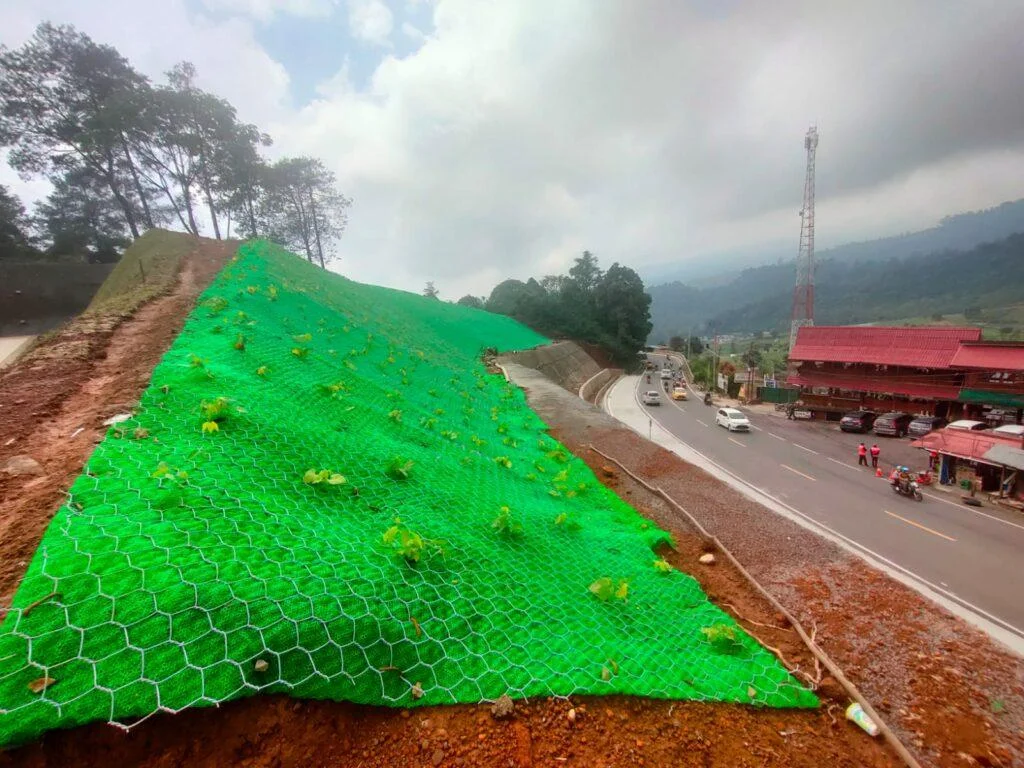
Choosing the correct geomat fabric is essential for highway and road slope protection. EM2–EM5 geomats vary in thickness and layers, providing erosion control, soil stabilization, and vegetation support. Proper selection ensures slope stability, reduces runoff, and prolongs project longevity in highways, railways, and embankment projects.
Why Choosing the Right Geomat Matters
Selecting the appropriate geomat type is crucial to prevent slope failures, soil erosion, and vegetation loss. Factors such as slope steepness, rainfall intensity, soil type, and project duration directly influence the performance of geomat fabric in highway and road projects.Before selecting the right type, it is helpful to understand the basic structure and working mechanism in our Geomat Fabric Guide.
Geomat Types for Highway Slopes
| Type | Layers | Typical Thickness | Typical Use |
|---|---|---|---|
| EM2 | 2 | 10–12 mm | Mild slopes, landscaping |
| EM3 | 3 | 12–14 mm | Medium slopes, secondary roads |
| EM4 | 4 | 14–16 mm | Steep highway embankments |
| EM5 | 5 | 16–18 mm | Heavy erosion zones, high rainfall areas |
EM3 and EM4 are the most commonly selected types for road embankments due to their balance between flexibility, erosion resistance, and vegetation support.
For detailed roll sizes, mass per square meter and supplier support, visit our Geomat Product Page.
How to Select the Right Type
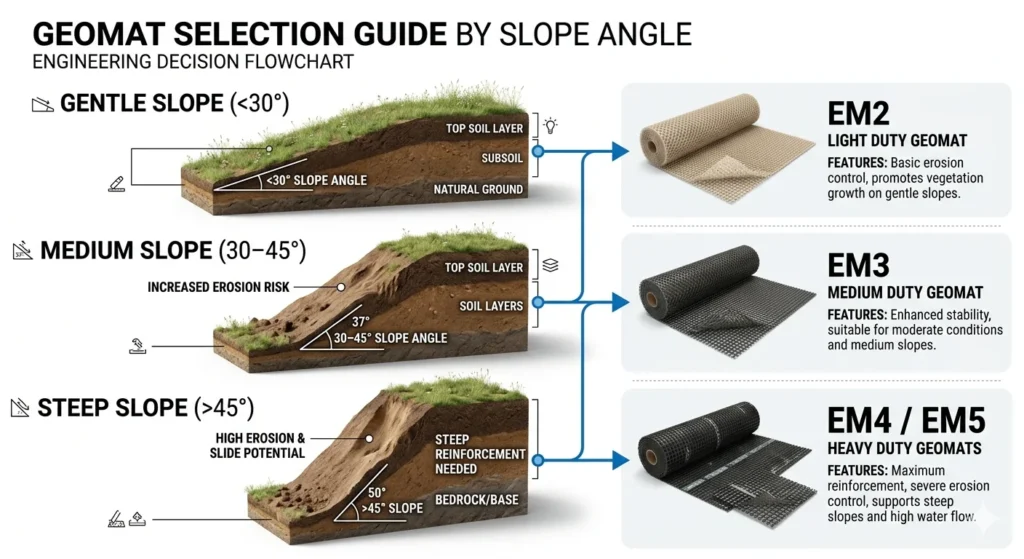
By Slope Angle
- <30° → EM2
- 30–45° → EM3
- 45° → EM4/EM5
By Soil Type
- Sandy → EM4/EM5 for greater confinement
- Clay → EM3 for drainage support
- Loose fill → EM3–EM4 for stability
By Rainfall Intensity
- Moderate → EM3
- Heavy → EM4/EM5
By Vegetation Requirement
- Rapid greening → thicker geomat
- Long-term slope stability → EM4/EM5
By Design Life
- Consider UV resistance, polymer quality, and environmental exposure
Installation Guidelines for Highway Slopes
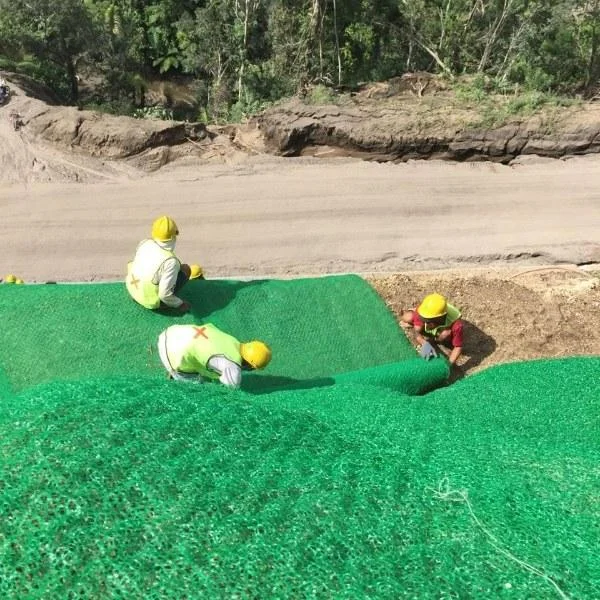
Step 1: Surface Preparation
Remove debris, rocks, and unstable soil to create a smooth, stable slope surface.
Step 2: Anchor Trench
Excavate a 300–500 mm trench at the top of the slope to secure the geomat.
Step 3: Laying and Overlap
Roll the geomat from top to bottom; overlap adjacent sheets by 100–150 mm.
Step 4: Fixing
Secure with U-shaped pins (spacing 1–1.5 m), or iron/bamboo nails in the middle sections.
Step 5: Topsoil and Seeding
Cover with topsoil and apply hydroseeding to promote vegetation establishment.
Benefits of Choosing the Right Type
- Minimizes erosion and soil loss
- Stabilizes slopes effectively
- Promotes healthy vegetation growth
- Reduces maintenance and repair costs
- Extends project lifespan
Real Project Applications
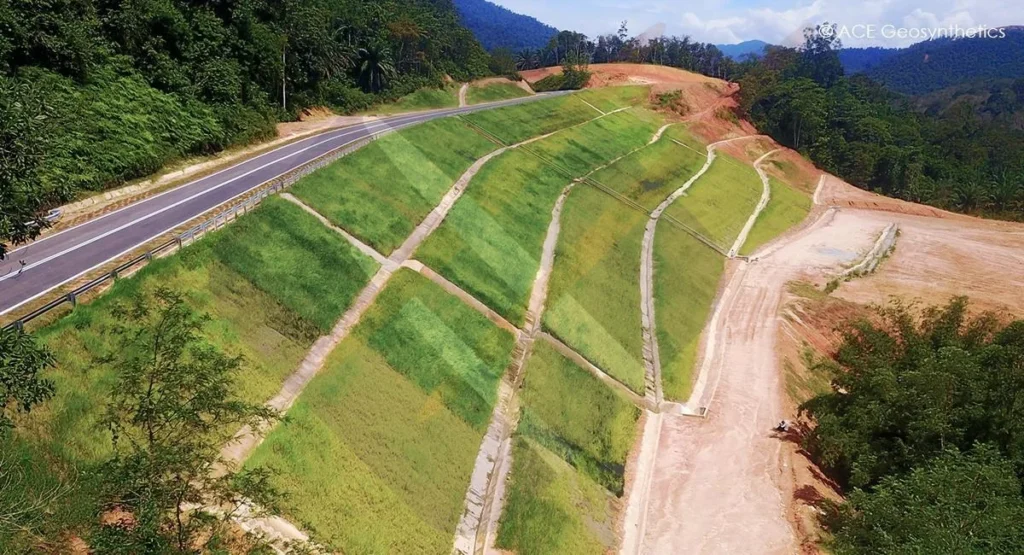
- Highway slopes in Guangxi, China
- Riverbank embankments in Thailand
- Railway and dam slopes in Southeast Asia
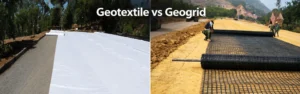
Geomat vs Geotextile vs Geocell
| Material | Structure | Main Function |
|---|---|---|
| Geomat | 3D | Erosion control and vegetation support |
| Geotextile | 2D | Separation, filtration, drainage |
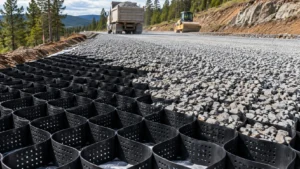
| Geocell | 3D cells | Load distribution and soil confinement |
For steep slopes requiring higher soil confinement and structural reinforcement, geocell systems may also be considered. You can also read our guide on the best method for attaching geocell to a slope for installation details and engineering recommendations.
Technical Specifications
| Property | Typical Value |
|---|---|
| Material | HDPE / PP |
| Thickness | 10–18 mm |
| Mass | 220–430 g/m² |
| Width | 2–4 m |
| Roll Length | 30–50 m |
| UV Resistance | ≥80% |
Internal Linking / CTA
Check our Geomat Product Page or the Geomat Fabric Guide for technical data sheets and supplier support.