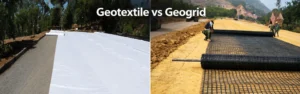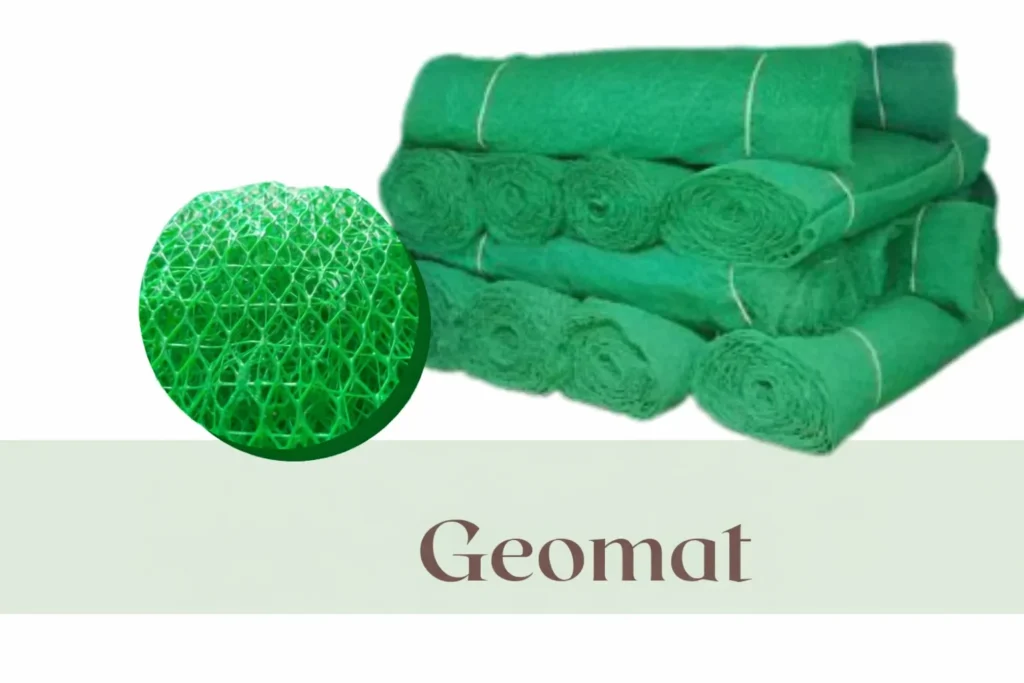
Geomat is generally better for surface erosion control and vegetation support on slopes, while geotextile is more suitable for separation, filtration, and drainage beneath the soil layer. The best choice depends on slope conditions, rainfall intensity, and the engineering purpose of the project.
Quick Comparison: Geomat vs Geotextile
| Feature | Geomat | Geotextile |
|---|---|---|
| Structure | 3D network | 2D fabric |
| Main Function | Erosion control | Separation & filtration |
| Vegetation Support | Excellent | Limited |
| Drainage | Moderate | Excellent |
| Slope Greening | Highly effective | Not suitable alone |
| Best Use | Surface protection | Subsurface layer |
What Is Geomat?
What Is Geotextile?
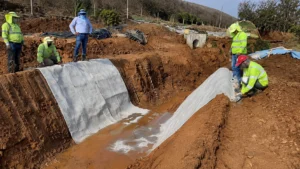
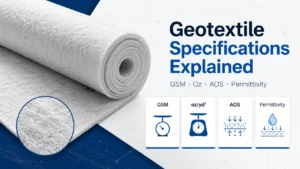
Geotextile is a two-dimensional permeable fabric made from synthetic fibers such as polypropylene or polyester. It is widely used in civil engineering for separation, filtration, drainage, and protection.
Unlike geomat, geotextile does not provide surface reinforcement or vegetation support. Instead, it is typically placed beneath soil layers to prevent mixing, allow water flow, and improve structural stability.
Key Differences Explained
Structure
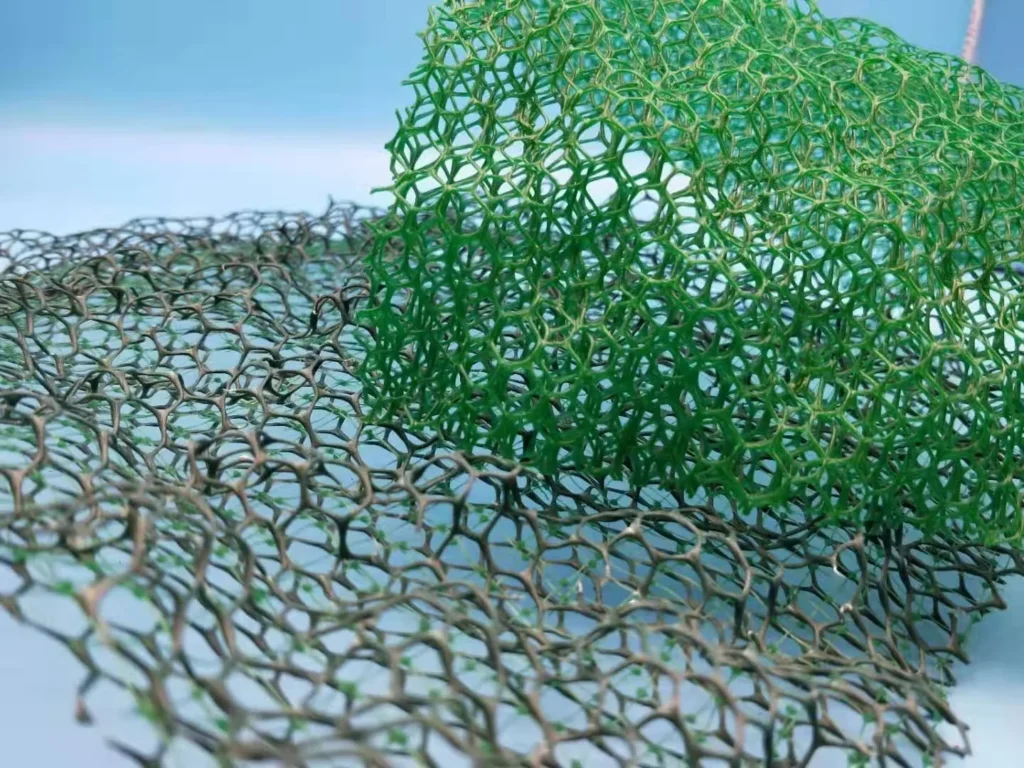
Geomat has a three-dimensional structure that provides volume and confinement, while geotextile is a flat fabric with no thickness structure.
Function
Geomat focuses on erosion control and vegetation support, whereas geotextile is designed for filtration and separation.
Performance on Slopes
Geomat is ideal for surface slope protection, while geotextile alone cannot prevent surface erosion effectively.
Which Is Better for Different Slope Conditions?
Highway Slopes
Geomat is the preferred solution because it stabilizes soil and supports vegetation growth.
Drainage Layers
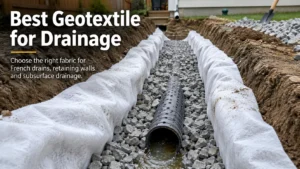
Geotextile is more effective when used as a filtration layer beneath soil or drainage systems.
Steep Reinforced Slopes
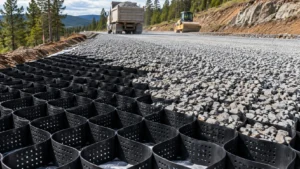
For slopes requiring structural reinforcement, geomat can be combined with other systems such as geocell.
Can Geomat and Geotextile Be Used Together?
Yes. In many engineering projects, geomat and geotextile are used together to achieve both surface protection and subsurface stability.
A common design approach includes:
- Geotextile layer for filtration and separation
- Geomat layer for surface erosion control and vegetation support
This combined system improves overall slope performance, especially in areas with high rainfall or weak soil conditions.
Best Choice by Application
| Application | Recommended Material |
|---|---|
| Highway slope protection | Geomat |
| Landscaping slopes | Geomat |
| Riverbank erosion control | Geomat |
| Drainage systems | Geotextile |
| Road base separation | Geotextile |