
Introduction
In asphalt pavement systems, geogrid is often discussed as a reinforcement solution, but its role is frequently misunderstood. It is not used to strengthen the asphalt mix itself in a direct sense. Instead, geogrid is typically placed below the asphalt layer to improve the performance of the supporting structure, especially the base and subgrade.
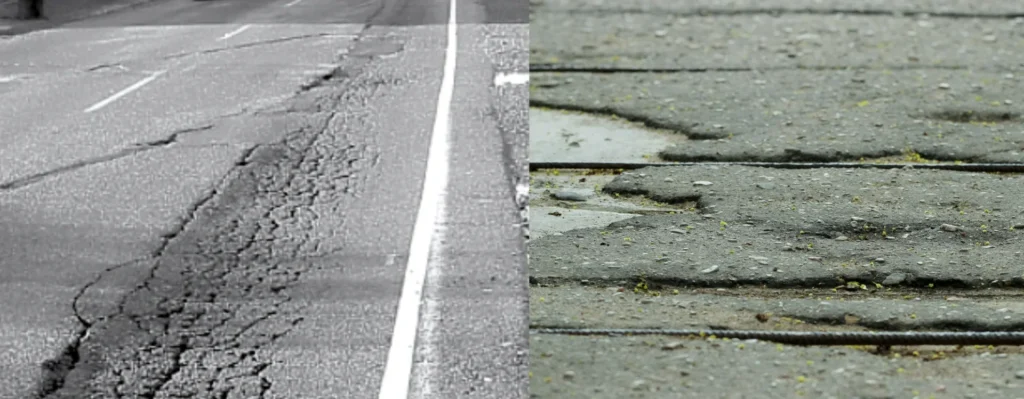
This distinction matters because asphalt pavement distress does not always begin at the surface. In many cases, rutting, cracking, and long-term performance problems are linked to deformation or instability in the layers below. When that is the governing issue, geogrid can play a useful structural role. When it is not, geogrid may offer limited benefit.
This article explains where geogrid is typically installed in asphalt pavement systems, when it can improve performance, when it may not be necessary, and how to evaluate whether it is the right solution for a specific project.
Short Answer:Does Geogrid Reinforce Asphalt Itself?
No—not in a direct sense.
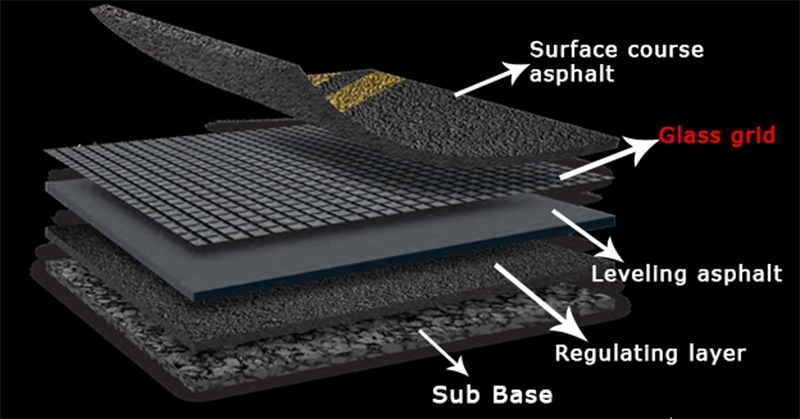
In asphalt pavement systems, geogrid is usually installed below the asphalt layer to reinforce the base or subgrade rather than the asphalt mix itself. It helps improve load distribution, reduce deformation, and support overall pavement performance. Its value depends on whether pavement distress is driven by underlying structural weakness rather than surface-level asphalt issues.
What Role Does Geogrid Play in Asphalt Pavement Systems?
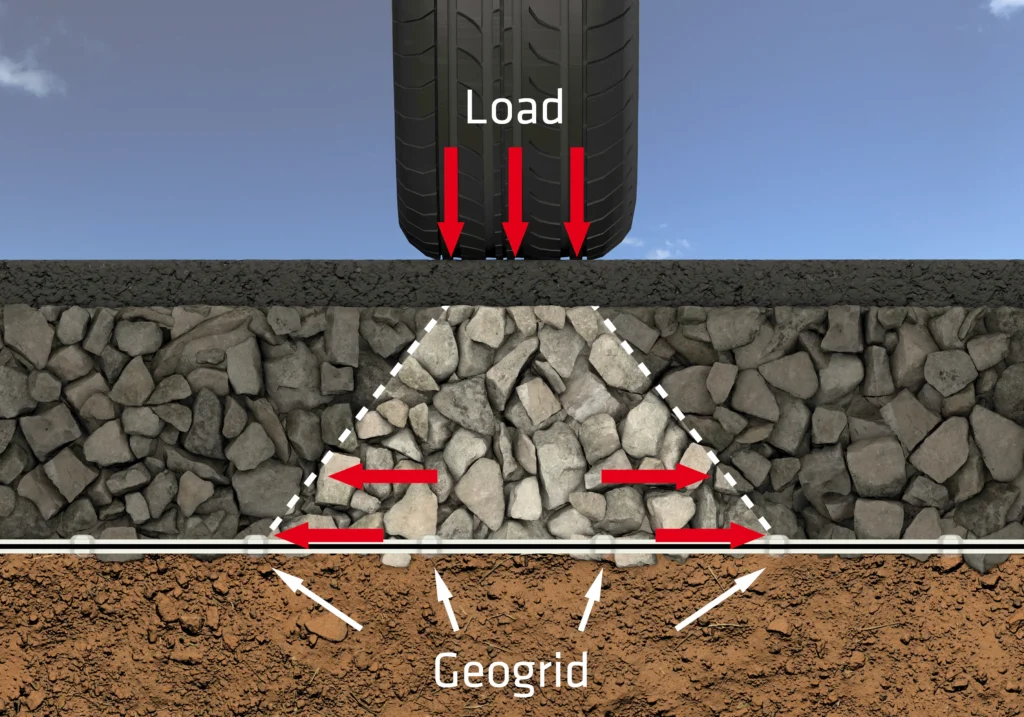
In asphalt pavement structures, geogrid is used as a structural reinforcement element within the supporting layers below the surface. Its role is not to change the asphalt mix itself, but to improve how loads are distributed through the pavement system and how the lower layers respond over time.
Rather than acting on the asphalt surface directly, geogrid typically helps by:
- improving mechanical interlock within the aggregate base
- enhancing load transfer across the pavement structure
- reducing permanent deformation under repeated traffic loading
- helping stabilize weak or variable support conditions
This is important because many visible pavement failures begin as structural problems below the asphalt layer. The distress appears at the surface, but the cause often originates deeper in the pavement system.
Where Geogrid Is Typically Installed?
In asphalt pavement systems, geogrid is usually installed below the asphalt layer, where it can improve structural performance in the supporting layers rather than in the asphalt mix itself.
The most common installation locations are:
- At the subgrade–base interface, where geogrid helps improve load transfer and stabilize weak or variable foundation conditions
- Within the aggregate base layer, where it enhances mechanical interlock and helps control permanent deformation under repeated traffic loading
The exact placement depends on the pavement structure, subgrade condition, traffic demand, and the specific performance issue the design is trying to address. In most cases, geogrid is used where better support and stress distribution in the lower pavement layers will have the greatest impact on long-term surface performance.
When Geogrid Improves Asphalt Pavement Performance?
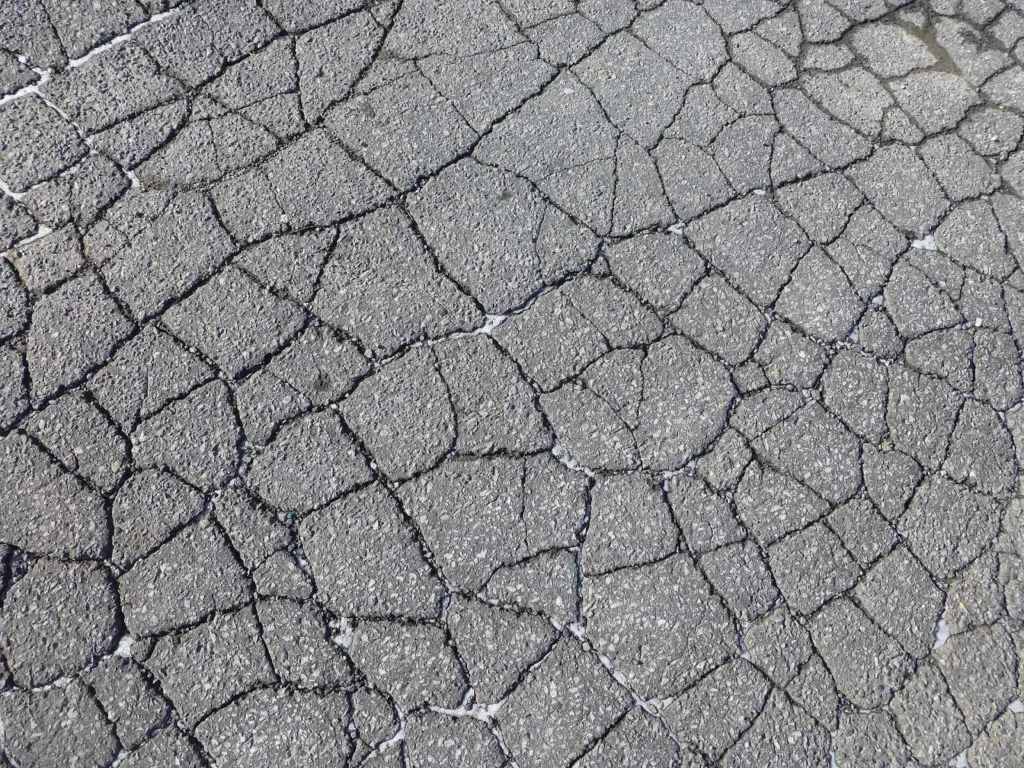
Geogrid is most useful in asphalt pavement systems when performance is limited by conditions below the asphalt layer rather than by the asphalt material itself.
Typical situations where geogrid can provide measurable benefit include:
- weak or variable subgrade conditions
- repeated heavy or channelized traffic loading
- rutting or cracking linked to base deformation
- designs where aggregate thickness is limited
- projects where long-term structural support is more important than short-term surface repair
In these cases, geogrid helps stabilize the support structure and reduce stress concentrations that accelerate pavement distress. It is especially relevant when the goal is to improve system performance rather than only address visible surface symptoms.
When Geogrid Adds Limited Value
Geogrid is not a universal solution for every asphalt pavement problem. Its benefit may be limited when the main source of distress is not related to support conditions in the base or subgrade.
Performance gains may be less meaningful when:
- the subgrade is already strong, uniform, and well-compacted
- pavement distress is mainly caused by asphalt mix design issues
- cracking is primarily driven by temperature-related thermal movement
- asphalt binder aging or oxidation is the dominant problem
- drainage deficiencies remain unresolved
- the pavement problem is surface-related rather than structural
In these situations, adding geogrid alone may not produce significant improvement. Conventional pavement design changes, drainage correction, asphalt mix adjustments, or other targeted measures may be more effective.
Geogrid vs Thicker Asphalt: Which Problem Are You Solving?
A common engineering question is whether pavement performance is better improved by increasing asphalt thickness or by adding structural reinforcement below the asphalt layer.
These two strategies do not solve the same problem:
- Increasing asphalt thickness mainly improves surface response and fatigue resistance
- Geogrid reinforcement mainly targets deformation control and structural support within the base and subgrade
That is why geogrid should not be seen as a replacement for proper pavement design. Instead, it can complement traditional design approaches when the controlling issue is deformation or instability below the asphalt layer.
The right choice depends on traffic loading, soil conditions, structural design limits, and long-term maintenance objectives. The key question is not which option sounds stronger, but which one addresses the actual failure mechanism in the project.
Base Reinforcement vs Asphalt Overlay Reinforcement
Not all asphalt-related geogrid applications solve the same problem.
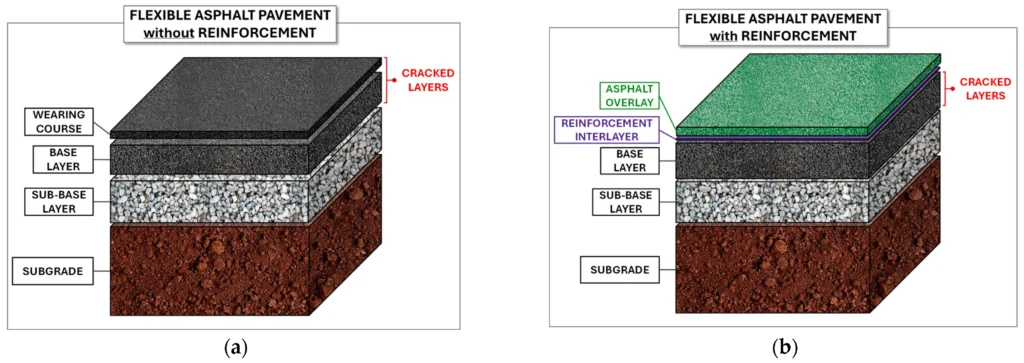
When geogrid is installed below the asphalt layer, it is usually intended to improve base or subgrade performance, reduce deformation, and support better load distribution through the pavement structure.
By contrast, reinforcement products used within asphalt overlay systems are typically selected to help control reflective cracking in the overlay itself. These applications are related, but they should not be treated as interchangeable.
If the main concern is:
- weak subgrade
- base deformation
- poor support conditions
- long-term rutting risk
then structural geogrid below the asphalt may be the more relevant solution.
If the main concern is:
- reflective cracking in an asphalt overlay
- overlay durability
- surface crack control in rehabilitation work
then an asphalt reinforcement product such as fiberglass geogrid may deserve separate evaluation.
This distinction is important because many buyers and project teams use the phrase “geogrid for asphalt pavement” to describe different reinforcement goals. Clarifying the problem first leads to better material selection.
👉 If your focus is asphalt overlay crack control, see our fiberglass geogrid solution.
👉 For broader structural use in road systems, see Geogrid for Road Construction.
What Problem Are You Actually Solving?
Before deciding whether geogrid should be used, it helps to define the real source of pavement distress.
Ask the following questions:
- Is the problem caused by base deformation?
- Is the subgrade too weak or inconsistent?
- Is traffic loading creating long-term structural instability?
- Is the issue mainly reflective cracking in an overlay?
- Is drainage the real cause of failure?
- Is the asphalt mix itself the weak point?
These questions matter because different causes require different solutions. Geogrid adds the most value when structural reinforcement is the limiting factor. If the root issue lies elsewhere, another design change may have a greater impact.
High-Level Project Inputs That Matter
When evaluating geogrid use in asphalt pavement systems, engineers typically consider a set of broader design inputs rather than making the decision from surface symptoms alone.
Key inputs often include:
- traffic classification and load repetitions
- subgrade strength, such as CBR or modulus
- aggregate type, gradation, and compaction quality
- pavement structure and thickness constraints
- drainage conditions within the pavement system
- expected failure mode and maintenance target
Geogrid performance depends heavily on system interaction. For that reason, selection should follow project-specific evaluation, applicable standards, and sound engineering judgment rather than a simple rule of thumb.
👉 Related reading: How to Choose Geogrid Based on CBR
👉 Related reading: What Strength Geogrid Do I Need?
Is Geogrid Always Worth the Cost?
Not necessarily.
If geogrid is used in the right context, it can improve structural support, slow deformation, and contribute to longer pavement life. But if the problem is unrelated to support conditions below the asphalt, the added cost may not create meaningful performance gains.
That is why geogrid should be evaluated in terms of:
- the type of distress present
- the location of the structural weakness
- the expected performance objective
- the long-term maintenance strategy
A low-cost material is not automatically the best choice, and an added reinforcement layer is not automatically justified. The value of geogrid depends on whether it addresses the real performance limitation in the pavement system.
👉 For pricing factors and quotation guidance, see Geogrid Material Cost.
How This Fits Within Road Construction Applications
Asphalt pavement is only one of several road construction scenarios where geogrid reinforcement may be applied. Its use should always be evaluated within the broader context of pavement structure, traffic demand, site conditions, and performance objectives.
In some projects, geogrid is used primarily for subgrade stabilization and base reinforcement. In others, related reinforcement products are evaluated for overlay performance and crack control. The correct approach depends on what the road system actually requires.
Final Thought
Geogrid can be an effective tool in asphalt pavement systems when structural reinforcement is the governing need.
The most important step is not asking whether geogrid is “good” under asphalt in general. It is identifying where pavement distress originates and whether reinforcement below the asphalt layer is the factor that will create real improvement.
When used in the right context, geogrid can add meaningful value. When used without a clear structural reason, it may add complexity without solving the real problem.
Understanding that distinction is what makes geogrid a useful engineering decision rather than a generic pavement upgrade.
Frequently Asked Questions
Does geogrid reinforce asphalt itself?
No—not in a direct sense. In asphalt pavement systems, geogrid is typically installed below the asphalt layer to reinforce the base or subgrade rather than the asphalt mix itself.
Where is geogrid usually installed in asphalt pavement systems?
Geogrid is most commonly installed at the subgrade–base interface or within the aggregate base layer. The exact placement depends on pavement structure, support conditions, traffic demand, and the performance issue being addressed.
When does geogrid help under asphalt pavement?
Geogrid is most useful when pavement performance is limited by weak subgrade, base deformation, repeated heavy loading, or other structural issues below the asphalt layer. In these cases, it can help improve load distribution and reduce long-term deformation.
When may geogrid have limited benefit?
Its benefit may be limited when the subgrade is already strong and uniform, or when pavement distress is mainly caused by asphalt mix design, thermal cracking, binder aging, or unresolved drainage problems.
Is geogrid the same as asphalt overlay reinforcement?
No. Geogrid used below asphalt for base or subgrade reinforcement is not the same as reinforcement products used within asphalt overlay systems for reflective crack control. These applications are related, but they solve different problems.
Is fiberglass geogrid used for asphalt pavement?
Fiberglass geogrid is often evaluated for asphalt overlay reinforcement and reflective crack control. If the main concern is overlay cracking rather than base deformation, fiberglass geogrid may be a more relevant option to review separately.
Can geogrid replace thicker asphalt?
Not necessarily. Thicker asphalt and geogrid reinforcement address different performance needs. Thicker asphalt mainly improves surface response and fatigue resistance, while geogrid is typically used to improve structural support in the lower pavement layers.
What should be evaluated before choosing geogrid for asphalt pavement?
Key factors include traffic loading, subgrade strength, aggregate quality, drainage conditions, pavement structure, and the actual source of distress. Geogrid should be selected based on project-specific engineering needs rather than as a generic upgrade.


